I’m not sure what I think…

about this plant. It’s one of the most beautiful, prolific, and enormous plants that actually grows in our backyard in Michigan. Pokeweed. There are more than one in the yard now, but the one that sits right next to the garden path, well not sits, more like towers, is about 8 feet tall. I did not plant it. I’m pretty sure a bird did when they pooped the seeds onto the soil, along with instant fertilizer.

This pokeweed has a thousand times more berries than the thornless blackberry I planted 9 years ago and have so far reaped a total of 3 berries from. (Not joking. We went sailing in the North Channel two weeks ago [yes! a post for later!], and when we returned, every last blackberry, apple, and peach was noticeably missing from the trees and brambles.) No harvest for the humans. For the raccoons and squirrels? All kinds of fruit cobblers and sweet treats.

In Washington, the weeds in my Mom’s garden grow low to the ground and stubborn, fighting for their spot rather than taking it over with such exuberant eagerness. Weeds in Michigan are definitely not shy–or benign.

Every part of American pokeweed (Phytolacca americana) is poisonous. It’s main stem is the size of a young tree’s trunk, and its taproot probably reaches down another foot or so, firmly anchoring its succulent weight in our sandy soil. From most to least toxic: roots, stems, leaves, berries. When it’s young, some people twice-boil the leaves and shoots for poke salad.

It looks out of place, too abundant, too red and purple and loud. No wonder it makes people uncomfortable.

There’s a lot online about how to manage pokeweed in an agricultural setting. Crop rotation, moldboard plowing, and disking. All techniques I studied as a graduate student at Ohio State University as I talked to organic farmers about the ways they managed the weeds in their fields without chemicals. Only pokeweed isn’t really a “weed.” It’s native to this part of the United States.

I recognized it this spring, when the long, thick stand of flamboyant green leaves literally shot up from the soil early and strong.

I let it grow.

A quick google search, “Should I remove pokeweed?”

“Yes. If pokeweed grows in your landscape, take steps to remove it.”

I’ll tell you what those steps are, because two of my neighbors and I volunteered to weed the community center’s garden beds during Covid and pokeweed was standing front and center.

Step 1: Put on gloves.

Step 2: Bring your best pruners.

Step 3: Attempt to pull it from the ground. When that fails, along with your back, weild best pruners and attempt to cut it off a few inches above the soil.

Step 4: Go back to shed to get shovel and large pruning shears, or possibly a hacksaw.

Step 5: Manage to finally mash/cut the main stem. Begin to dig around taproot.

Step 6: After struggling for 15-20 minutes to pull up taproot, cover what remains with soil and call it a day.

Step 7: Repeat the following year.

In Michigan, pokeweed is native. In Washington State and all along the Northwest Coast, pokeweed is invasive. It’s the same plant, poisonous to people, livestock, and pets. In Oregon, it’s considered an “Early Detection Rapid Response” species! Danger! Danger! In one particularly distressing case, “The berries stained our white dog purple.”

When it grew up to my waist, about 36”, I still didn’t chop it down.

Pokeweed is a member of the nightshade family, the most sinister sounding of them all (tomatoes, eggplants, beware!). Possibly you’ve heard of the deadly nightshade, or belladonna—the beautiful woman. Venetian women in the Renaissance used eye drops made from belladonna berry juice to dilate their pupils for an enchanting effect, and probably a few days of hallucinations, too.  Agatha Christie’s serial killer Tim Kendal used belladonna to give his third wife hallucinations before he planned to poison her properly.

Even though people, pets, and potential murder victims should steer clear of nightshade berries like those bursting from the pokeweed in my backyard, birds and Hawk moth larvae love it. Like a lot of food and medicine, it’s the way the plant is used that matters.
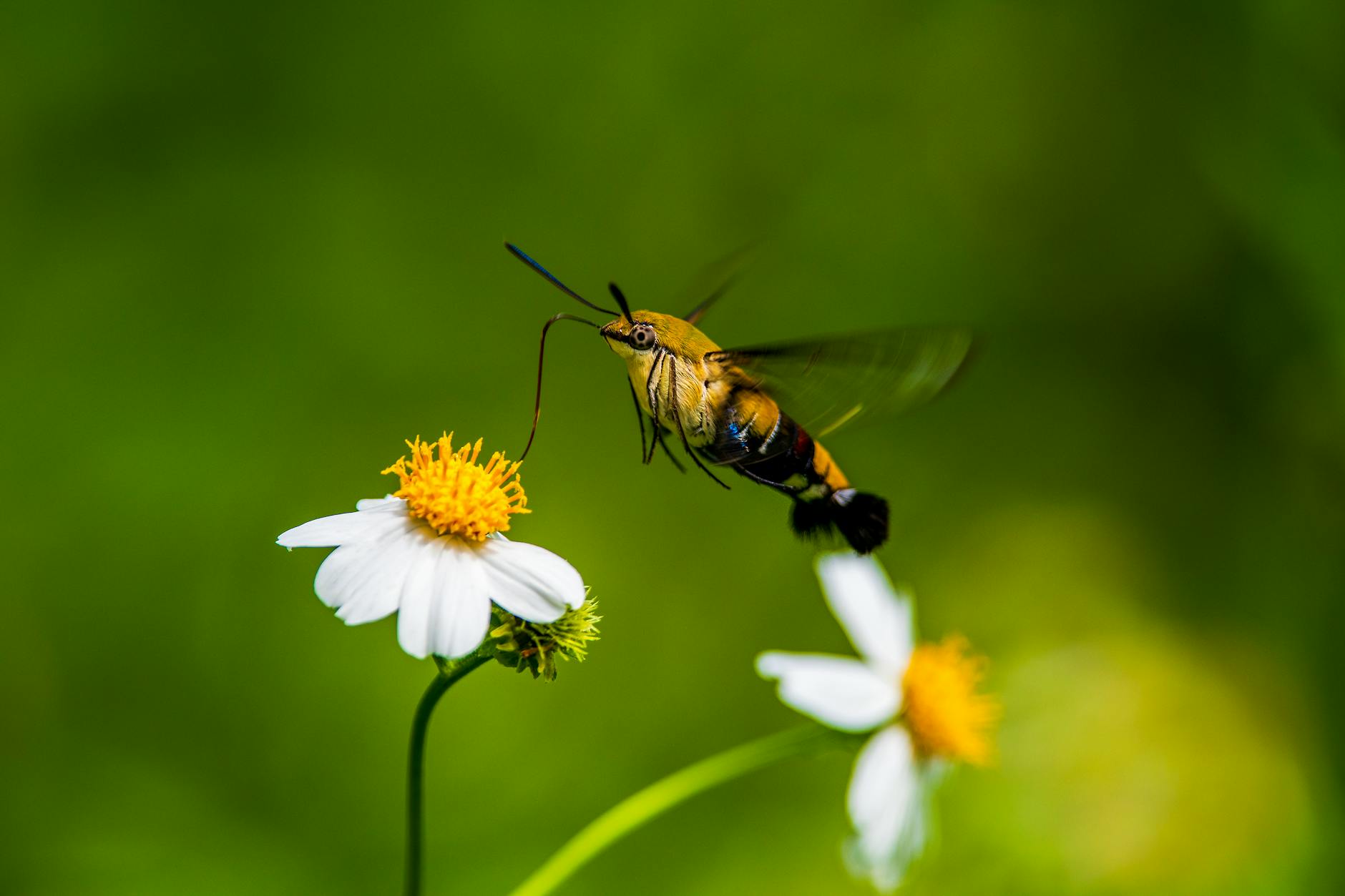
The incredible Hawk moth.

The pokeweed creates her prolific toxins for self-defense. Her roots secrete proteins to protect against root rot and invasion by soil-borne pathogens, and her seeds contain peptides that protect them against fungal diseases. And, in certain well-prepared forms, pokeweed can protect rather than harm humans. Indigenous people made a salve from her juices to ease rheumatism and arthritis and to treat fungal infections, ringworm, and eczema. The extracts from pokeweed, according to some recent scientific work, are shown to have “antibacterial, antiviral, antifungal, anticancer, antiparasitic, and insecticidal activities.”

When she came up to my chin, still, I let her grow.

Inkberry, coakun (not much on where this comes from), scoke (from m’skok, that which is red), whatever you call her, pokeweed was here long before I was, feeding the birds and moths, tapping the ground to let rainwater percolate through and oxygen fill soil cracks like a breath. She provided shade to wild rabbits and rolly polies. She defended herself.

I suppose she might be the one who decided to let me pass each time I measured her height, and now her sprays of white flowers have ripened into fruits that will spread across the neighborhood, a lot like the milkweed seeds that have populated the sidewalk crevices and fence lines of my neighbor’s yards.

An aggressive colonizer, she’s called. Well, I’ll let her be. She has been providing for the people and more-than-human beings with beauty and strength for centuries.

I think she’ll stay.

My daughter sits in front of her bounty of milkweed seeds. It was a few years ago now, but the look on her face mirrors what I’ve always felt about milkweed seeds and her and now pokeweed: ethereal, determined, wonderful, resilient, magical. I want to give them as many opportunities as possible to spread their gifts far and wide!

Timbers

“The Timberdoodle…”

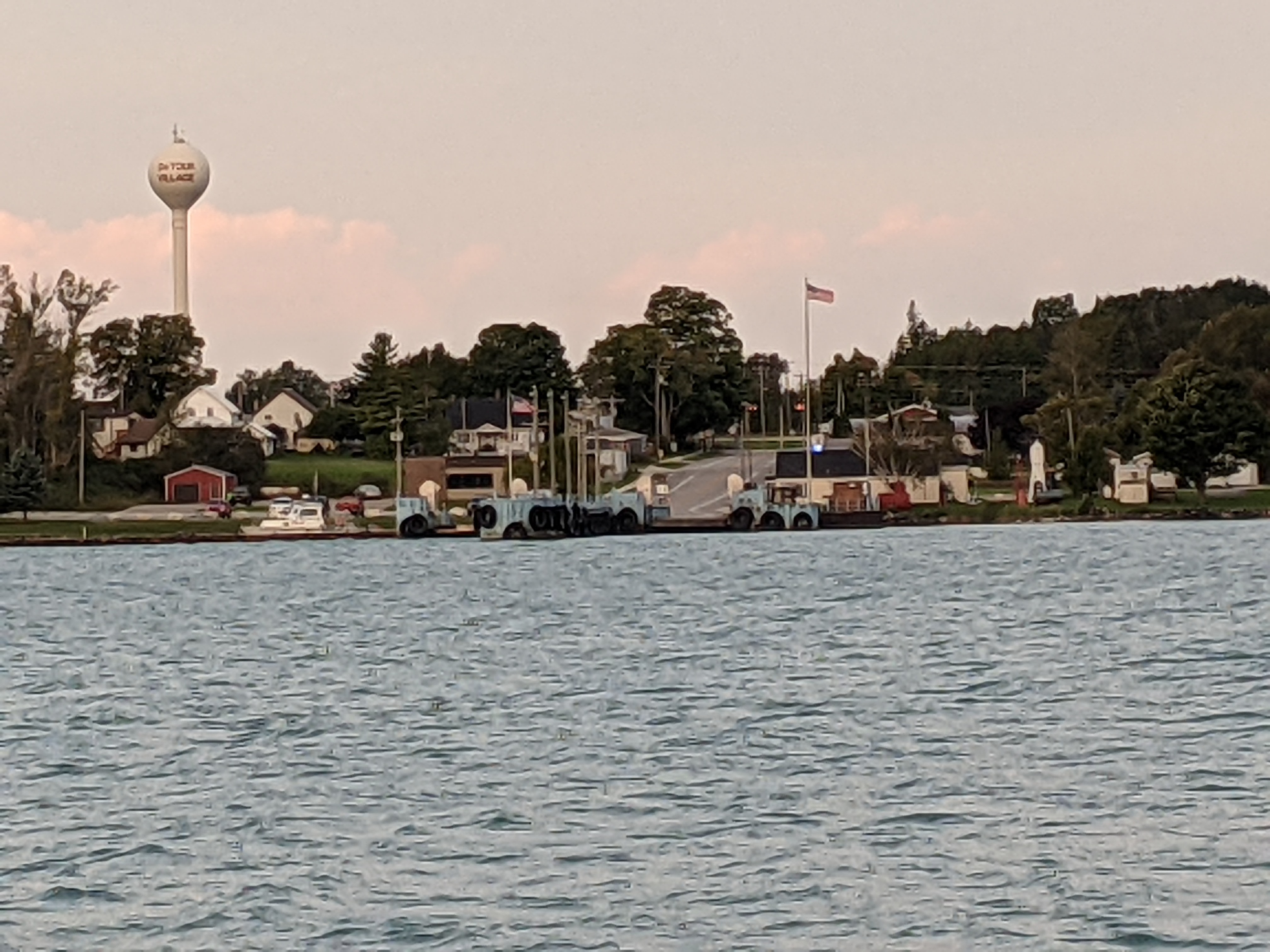
I mumbled out loud in my head. It was a store in De Tour Village, (pronounced dee toor) Michigan, and we were De “Tourists” that summer.

De Tour Village seen from the ferry

I said the name again out loud to my husband.  “Timberdoodle? That’s cute. Like a picture of a tree doodled on paper made out of trees. Like all the kitschy things we’ll probably find inside.”

“Whelp, let’s go in!”

It was a colorful store of rooms filled with eye candy that made me want to buy a lot of things and also say no to everything my kids brought to show me. “This will make me so happy,” their eyes pleaded. “I’ll do whatever you say afterwards if you just buy me this one thing that I love.” I was trapped in consumerism and eventually in small talk with the owner who looked like her native habitat might have been a store on the corner of Haight-Ashbury in San Francisco. This place was more than two thousand miles from there, across a bridge even longer (and some say more impressive) than the Golden Gate.

The street in front of the store was open and wide, sloping up to a neat ridge of pine and deciduous trees. As a De Tourist, I could have lingered for hours on the brightly painted porch in front of the Timberdoodle while considering the most pressing issue on this end of town—which of the two restaurants we would choose for dinner (if they were even open). Main street was 3 blocks long and ended at a ship shape marina that was three times that. Getting around was more boat inclined than wheeled here.

The Timberdoodle was a distillation of Michigan’s rugged independence mixed with cottage charm and long maritime history that saturated the Upper Peninsula’s freshwater lakes. The tiny store overlooked the St. Mary’s river where 1,000 foot (“footers”) freighters slipped by practically unheard and unnoticed. Eighty-six million tons of raw materials and 90% of the US’s iron ore glided by the Timberdoodle’s back alley.

A Footer

No rush.

If a freighter could make it to this narrow water crack between the Eastern UP and the last island before Canada from China at that speed, what could possibly be so important to rush off to?

We had time, so we browsed, and the Timberdoodle’s charm grew on me like a barnacle on one of the footer’s hulls. It had more character than just quaint. There was local art and soap, local jams, local jewelry, and a bulletin board for community events they hosted (pop ups at the farmer’s market, local authors and the like). There were a lot of Melissa and Doug toys for the kids, and Taylor Swift inspired bracelets,of course. A few whispy articles of women’s clothing on a rack that I thought might make me look carefree and slightly hip, along with strings of exotic, but earthy beads on silver chains. A few frog umbrellas, bug catchers, whirligigs, and glasses that compound vision like a fly’s, multiplying every trinket in the store by 1,000. I also found (and bought) a pair of “Safety Sasses.” Thick, oversized, horn rimmed tortoise shell safety glasses for women to wear while constructing things out of wood, perhaps a Timberdoodle, whatever that was.

As I warmed up to the store, I felt my inner critic quiet and my good nature gather courage to speak with the woman behind the counter.

“Hi” and “How are you?” and “The store’s name isn’t anything I’ve heard of before. Is Timberdoodle something you came up with?”

“Oh no,” she said, and smiled at me like a mother explaining the most basic thing to her child. “It’s the name for a game bird you find here. Also called a woodcock.”

“Oh! I’ve never heard of it.”

I googled it.

A bird appeared on my screen: short and pudgy with deep pools of water for eyes and a long plover-like bill not for piercing sand, but for exploring forest duff, for slurping up worms that wriggled beneath the rich decay. Timberdoodles snuffle their lives along the earth’s spongiest floor, but they aren’t bound to it. Every spring, they soar straight up into the early morning and late evening sky to show the world and a lucky Timberdoodle lady their dizzying sky dance, a whirling cyclone drop accompanied by exuberant song.

Imagining this was like suddenly discovering my elderly, teetotaling, tractor-bound Great Uncle Harold could break out the smoothest, mind blowing dance moves if I got up early enough to watch.

Timberdoodle Photo: Tapani Hellman on Pixabay

“Crrrck! Crrrrck!” The Timberdoodle peents to announce his amorous intentions, hidden at your feet among leaves and old pine needles at the edge of a field or bog. He lifts into the air, higher and higher, and falls in exuberant twirls, like a helicoptering maple seed, and the whole forest pauses to admire the wild, acrobatic feat. Later, when the curtains close on his last performance, he will lift his brown belly and long bill into the air and migrate to New Orleans for the winter, which seems like a fitting place for such a surprisingly talented, unassuming, and exuberant bird.

Had I ever seen one in the sky?

Never.

I suddenly longed to see and feel those feathers the color of mud and soil—a soft, beautiful brown camouflage. Could I sneak up on a Timberdoodle? Lay in wait one early morning? Or was it enough to suddenly and simply know it existed? To know it danced? What would I gain if I saw it? Would witnessing the dance shift my awareness of the world, and for how long? Are tiny shifts enough to move a life in unexpected directions?

Like the fox I have yet to spy, my eyes still haven’t rested on a Timberdoodle in the wild. I knew that to create such a moment meant I needed to make more than a passing, hopeful effort. It meant asking local experts and concocting a certain means of planned patience into existence. But where to make those efforts?

At my high school in Washington State, I was a Timber-wolf.

Incredibly cool, I used to think, but a very different kind of Timber. One of my brief boyfriend’s dad and his friend traveled to Alaska when they were young and spry and shot a Timberwolf to taxidermy for the trophy case in the high school gym. It was still there 25 years later–a dull gray brown, one paw lifted, nose pointed towards home, trapped in a glass box and surrounded by trophies of the achievements of teenage athletes, including our 3rd in state volleyball team and 4th in state basketball team. Tennis players and track stars and this wolf, who could have out run us all in speed and distance, who showed her cubs how to howl at a night sky shining with the ancient claw marks of the milky way, who had been removed, cut down like so many timbers around her, and frozen among brief, human victories, herself being one of them.

What is this world where materials are removed along with the animals attached to them like spiders on the end of their glorious silk? Wolf and iron ore, forest and water, fur and metal, feather and foot. We rearrange earth’s body to fit our idea of bodily need until we stumble into a gift shop at the end of the Upper Peninsula and find time to become wild and warm and discover the ancient, flighty, and astonishing; until we slowly layer new awareness of the more-than-human upon our hearts and want to repair our relationship with them, break the glass, preserve the duff, wonder at doodling Timbers.

I stood, stunned, by the Timberdoodle.

In this store named after a beautiful, shy bird, I found strings of pearls and quilt squares, trinkets that, taken time and focused attention, can be gathered and stitched back into each other by gently pulling on threads of old and local knowledge, new and unviersal wonder, humble and uncomfortable conversations. These pieces are what will revive our inner and outer landscapes until wolves run unhindered, doodle dance floors remain intact, and we are beautified and remade to be part of something bigger, a whole reality rather than a split one.

I contacted two local wildlife gurus when we got back home, and they knew exactly where to find Timberdoodles. Not a hundred miles from my house in the wilds of the UP, but a mere 20 miles east of East Lansing. It was astonishing. Who knew they were so close? Upper and lower peninsula realities collided—brushed up against each other like brindled feathers. Like De Tour and San Francisco and New Orleans. Like wolves and doodles.

Timberdoodles.

The sign reads: “Where the Ordinary is Extraordinary”

It’s only 18 minutes away…

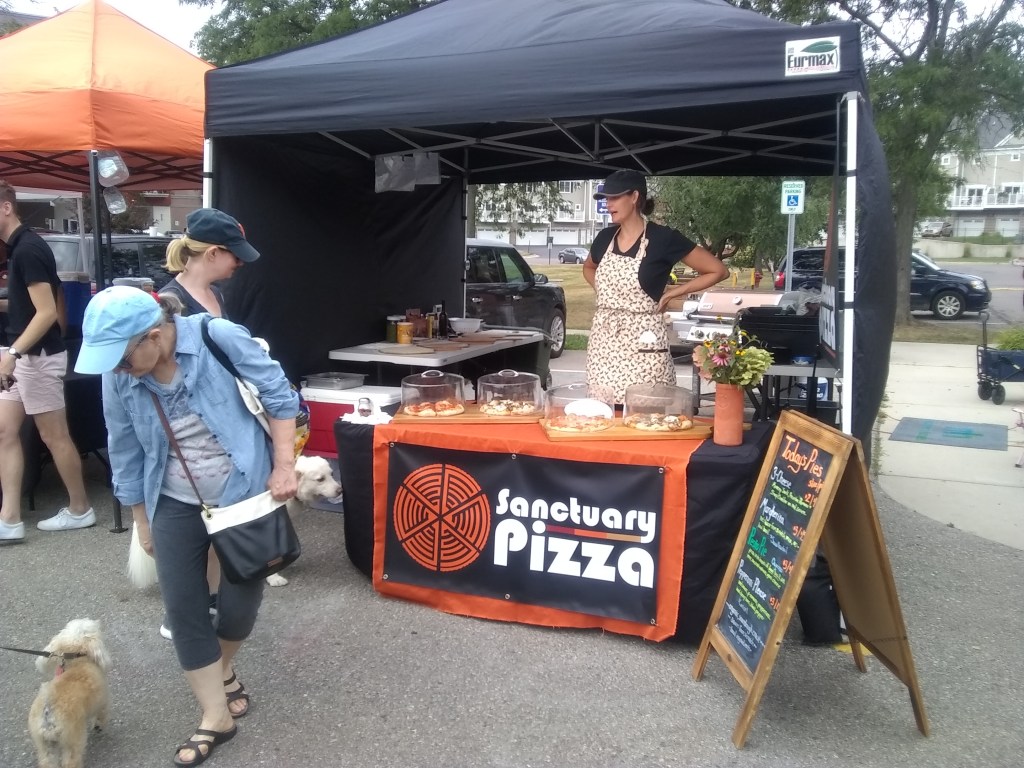
I used to make a lot of pizza. Five every Friday for 2 years and then 40 every Sunday during the farmer’s market season. In all, I made over 1,000 pies in the summer of 2019, and even though I don’t sell them anymore, if you stop by our house on a Friday, well, you’ve come on a Pie Day.

If you are a foodie, local is the magic word. Even better, local organic. Even better, local native.

Let’s start with the crust. Water, wild yeast, and flour. Water, local (Saginaw Sandstone aquifer), check. Wild yeast, local ( floating around my kitchen), check. But let’s face it, local, organic flour? That’s for people in Maine or Oregon who have the passion to make such things possible. Not for a Michigander making 1,000 pies that are affordable. You think in the Midwest you’ll find organic, local flour milled at a local mill?

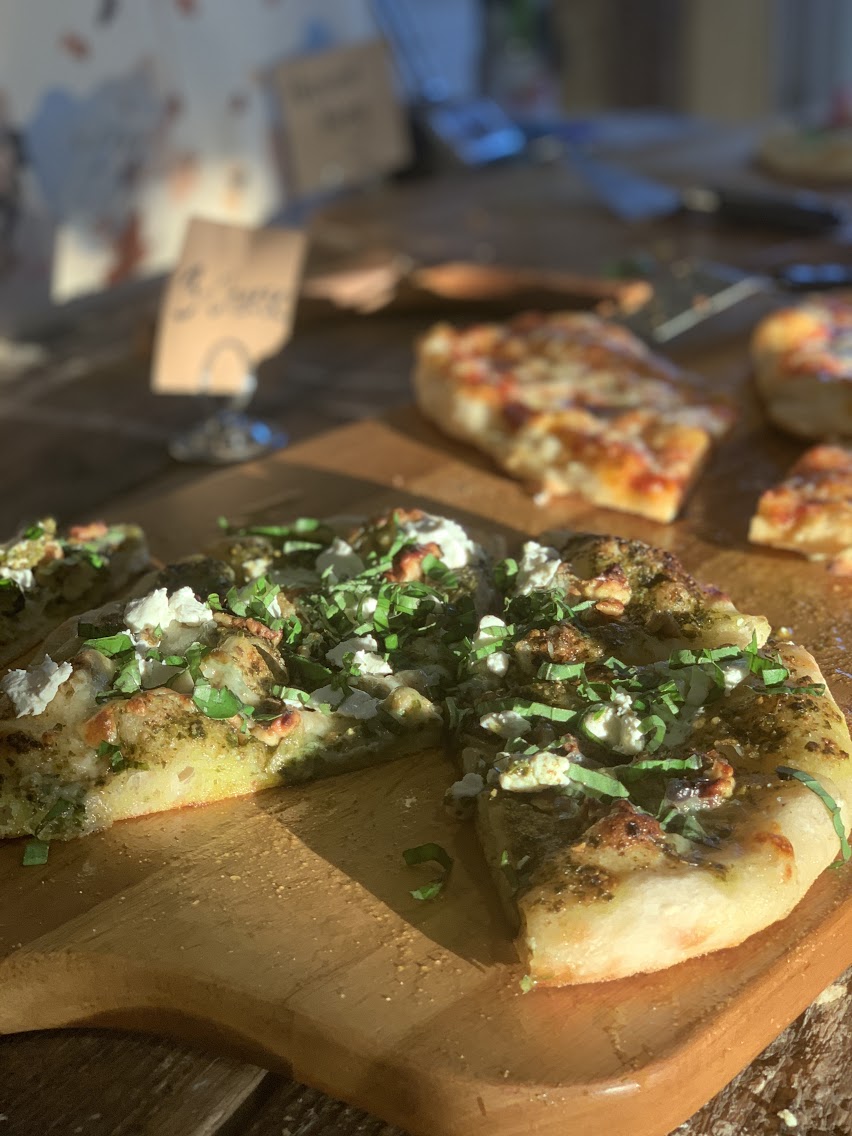
“B Happy Pie” with local blueberries, basil, and bacon from Trillium Farm

​You know where I’m going. You can. It’s only 18 minutes away from my house.

Ferris Organic Farm. Back in 2018, I ordered whole wheat flour (discontinued, it seems, but millet is so tasty and oats amazing for the body) and some buckwheat from Ferris, and I showed up at the farm in my Honda Accord on a foggy Tuesday. There were a few outbuildings, a place where I could park. The door was closed, but I grew up near my Grandpa’s farm, so I knew not to give up just because people weren’t around. They were probably out doing chores somewhere, and I was conscious that I would be interrupting what is always a tight farm schedule, but didn’t it say to come on Tuesday?

“You should have come on Thursday,” she said, very short and brisk and brusk. She had short, evenly cut hair, tiny feet, and apparently was gluten intolerant. I offered to carry the floury, dusty bags after she checked the order form and took me back into the storage area. The mill for the farm was enormous, and quiet now. The suspended smell of seeds under friction found my nose. I already loved this place.

“You are lucky you found me, otherwise you would have driven all this way for nothing.” I was reminded of Henning, the German farmer I worked for on Lopez Island oh so many years ago, back when I wanted nothing more than have a farm of my own with fence posts I had dug into the ground myself some hot, sunny day. Somehow, in my 20 year old mind, building a fence meant I earned it, owned it. I felt just as happy listening to her kinda-ly chastise me as I felt one morning transplanting tender bean plants in the east orchard after learning I had accidentally planted pole beans next to bush beans and they would cross pollinate, so the bush beans needed to be moved.

Like Henning, she held secrets, years of knowledge that probably went back before she was born, and mysterious tendencies underneath that observant, piercing brow.

Henning used to talk about Norwegian folklore as we worked to make rows out of the field with pick axes (the rototiller used too much gas) for a dry bean experiment that Washington State University was staging at his farm (we had tried last month in the sacrifice field, but without a fence, the dear deer ate his two weeks’ labor in one night.) Day after day we pick axed our way across the acres, him sharing more and more about why biodynamics appealed to his sensibility. It was a mix of traditional knowledge and science, planting on certain days depending on if it was a leaf, flower, fruit, or root crop you’d like to grow. (Today, August 3, the moon is in pisces and it is solely a leaf day, so get that late summer spinach and mache in the ground before tomorrow (a fruit day!)).

I was as fascinated as I was skeptical. Part of me craved this new way of thinking about food. Composting everything in order to create a closed farm system not dependent on fertilizer from outside, herbicides, pesticides, or any other additives. Instead, we made fertilizer from cow horn manure buried under a full moon, dandelions picked in the morning sun just before their petals opened all the way, and chamomile found flourishing in the gravel driveway that we stuffed into deer bladders and let ferment in the ground for a year. The magic was harnessed for the soil, and the soil made celestial foods.

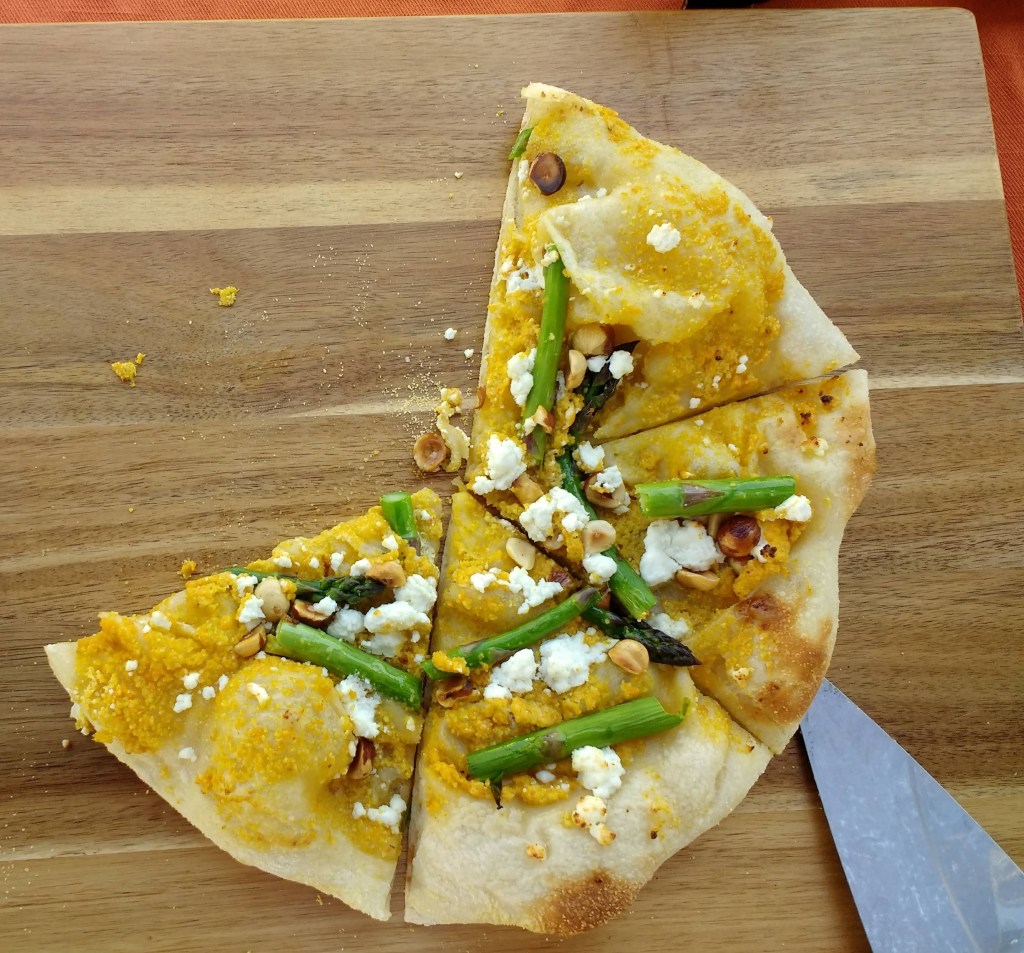
“Spring into New Orleans” with carrot aioli, local asparagus, hazelnuts, and goat cheese

I’ll never know if the buckwheat at Ferris Organics was sprinkled with a brew of nettle tea (delicious), but I had walked on the ground where it came from. I was standing in a space where it lingered for a while after harvest, imbued with the touch of hands, still near the trees where it was planted and raised. (I asked Kroger where their organic flour was grown, but they didn’t know. They don’t know where their ice cream is made, either, but it’s the best ice cream I’ve had).

Listen, you are probably looking at your screen the same way my future husband looked at me when I first met him on Lopez and told him my latest biodynamic task was to “ask” the new tree how it wanted its longest branch oriented (east to west). This is the kind of care and mystical, wonderful potential I want my daughters to see in every tree along their way to school, every beetle burrowed in a milkweed, and every person needing the magic of kindness born of imagination, of empathy. Singing the stories of every life on this earth, not just our own, making space for them to do their healing and wonderful work that weaves in and out of the sometimes silly, sometimes cruel, sometimes beautiful lives of the humans that are here, too.

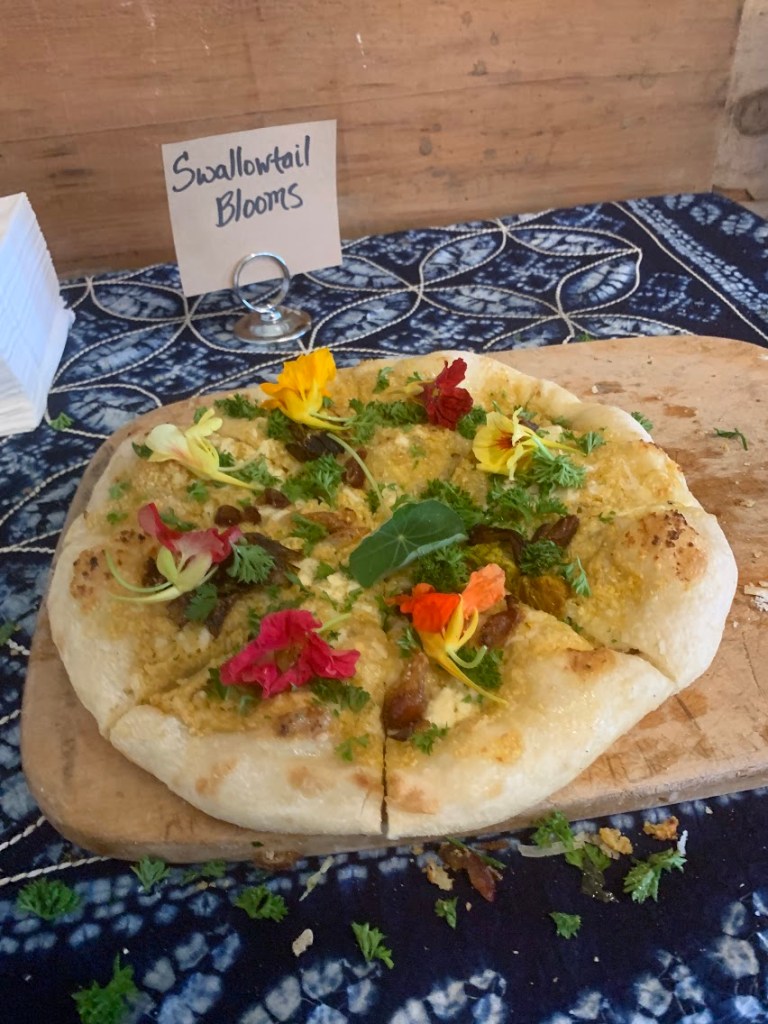
Years after dipping my toe into biodynamics, I was making pizza at Swallowtail Farm for a “pizza at the farm” night. I gave my pizzas some local magic, starting with the crust and ending with the bright, beautiful flowers of squash plants, nasturtium, and basil, a palette of local color and flavor bound for the human palette, to taste colors! To mouth feel late summer! (Wine enthusiasts, you will be familiar with this: biodynamics and terroir and the liquid seasons.) To take into our bellies, hearts, and mental health capacities the energy of the water that opened the seed to cotyledon and nutation, the soil that humbly brought nutrients to root, the farmer that tenderly and gleefully tended its every growth spurt, then with quiet gratefulness cut off its life to feed our own. To mingle our enzymes with foods like water mingles with paint, to paint a canvas of flavors full of light and delight and gratitude and love.

It’s not that far, just 18 minutes away.

It’s not the Pacific

This is what I learned about the Great Lakes when I was in primary school.

H.O.M.E.S.

They meant as much to me as Mary’s Violet Eyes Make Johnny Sit Up Nights (Period). They were just as far away, distant, and unfamiliar.

The lakes I knew were usually small and too warm and slimy on the bottom with lots of salamanders and newts. Or inaccessible. Think Crater Lake.

Then we moved to Michigan. People who lived here said being at Lake Michigan was like being at the ocean. I was skeptical. Perhaps a tad more. Scoff-tical. A bit of salty pride mixed in there with a dash of defensive homesickness and a sprinkling of beloved memories of frozen legs and Dad’s big hands holding mine fast against enormous waves trying to knock me backward and pull me forward and loving every alive second of it, perhaps?

A lake is not an ocean.

My family used to go to the Oregon Coast for vacation, driving down the Columbia River Gorge, through the mountainous Coast Range of Oregon and at last arriving at the Pacific, rimmed with rocks and tide pools. It was so cold. The waves were enormous and loud, but once my entire body went numb, they were exciting. The wind whipped sand into my hair and eyes, my wind breaker’s sleeves flapping like an untrimmed sail.

My Dad bought kites for my brother and me one year when I was about 12. Some days were actually too windy to fly them, the days I could stand at a 30-degree angle into the wind without falling over.

If I pulled on one of the two strings of my rainbow kite it would tumble and flip to the left or right, swooping like a giant bird. Dad bought them from one of my favorite Seaside stores. It was filled with kites and windsocks, whirligigs and anything that would dance and turn in the wind. My brother got a blue and gray striped one that matched the sea and sky.

At the ocean, we ate too much taffy, played Dark Tower and card games, listened to the waves crash all night, spend hours carving sand into castles and dragons or digging holes big enough to climb into. No sunscreen needed. The ocean was so big and the sand so broad, I could look out into the ocean and my mind couldn’t hold it, had to clear.

This was the coast. This was an ocean. The    Ocean.

There were whales out there, Humpbacks and Grays, rolling onto their sides, singing to each other. There were Puffins flapping in circles above Haystack rock, otherworldly anemones the palest red that sucked every tentacle in faster than I could blink an eye when gently poked, my finger dissolving into their squishy/sticky belly? Mouth? Buried clams squirting water up through perfectly round holes in the sand. Crabs and their crabby parts. Enormous ropes of stranded bull kelp made of some alien material impossible to break but so fun to play with.

Washington life was filled with riffs of the Pacific. Long Beach, cold but beautiful. Puget Sound, calmer, with mountains on the rim, ferries, and the two sea otters I’ve seen visiting the shore with their favorite rocks. The strait of Juan de Fuca and the Salish Sea, the San Juans, more open, stronger tides, Orca, sharper rocks, sea lions, and seals. San Francisco’s coast, urban and littered, but brighter somehow. El Salvador, hot, with palm trees and pelicans flying back and forth and shells in shapes I’ve never seen. I couldn’t take my eyes off of them.   

And now this lake. Lake Michigan.

H.O.M.E.S.

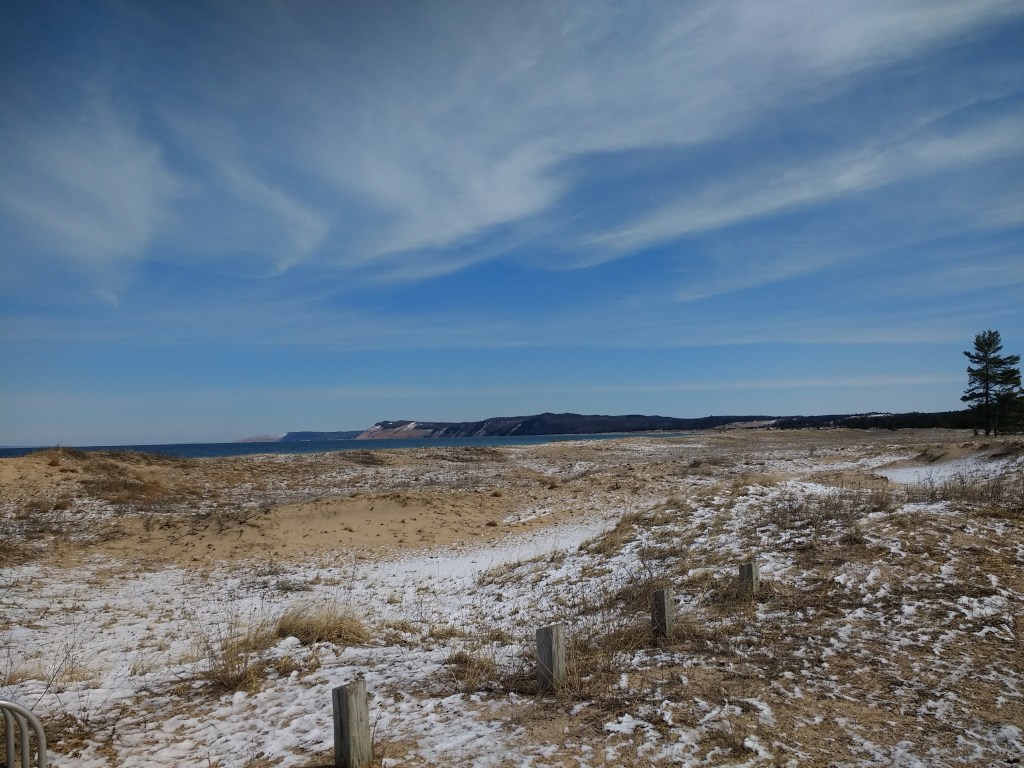
A year after moving to Michigan, we got in the car and drove north to Sleeping Bear Dunes. It was October, and the dunes were so much colder and bigger than I’d imagined. I carried our 2-year-old daughter to the top and looked out over the lake, the lake so big that it had no shore on the other side.

We hiked to Sleeping Bear Point and there she was below us, Lake Michigan. So blue she was almost teal. Two islands in the distance, the bear cubs. I was moved by the depth of the water, by the legend of mother bear, by the enormity that was as mind clearing as the Pacific, but less loud, slightly less intimidating.

Don’t get me wrong. I would never underestimate her or any of the Great Lakes.

Six thousand shipwrecks in the last two centuries, 1,500 in Lake Michigan. The winds can whip up across the water in no time and the largest ship to ever sink, the Edmund Fitzgerald, wasn’t 100 years ago. No, it was 1975.

This was unsalted water. This was a lake. The       Lake.

The next year we drove a state’s worth of miles to get to the Upper Peninsula for the first time. And for the first time in a long time I breathed in the sweet, spicy smell of stands of pine trees and saw the familiar purple swaths of lupine. We were on our way to Marquette, and little did I know that while my husband spent his hours at a conference giving speeches, the girls and I would spend hours on the rocky beaches giving chances to the lake to befriend us. And she did.

At Eagle Harbor’s beach I watched five ladies in low beach chairs and swimsuits lay under the intense, but disappointingly cold, rays of spring sun, soaking up every thermal unit it provided. They all held books in one hand, fly swatters in the other, hovering over their bare skin, which I found odd, until the flies found me. Ah.

This was Lake Superior.

H.O.M.E.S.

We had driven far enough north to reach the end of the acronym. Gichi-gami was blue and bright and the coldest water that had ever embraced my body. There was a dock out there in Eagle Harbor, one that seemed easy enough to swim to, so I launched myself into the water, swam two strokes, and launched right back out. I hadn’t expected a polar plunge in the middle of May! My husband put our oldest daughter on his back, determined to swim there, but I warned him he would cramp up before he hit five strokes, and he quickly turned back. We were all breathless and laughing and swatting flies. An eagle flew overhead.

Copper Harbor, as far as you can get, and full of beautiful, smooth, speckled red rocks. It was a shoreline like nothing I’d ever seen. There were no tidepools, but there were rocky outcroppings everywhere to climb and explore. I traced my fingers and toes along the contours of the lake, almost intimately, in a way the Pacific does not allow.

And almost every summer since we moved to Michigan, we have been lucky enough to know someone who has one of those “cabins” or “cottages” every Michigander steals away to. On a fire lane in a stand of old growth woods it perches on metal poles, yes poles that reach down into the sandy dune and, I hope, meet some kind of sturdier substrate.

Each year the sand is washed away even further as the slow rise of the Lake marches towards these cabins, beating away the grasses and trees that hold houses in place. There is some debate as to how to save these cabins from the fingers of the lake. Some have built enormous retaining walls, a fast and almost adrenaline induced response to the loss of dune and home. But some research points to the lake’s long wisdom of reappropriating the sand in ways that save the dunes in the long term. Cutting off access to more sand could exacerbate the problem in the long term.

The lakes have been here for 20,000 years, left over from the sea, the ancient sea, the ocean of coral and fish. They hold 20% of earth’s freshwater, these lakes, lapping at the shore.

Does it have waves? Yes. Tides? Not really. Salt? No. Sea otters? No. Seals or sea lions? No and no.

But there are loons and sailboats. Plover and whitefish. And once, while camping at Wilderness Park, I caught sight of a wiigwaas jiimaan early in the morning out on Big Stone Bay.

Home.

Is that a cat?

It sits on our deck, huge and dare I say looming, eyeing our two actual cats through the sliding glass door, its little paws resting contentedly on its light brown belly, perfectly balanced on its back legs and long, gloriously flowing tail, waiting very insistently for something….for food.

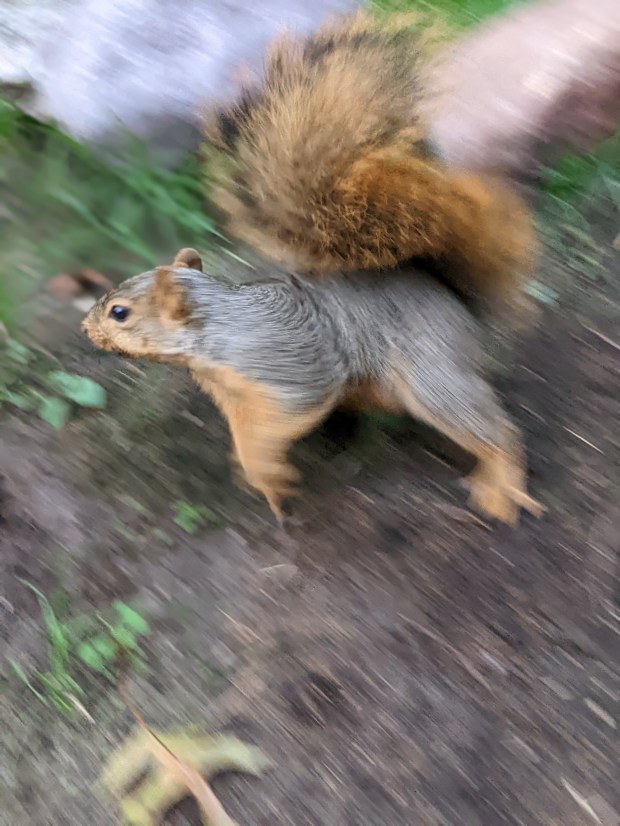
It is the biggest squirrel I have ever seen.

It is not at all like the ground squirrels, or gray diggers as we call them, ubiquitous in Eastern Washington. Those squirrels do not live in trees, but in rocky outcrops and underground tunnels dug entirely too close to the septic tank’s main line. My Mom once hired a high schooler to eradicate said gray digger from our garden by “local means.”

Oh yes, he came, with his hunting license, his hunter’s orange, his rifle, and a lawn chair, sat quiet as a cat for at least two hours on our deck, his back to the house, watching the stone garden wall where the gray diggers were known to idle on warm rocks after stuffing their bellies with strawberries, and when the gun went off, “BAM!!” it scared us all ****less. Mom paid him. He packed up.

The next day, two more gray diggers sprouted from that same rock.

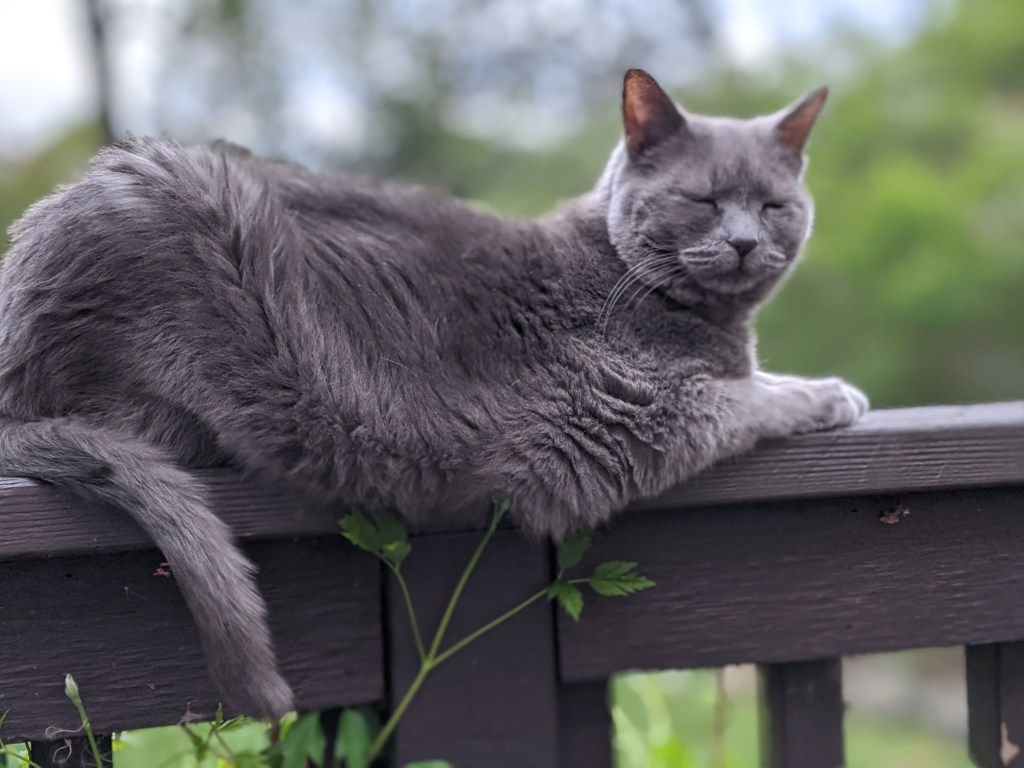
No, this “cat” is the eastern fox squirrel—brash, bold, beautiful, and as big as a cat. It’s as if an artist took a brush and blended the deepest shades of brown, tan, and rusted orange into one. Sometimes they drape themselves over our deck railing and sleep, waiting for someone to paint them. I’ve recently learned there is a name for this. It’s called “splooting.”

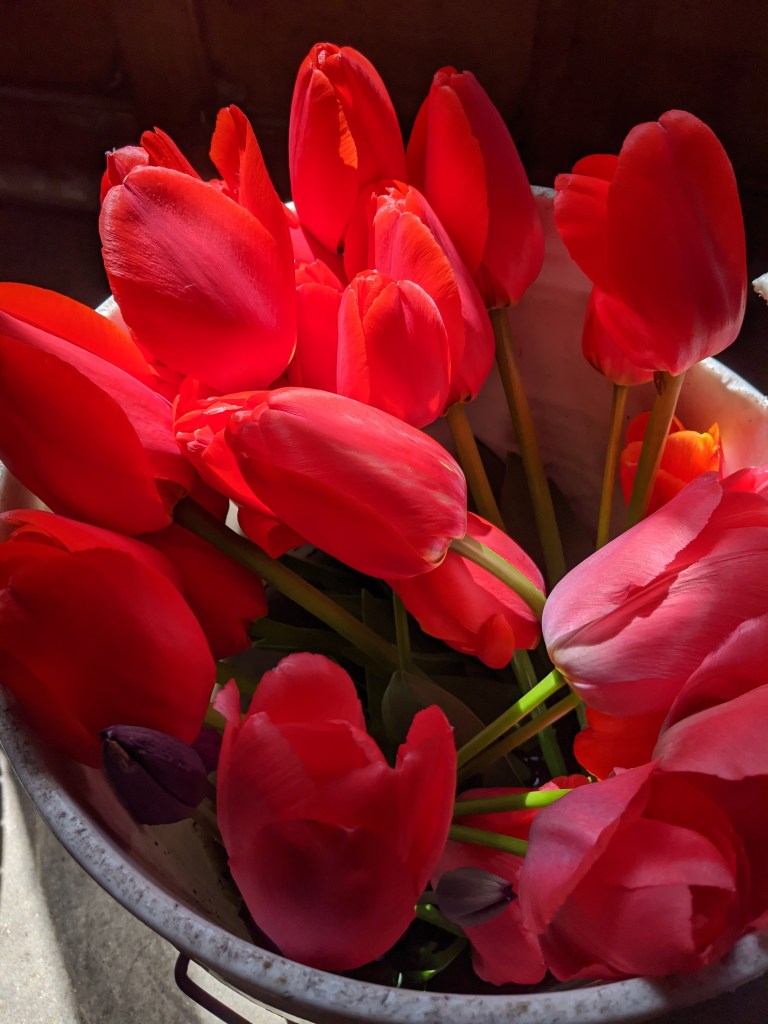
There are other squirrels in Michigan. Red and eastern gray squirrels (which include the black ones, somehow), and Michigan’s northern and southern flying squirrels (though I have never seen one) flitting in the treetops of our backyard and flirting with my newly bloomed tulips. I fire-walled those bulbs in the fall with black netting hidden under fallen leaves, fed them with bone meal and brought them through the last frosts of spring with burlap blankets, only to discover their superb, rich, red blooms decapitated one morning by hungry squirrels.

There are plenty of “local means” in Michigan that I could call.

A Michigan Department of Natural Resources wildlife biologist had this to say in January, “It is not like anything you can get in the store, and it just has a very unique, light taste but kind of a nutty flavor in it.” (Detroit Free Press)

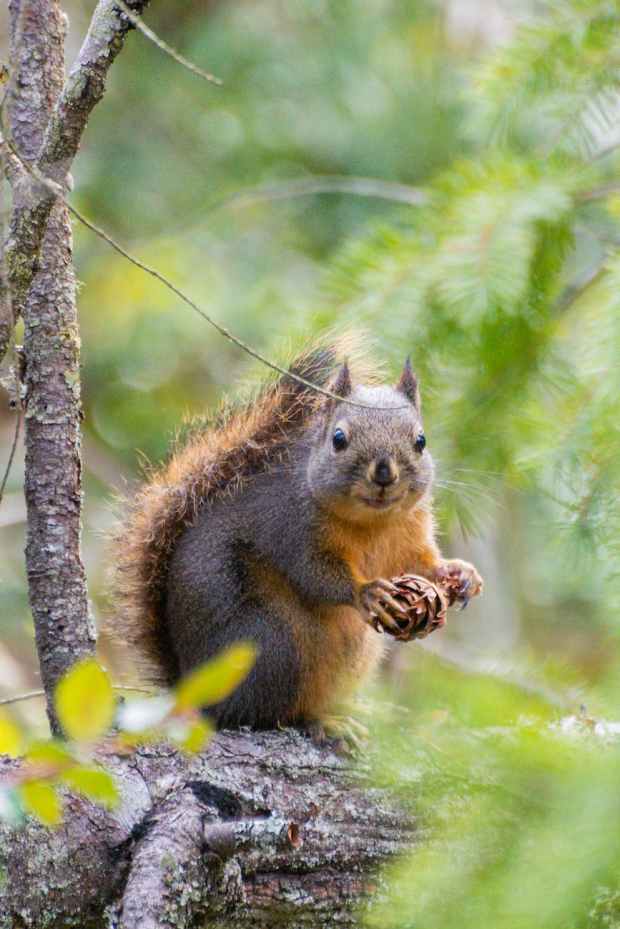
One day, longing for freedom from mothering and hoping to fill that hollow spot that needed my mother nature, I went to a patch of woods near our house. A rhythmic gnawing snatched my ear, and in the crook of a maple branch sat a fox squirrel. She held a pine cone in her clever, furry fingers, and chewed the seeds and spit the chaff out the side of her mouth, which was turned up in a kind of sideways crescent. Eye level with me, happy to let me watch the bright brown fur that outlined her eyes, the perfectly shaped tail that exactly mirrored the curve of her back, her thin lips, moving so nimbly and fast that the pine cone came apart in a blur of precision, leaving shreds behind like leaves on the trail until just a cone-cob remained.

She chattered at me, loudly. I had watched long enough.

Watching squirrels, the Iroquois story goes, taught people how to tap trees. Robin Kimmerer, a mother, plant ecologist and writer, tells the story in her book, “Braiding Sweetgrass.” Squirrels were hungry, and so were people. It was the hungry time—the end of winter and the beginning of spring—so squirrels gnawed at tree branches with their spile-like teeth and licked the sap that seeped out while it flowed up the outer and inner bark from the tree’s underground “root” cellar. Last year’s sunshine for this year’s life.

The squirrel-tapped sap froze on the surface and then—sublimation. It was so cold that water in the sap transformed directly into a gas, leaving a bead of sweeter sap the squirrels returned to for food.

Kimmerer describes how Native Americans around the Great Lakes used long, hollowed out logs to sublimate sap on a large scale. They poured sap into the shallow channel so it would freeze. Then, they would chip out water that was now ice, distilling sap with cold instead of heat to save precious fuel.

Sublimation.

This is the second year that we have tapped a tree in our backyard. Can’t get much more Michigan than the simple fact that we even thought about doing it. And a Silver Maple, no less, not even a sugar one.

As the smoke from our fire curled into our neighbor’s backyard, he did not miss a beat. “Boiling sap?” It does smell delicious. Our arch was rudimentary. The sap, smoky. Ten gallons of sap, 5 hours of solid burning, and 1 pint of syrup. We were as excited as kids when we poured it on pancakes and used it in cocktails. We live in a city of 50,000 people, and our neighborhood is full of maple trees and squirrels.

An urban sugar bush.

Everything is flowing, the tree sap, the blood in my heart, the Red Cedar River, the stories about people and squirrels who lived here for thousands of years before we did, and my gradual understanding of where my family lives, eats, and watches squirrels.

Nothing is still.

Especially not the over-sized squirrel sitting on my deck that destroyed my tulips and taught people how to tap trees.

Michigan smells different…

“Like we’re camping.”

The first positive words that came out of my mouth about our new home in East Lansing, Michigan were olfactory. I sat on the top step of the back deck, our 3-month-old cradled in my arms, back aching after moving quickly and sleeping badly and breastfeeding constantly, and breathed in the spicy, evening scent coming from the exhalation of old trees and the swampy-sandy soil I would soon be completely baffled by when trying to grow anything other than purslane (edible), creeping charlie (I confess I love the smell of it) or sedges (native).

I did not want to be on that step.  

My back to our unfamiliar house, my eyes wandered along the tops of the pine trees concealing the parking lot on the other side of our fence, the human-sized eastern black nightshade and garlic mustard inside the fence and the enormous wild cherry leaning uncomfortably over the fence.

This was not the step I wanted to take.

We had been living in Columbus, OH (Michiganders, stay with me) for 5 years already, and I was ready to move on. True, Columbus had a food scene that satisfied the cravings of two, older-than-30-something graduate students who enjoyed a bite beyond Chipotle. True, our dearest friends lived in Columbus and our two-year-old daughter’s first, dearest playmate: all heartbreak (hearth-break) to step away from.

But if we had to leave, I planned to go west, all the way to the coast where I could stand and spit into the Pacific Ocean on any given day, as my Grandpa would say, or at least a river that ended up there. Somewhere between Oregon and Canada.

Instead, we went roughly 3 degrees North and 2 degrees West from the middle of Ohio to the middle of Michigan.

Columbus, OH:
39.9612 N by 82.9988 degrees W
East Lansing, MI:
​42.7370 N by 84.4839 degrees W

People refer to Michigan as “the mitten.” There’s a reason why they do. You need them. Winters are cold. And long. I’m writing at the end of April and last week we had an inch of snow. No one gets their hopes up above freezing until the middle of May. 

Oh, and Lower Michigan is a mitten-shaped peninsula, a wool-wrapped hand gently patting the frozen waters of the Great Lakes.

Michiganders do that thing where they hold up their hand in the shape of a mitten, fingers together, thumb out, and point to where they live. I swore I would never do that.

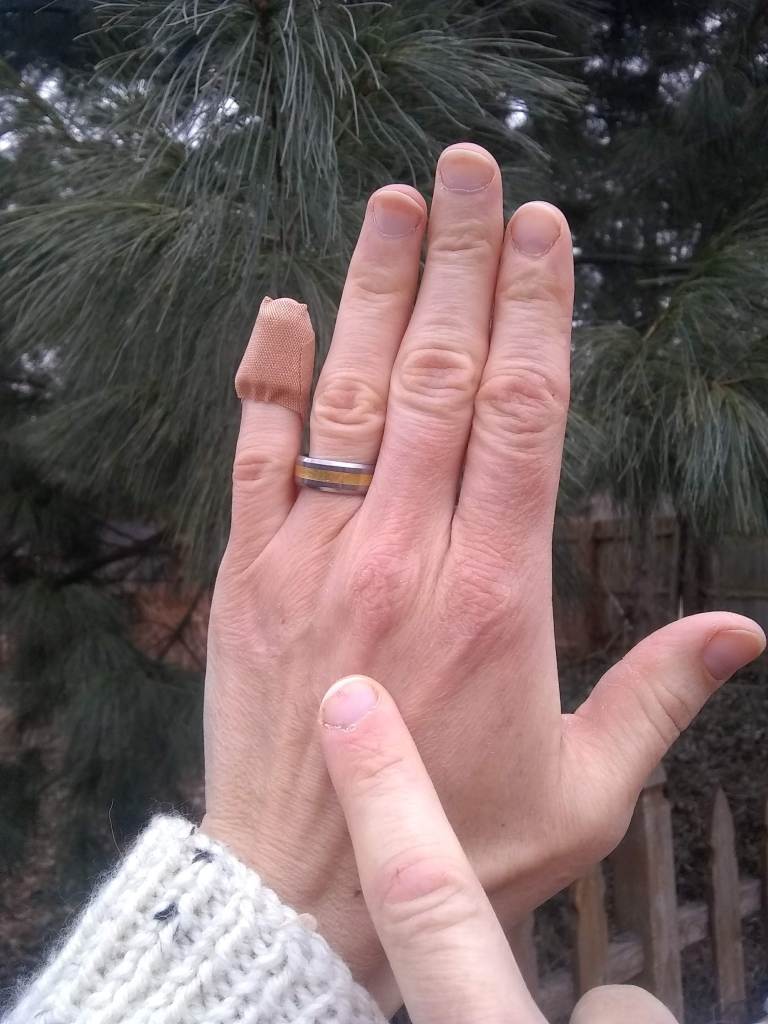
We bought our first home right in the middle of the mitten. Hold out your right hand facing away from you, fingers together, thumb out to the right and put your left pointer finger in the middle of the palm of your left hand. There we are. Dead center. Oops.

When I did the mitten thing for someone the very first time, my thumb, meant to be representing the Blue Water Area of Michigan (think Flint, Detroit, Motown, light houses, St. Clair River flowing into the largest fresh water delta in the world and driving south to Canada) pointed the wrong way. It was sticking itself into Lake Michigan instead of Lake Huron, looking to hitch a ride West (wait, is that right?).

I know, my hand’s backwards

I was inwardly rebellious of the entire lower mitten, not to mention the other one above it.

What’s the big deal with the cherries and the apples? I grew up in Eastern Washington with plenty of apples, cherries, apricots, peaches, pears and grapes. Washintonians also say “pop” instead of “soda” and we never drink either one with something called a Pastie (short “a” sound, not long). Trolls and Yoopers (no comment)? I tried it, and Superman ice cream is gross (Michiganders can throw some at the screen if you like). Can the Great Lakes compare with the Pacific Ocean? Why does everyone casually mention they’re going up North to their cabin for the weekend? What’s up there, and why does everyone have a whole other house, excuse me, cabin? Why can’t I just turn left without being forced to first turn right?! Do I have to love Sparty (my daughter fell in love the minute he mimicked her picking her nose at an MSU baseball game) or the Lions (I grew up loving Seahawks)? Will I need to learn Euchre (my husband’s family plays Pitch, for all you Nebraskans out there) or how to cross country ski?

Not           my            step

I eventually pulled my daughter close, got up from the top step of our deck, went upstairs and opened the bedroom window of our 1948-built home that first night, and almost every night after, because the air smelled good. Even though we lived in the middle of East Lansing in the middle of Michigan in the Midwest, that smell in the air was annoyingly, invitingly, invigorating.

Leave a comment