He was so heavy in my lap.
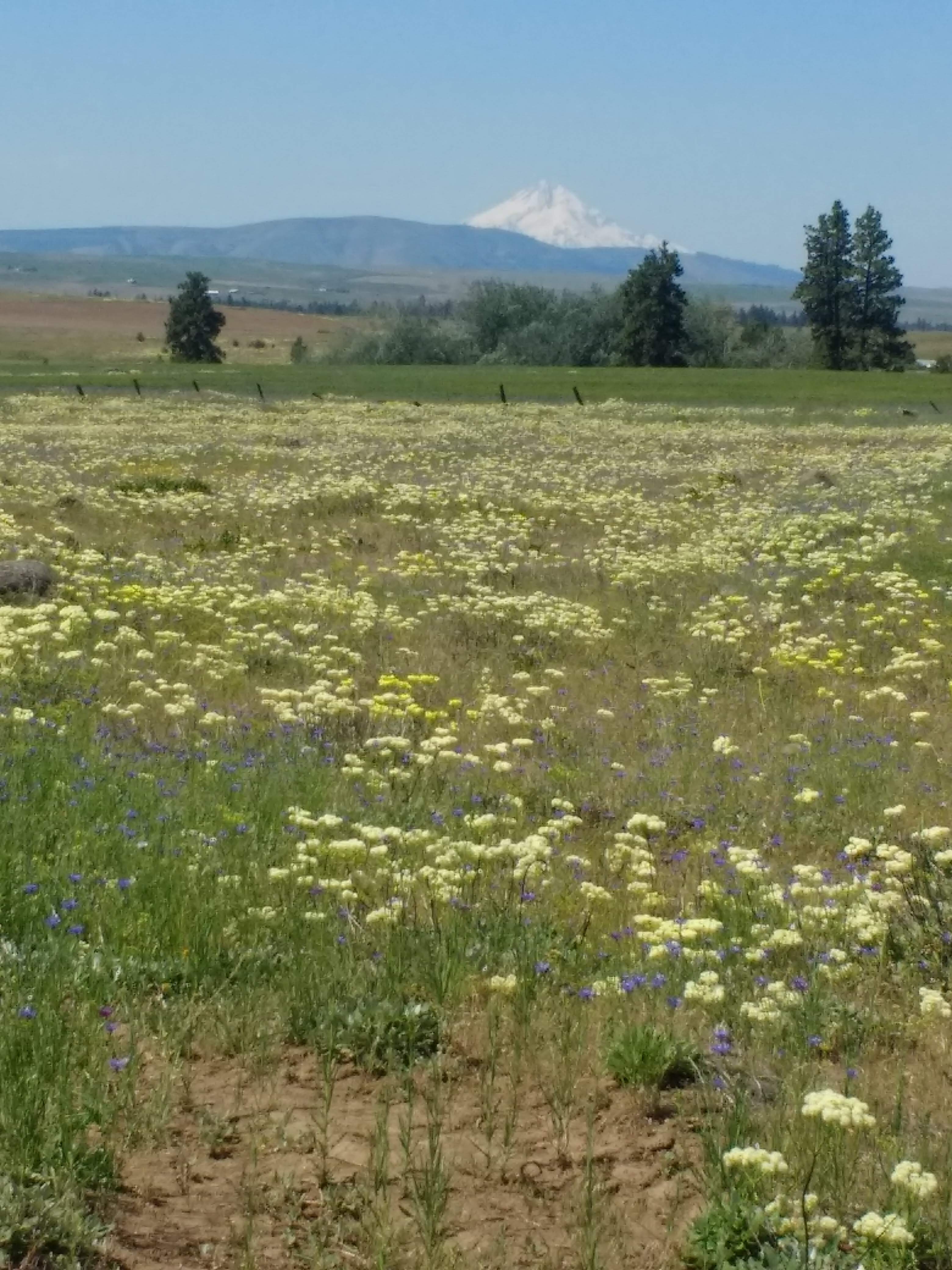
I was in the back seat of our pickup truck. My mom was in the front passenger seat next to my brother who was driving up and over the Old Dalles Mountain Road. It was my dad’s favorite route to take in the springtime, when lupin and balsam root were in full, glorious, purple and gold bloom, bright and vibrant against the dusty silver of sage and the muted brown of soil already cracking underneath their small, but triumphant, canopy of petals.
We were all together, our four-leafed family now plucked to three. There was a gap. A strange, time-warped gap, where I sat mostly in front of a computer screen to work and connect with people but felt the least connection of my life. Life halted, cut off and held hostage by an invisible, global virus, that, if gathered into one place, would fit inside a Pepsi can.
My dad drank a lot of diet Pepsi when I was growing up. It was comforting, that stockpile of cold pop cans in the mud room refrigerator, the sound of the tab snapping open, psssshhcck! on a hot, hot summer day after tilling the garden. Dad’s tanned arms in a cut-off sleeved shirt, his beard trembling a little from his hidden chin wiggling in concentration, his jeans, faded and dirty, his tennis shoes, old and falling apart, leather work gloves worn shiny and brown, and a Mariner’s baseball cap keeping his bald head form burning. These separate articles of clothes hung off of his 6’ 6” frame and contained him. They clothed the certain and habitual gestures of my industrious, earthy, strong parent. This was the dad my eyes were accustomed to resting on and my arms were used to wrapping around for bear hugs. I never had to see or to visit my dad in a mask. His face was always wholly visible, even as it began to slim and slacken and dim.

The work worn clothes, sweat stained baseball caps, muscle, and bone that contained the shape of my dad in the world were burned to ashes and held together in an urn made and fired by one of his long time teaching friends. The heavy weight of last year was lying in there with him, as well as the long wait to take him to his resting place.
I thought he would be light, like ashes caught in an updraft. But no, he was like sand, almost too real. I didn’t want the urn to break, so I held it in my lap. Tightly. I did not want to hold it, either. Was the cancer burned away now? How would he be welcomed by the earth? Ashes are so different than compost. Hydrophobic. No water, no organic material, can attach easily to it. It is free of earthly duty, ready to fly.
Still, I held him in my lap so the jostling from washboards and dislodged rocks on this old, dirt road wouldn’t accidentally break the ceramic container that held him. It took all the strength I had. How could he be so heavy and so gone at the same time? How could I still be so scared of making contact with other humans, of breathing another’s air, and still desire to touch and mingle voice and smile and smell and taste at the same time? How could I have been so far away as he was dying of cancer and not realize how much it would hurt not to hug him at the same time?
Dad didn’t leave me any coaching tips for this.
There was a road sign at the top of the mountain, of all places. Who on god’s green earth would see it, or need it, up there? This wasn’t god’s green earth. It was brown and dusty. There were no other ways to go, no other roads to take, no choices to contemplate. Nevertheless, this road was marked by a green sign that read, “Bryan’s Road.” My dad’s name, only with a “y” instead of an “i”.
Despite the name, we were still unsure whose road this really was. The land up here seemed unclaimable. Too remote and close to the sky to thrust private stakes into it, yet thrust and privatized it was. But the view was stunning, and the sign had his name on it, so we felt justified as we timidly crunched our tires down the barely graded gravel, quietly passed through a cattle guarded gap in the barbed wire fence, and parked out of sight from the rough shod shed just off to the west.
We had arrived.
I opened the door and slid off of the back seat, dad’s weight pushing my footsteps down into the dusty soil. Despite this, I felt wholly untethered, stumbling through sage brush on this high, high, wind-swept hill surrounded in every direction but the east by mountains.
There, to the north, Mt. Rainier, the mountain nearest Seattle, where dad was born in 1946 and lived with his parents, older brother, and younger sister in the house his dad built in the Rainier Valley. He lived there until he left for college on the other side of the state where there were no mountains, just acres of wheat fields. I could see Mt. Rainier’s summit, gleaming like the fond memory of a favorite teacher, peeking above the darkened outline of the Simcoe Hills that made up the northern border of the valley where we lived.
You had to climb this high to see that far.
Sweeping my eyes slightly west I saw the gray, flat-topped form of the once perfectly conical Mt. St. Helens, the mountain that erupted while dad and mom were still young parents, new teachers, first time homeowners, and rained an inch of lighter than air ash on their new deck in 1980 just outside of Portland, Oregon. I was four years old.
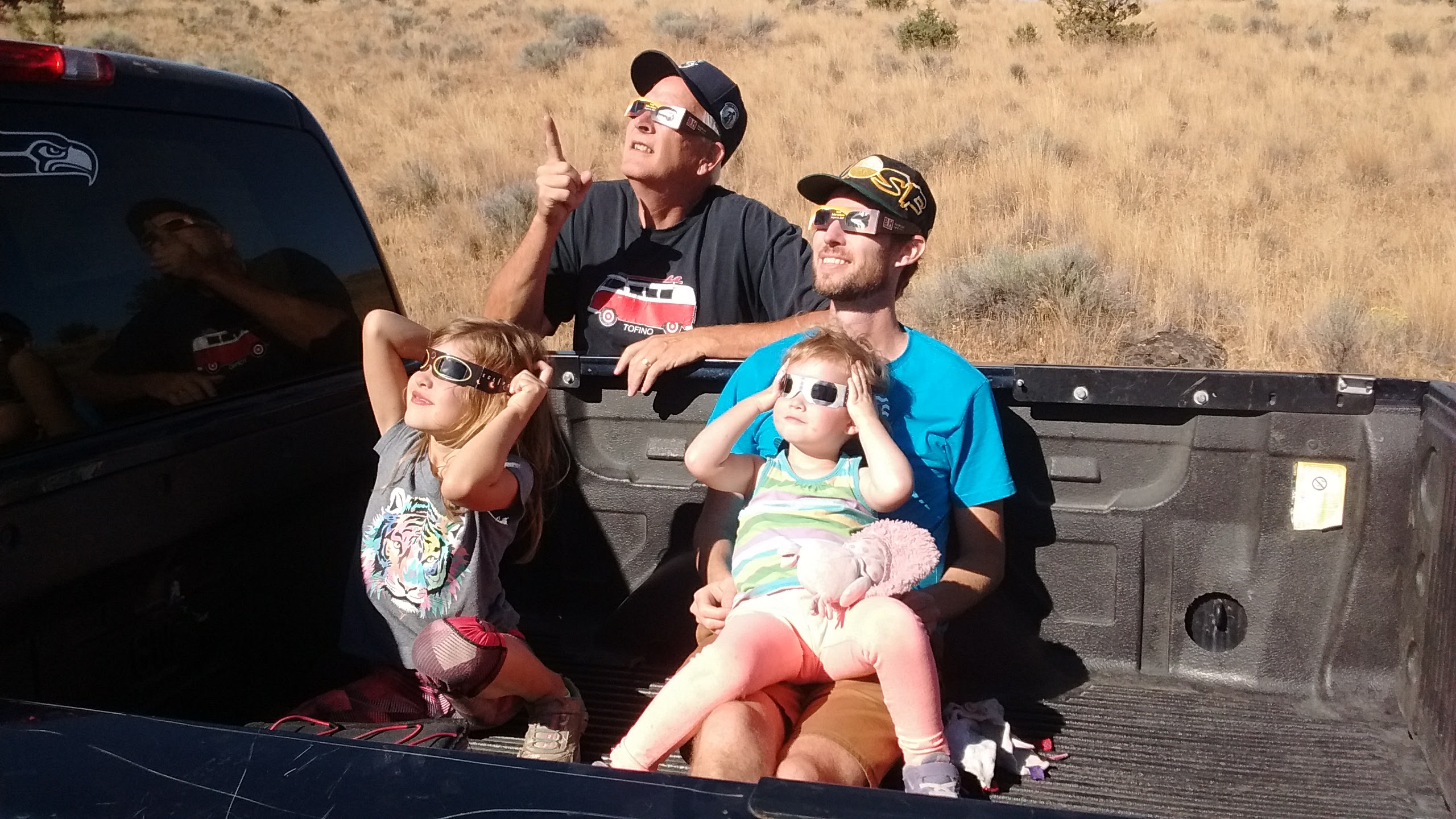
I continued the turn counter clockwise until I was facing south, gazing on Mt. Hood across the Columbia River and into Oregon, a distant but familiar face that so captivated my dad when the blue and white tails of the brightest comet in history, Hale-Bopp, streaked over her summit in 1997 a thousand times brighter and thirty-nine times more deadly than Halley’s comet (which I watched fly from the top of his shoulders when I was 10). Thirty-one years after Halley and twenty years after Hale-Bopp, dad and I drove to central Oregon with my husband and two very young daughters, pulled off to the side of a desert road, plastered paper and plastic glasses to our eyes, and were totally eclipsed for two minutes and forty seconds.
And finally, I turned back to the northwest, to the closest mountain, Mt. Adams, the mountain that would accompany him for most of his life, and mine. The mountain I looked for every time I crested the Columbia River Gorge and returned home. The mountain where we pitched our tent and picked huckleberries in the skirts of her southeast forests in late summer. The mountain our eyes sought out from the back porch of the house that mom and dad helped build to watch winter sunsets kiss her southern slopes and summer sunsets ignite her ancient form from behind, throwing rays of gold and orange and pink into the sky. On early summer mornings, the sun painted her the palest pinks and creamsicle oranges as we drove out to the alfalfa fields to change irrigation lines. Dad spent the last week of his life in my room, Mt. Adams looking in on him through the bedroom window.
From this high place, we could see his life in mountains.
From this high place, we let dad go. His ashes—the twin tails of a once-in-a-lifetime comet, the radiant beams of a sunset, the sudden clear rays of a solar corona—appeared, startling and singular, and then vanished, carried by wind, out over the mountains.


 Motherlife