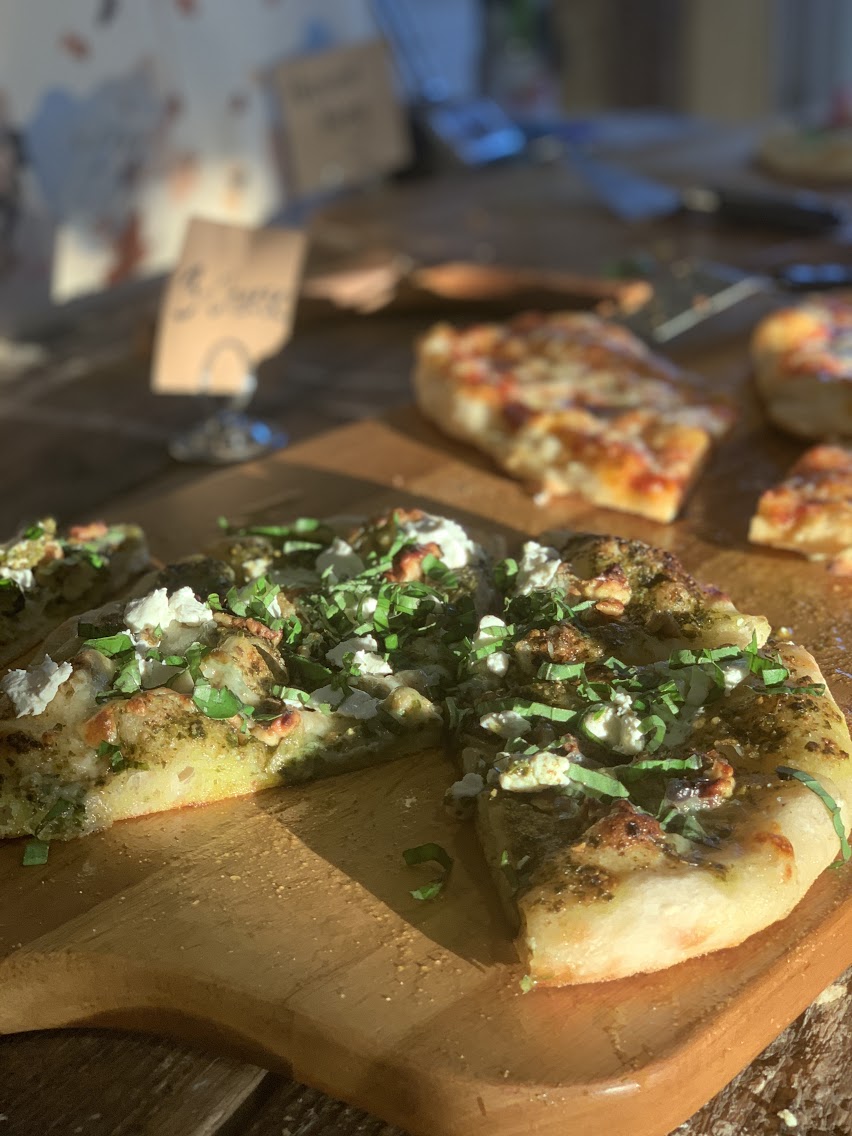
I used to make a lot of pizza. Five every Friday for 2 years and then 40 every Sunday during the farmer’s market season. In all, I made over 1,000 pies in the summer of 2019, and even though I don’t sell them anymore, if you stop by our house on a Friday, well, you’ve come on a Pie Day.
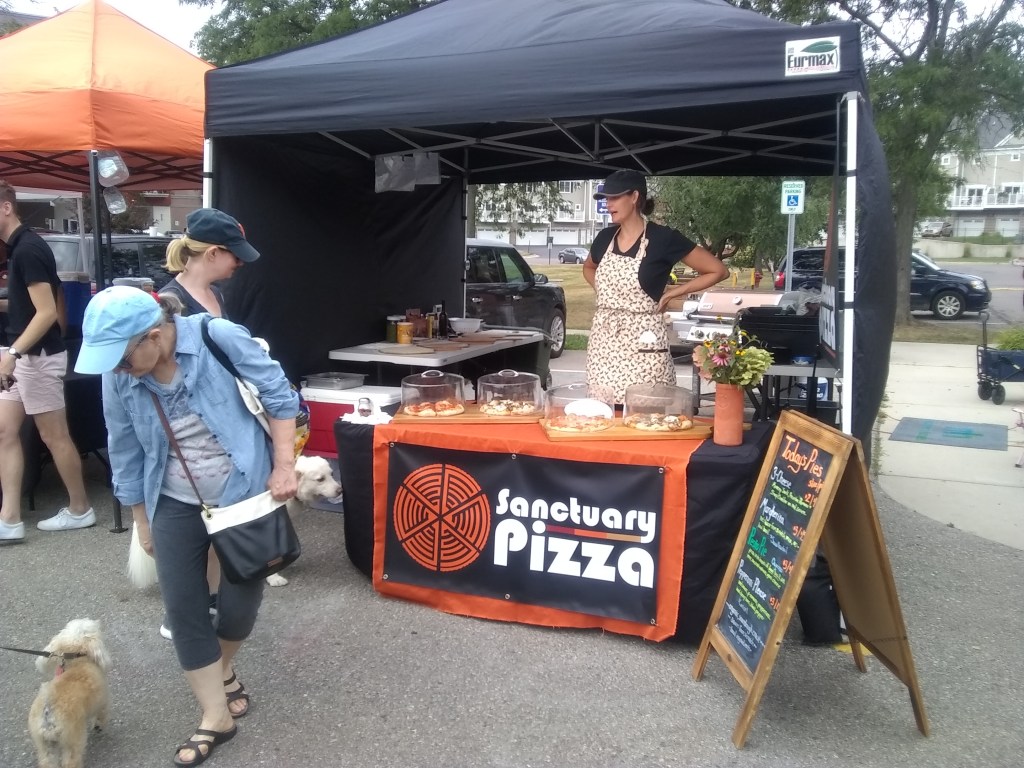
If you are a foodie, local is the magic word. Even better, local organic. Even better, local native.
Let’s start with the crust. Water, wild yeast, and flour. Water, local (Saginaw Sandstone aquifer), check. Wild yeast, local ( floating around my kitchen), check. But let’s face it, local, organic flour? That’s for people in Maine or Oregon who have the passion to make such things possible. Not for a Michigander making 1,000 pies that are affordable. You think in the Midwest you’ll find organic, local flour milled at a local mill?

You know where I’m going. You can. It’s only 18 minutes away from my house.
Ferris Organic Farm. Back in 2018, I ordered whole wheat flour (discontinued, it seems, but millet is so tasty and oats amazing for the body) and some buckwheat from Ferris, and I showed up at the farm in my Honda Accord on a foggy Tuesday. There were a few outbuildings, a place where I could park. The door was closed, but I grew up near my Grandpa’s farm, so I knew not to give up just because people weren’t around. They were probably out doing chores somewhere, and I was conscious that I would be interrupting what is always a tight farm schedule, but didn’t it say to come on Tuesday?
“You should have come on Thursday,” she said, very short and brisk and brusk. She had short, evenly cut hair, tiny feet, and apparently was gluten intolerant. I offered to carry the floury, dusty bags after she checked the order form and took me back into the storage area. The mill for the farm was enormous, and quiet now. The suspended smell of seeds under friction found my nose. I already loved this place.
“You are lucky you found me, otherwise you would have driven all this way for nothing.” I was reminded of Henning, the German farmer I worked for on Lopez Island oh so many years ago, back when I wanted nothing more than have a farm of my own with fence posts I had dug into the ground myself some hot, sunny day. Somehow, in my 20 year old mind, building a fence meant I earned it, owned it. I felt just as happy listening to her kinda-ly chastise me as I felt one morning transplanting tender bean plants in the east orchard after learning I had accidentally planted pole beans next to bush beans and they would cross pollinate, so the bush beans needed to be moved.
Like Henning, she held secrets, years of knowledge that probably went back before she was born, and mysterious tendencies underneath that observant, piercing brow.
Henning used to talk about Norwegian folklore as we worked to make rows out of the field with pick axes (the rototiller used too much gas) for a dry bean experiment that Washington State University was staging at his farm (we had tried last month in the sacrifice field, but without a fence, the dear deer ate his two weeks’ labor in one night.) Day after day we pick axed our way across the acres, him sharing more and more about why biodynamics appealed to his sensibility. It was a mix of traditional knowledge and science, planting on certain days depending on if it was a leaf, flower, fruit, or root crop you’d like to grow. (Today, August 3, the moon is in pisces and it is solely a leaf day, so get that late summer spinach and mache in the ground before tomorrow (a fruit day!)).
I was as fascinated as I was skeptical. Part of me craved this new way of thinking about food. Composting everything in order to create a closed farm system not dependent on fertilizer from outside, herbicides, pesticides, or any other additives. Instead, we made fertilizer from cow horn manure buried under a full moon, dandelions picked in the morning sun just before their petals opened all the way, and chamomile found flourishing in the gravel driveway that we stuffed into deer bladders and let ferment in the ground for a year. The magic was harnessed for the soil, and the soil made celestial foods.
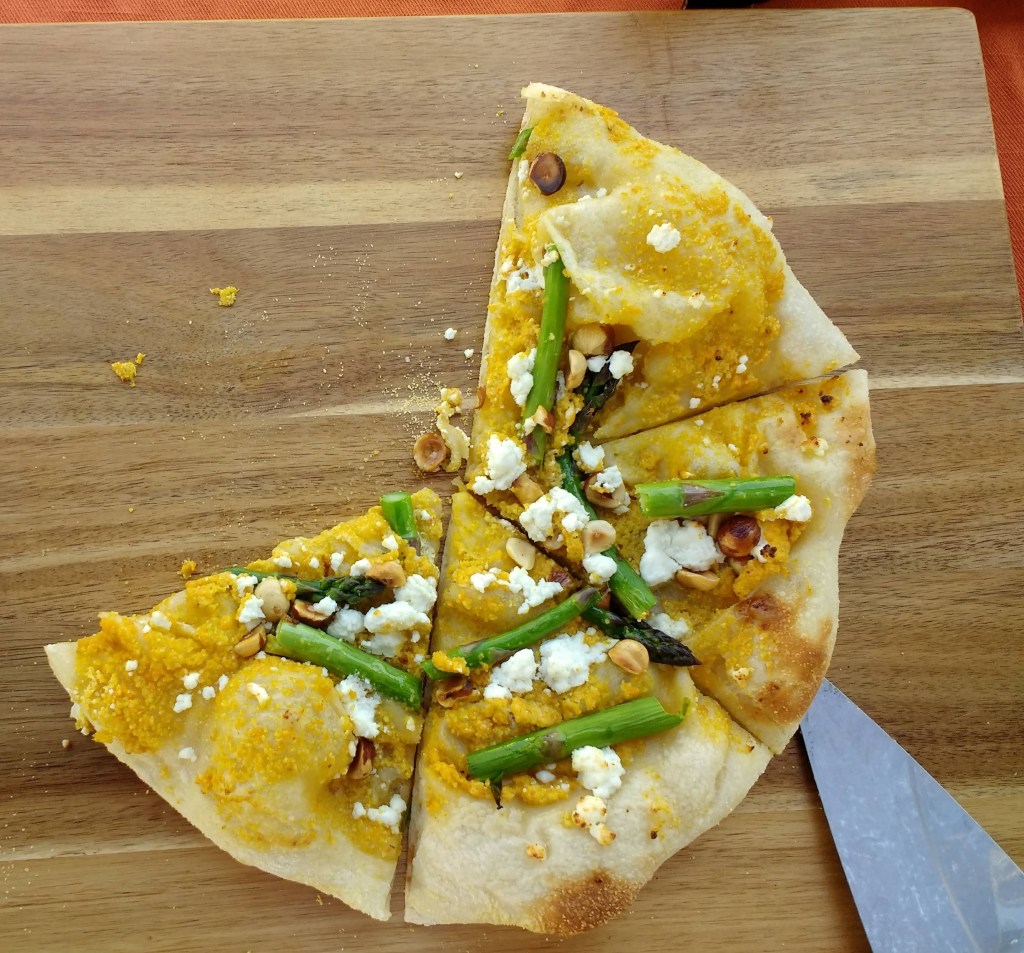
I’ll never know if the buckwheat at Ferris Organics was sprinkled with a brew of nettle tea (delicious), but I had walked on the ground where it came from. I was standing in a space where it lingered for a while after harvest, imbued with the touch of hands, still near the trees where it was planted and raised. (I asked Kroger where their organic flour was grown, but they didn’t know. They don’t know where their ice cream is made, either, but it’s the best ice cream I’ve had).
Listen, you are probably looking at your screen the same way my future husband looked at me when I first met him on Lopez and told him my latest biodynamic task was to “ask” the new tree how it wanted its longest branch oriented (east to west). This is the kind of care and mystical, wonderful potential I want my daughters to see in every tree along their way to school, every beetle burrowed in a milkweed, and every person needing the magic of kindness born of imagination, of empathy. Singing the stories of every life on this earth, not just our own, making space for them to do their healing and wonderful work that weaves in and out of the sometimes silly, sometimes cruel, sometimes beautiful lives of the humans that are here, too.
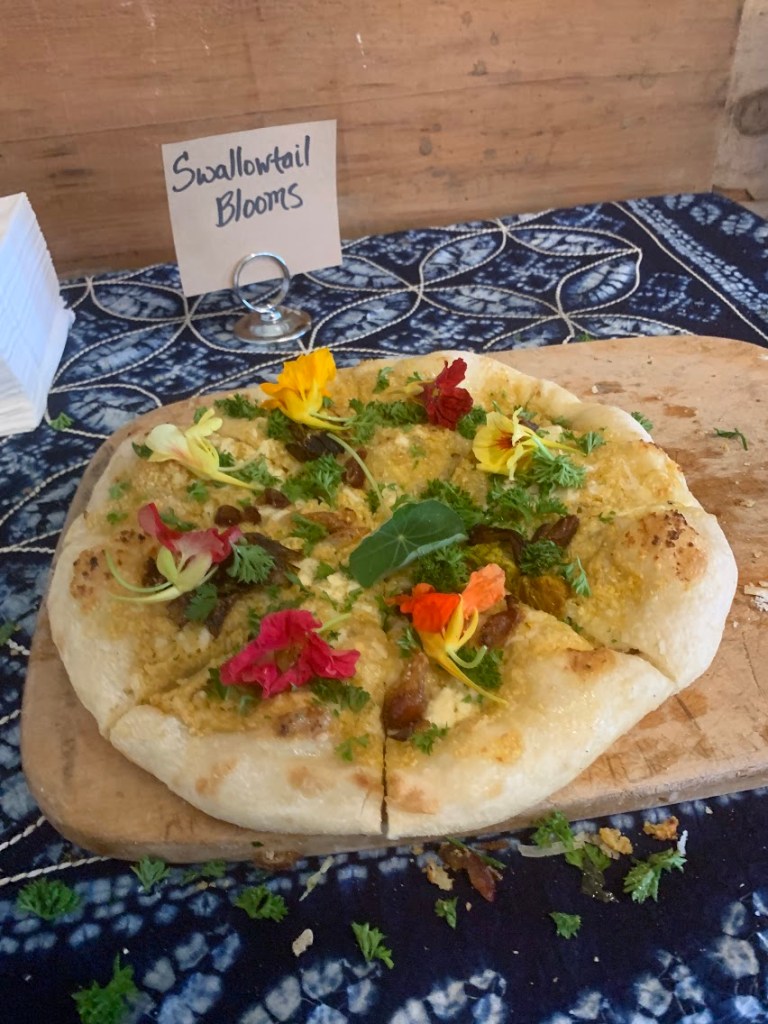
Years after dipping my toe into biodynamics, I was making pizza at Swallowtail Farm for a “pizza at the farm” night. I gave my pizzas some local magic, starting with the crust and ending with the bright, beautiful flowers of squash plants, nasturtium, and basil, a palette of local color and flavor bound for the human palette, to taste colors! To mouth feel late summer! (Wine enthusiasts, you will be familiar with this: biodynamics and terroir and the liquid seasons.) To take into our bellies, hearts, and mental health capacities the energy of the water that opened the seed to cotyledon and nutation, the soil that humbly brought nutrients to root, the farmer that tenderly and gleefully tended its every growth spurt, then with quiet gratefulness cut off its life to feed our own. To mingle our enzymes with foods like water mingles with paint, to paint a canvas of flavors full of light and delight and gratitude and love.
It’s not that far, just 18 minutes away.
 Motherlife