Which Way?

I’ve tried composting lots of different ways:
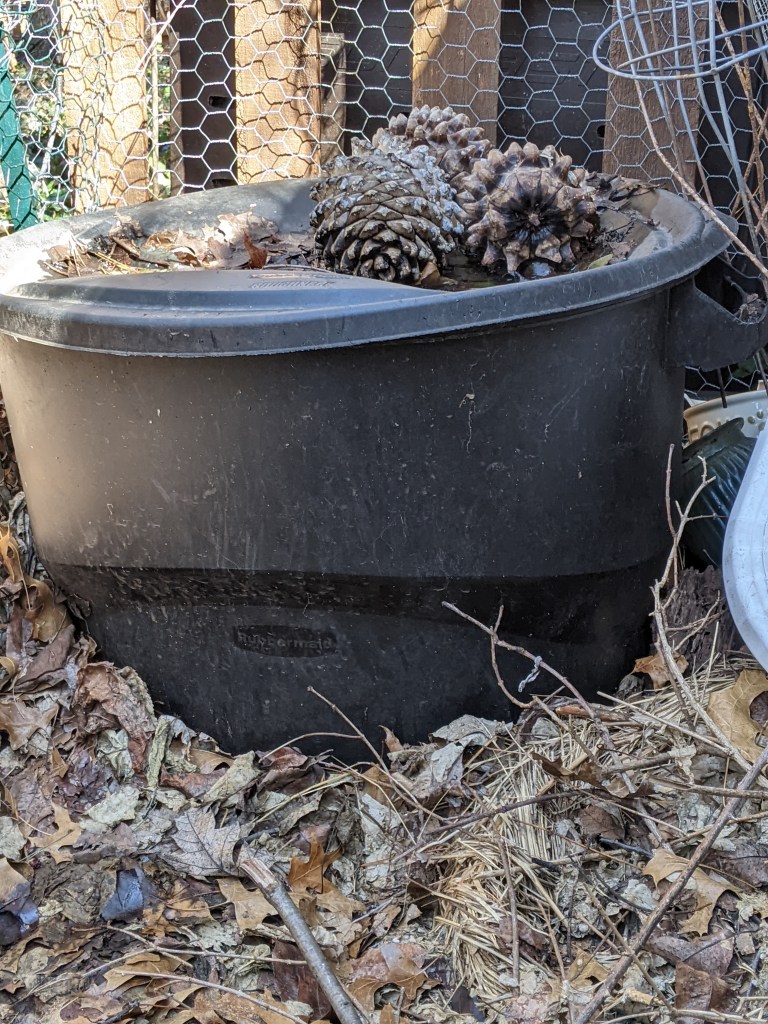
…worm bins made out of Target plastic drawers on wheels, passively aerated piles with perforated PVC pipes buried underneath, plastic garbage bins buried, then filled, lidded, and left for a year or more, long enough to become quite a popular raccoon latrine (left, with three, large pinecone deterrents),

…a three-bin system without the three bins (right) that ends up moving around the space like slime mold, I’ve tried in the garden or just outside of the garden, composting toilets,

…and the longest running compost bin I have–15 years running–the rubbermaid vermicompost bins in our garage, my constant compost companions. Spider webs trail over their sides, spider eggs nestle in their crevices, food transforms in their depths. They froze solid for two weeks this winter, and then surprised me with what can only be described as freshly resurrected worms, happily wriggling through winter leftovers as I peeked in on them just this morning.

I’ve tried composting lots of different things:
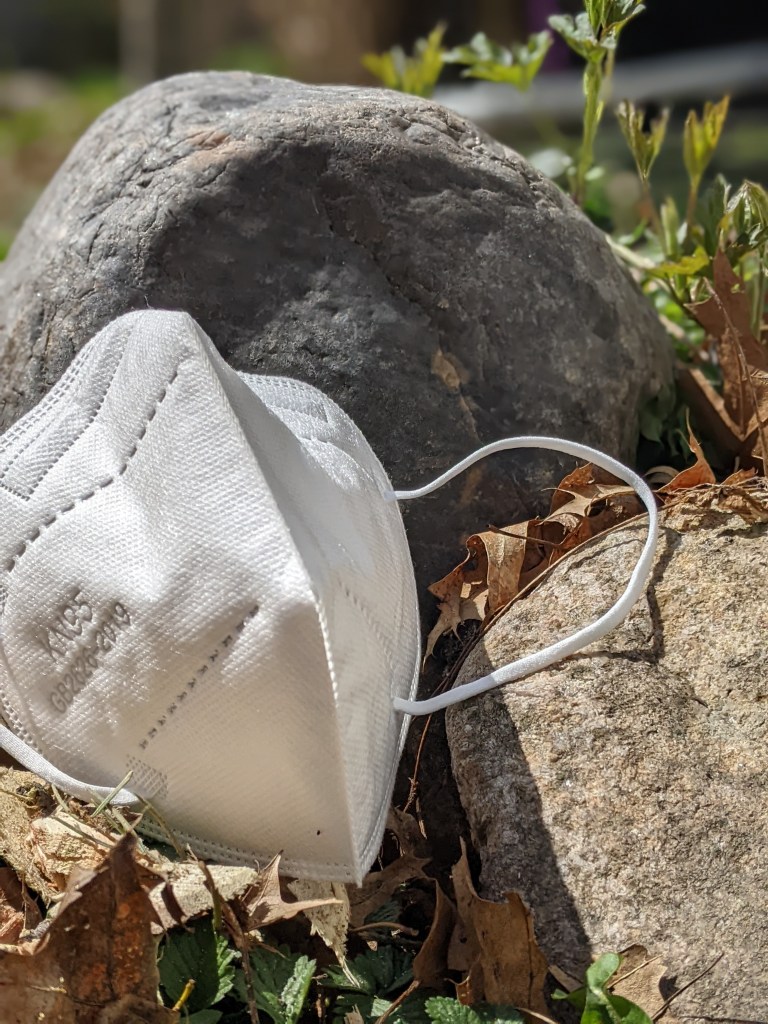
…underwire bras, sports bras, cotton socks, Wonder Bread, sourdough starter, my first n95 mask, coconut shells, teeth, chickens, t-shirts, fabric, lint, hair, underwear, baking parchment, tampons, and fancy paper plates.

Curiosity, playfulness, creativity, despair, and hope fueled all of these compost experiments. What will compost? What won’t? Where is the best place to do it, here or there? Can I compost anywhere? In a box (I haven’t tried that yet), with a fox (a PH.D. student studying biodynamic compost told me she found a fox curled on top of a warm compost pile), can I compost all my socks (yes, but it takes a couple years)?

Compost piles aren’t really definable or measurable, they are only utterly possible at all times and everywhere. 

Truth is, composting is as unique to each person, location, diet, gardening habits, and local available materials as fingerprints and snowflakes. The bacteria and fungus waiting for a safe space, enough food, water, oxygen, and time, will gladly accept what you have to offer them.

So which way? Any way that works in your life, in your family’s life, in your garden’s life, in the life of the tree that stands watch over the compost, in the field mouse that burrows beneath it during the winter or the fox that curls on top in the winter, the old pair of shorts that began their life in the cotton fields of India and ended in your compost, and in the billions of invisible microbes’ lives waiting to transform what you ate into plant food that will grow what you will eat in the future.

Life, death, life.

Compost accepts everyone’s leftovers—grief, boredom, regrets, a new job, the loss of a loved one, sickness, death–lets them stay and change over time. The invaluable result, humus, is the miracle of each person’s leftovers piled, watered, turned, and cured.

When I wake up on Saturday and life feels stable and peaceful, that’s a good time to visit stockpiles of old grass, kitchen waste, leaves, and garden trimmings, and gratefully start a new compost heap.

When I wake up on Saturday and begin to feel the edges of hopelessness, fear, and grief for the earth and humanity creep in and paralyze me, that’s a good time to go outside and dig into the leftovers that have gone cold, turn them, water them, and feel the warmth start to build again. The heat signature of transformation. 

By giving careful attention to compost in any form—gathering leftovers and letting microscopic life forms recycle them—tomb becomes womb. Nothing and no one is wasted.

I do my best to care for and to watch, to be gentle with failure, to make sure my lantern is lit, to visit the tomb early Sunday morning and learn to recognize resurrection when I see it wriggling through kitchen scraps or rising as steam from the generative warmth of a compost pile.

Where and what will you try to compost? Send me a message, and we can be curious and playful together!

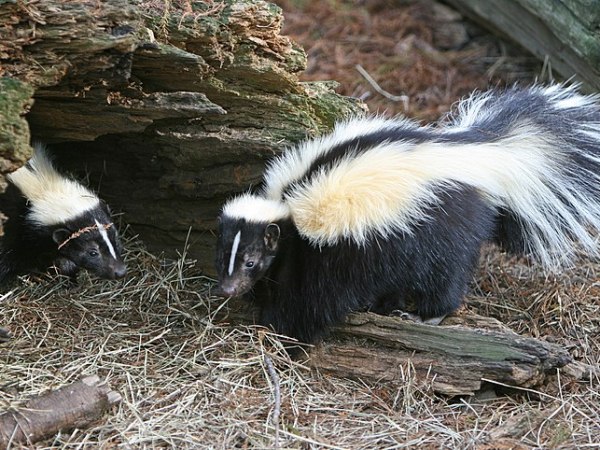
Way to Compost 2: Worms

They are born, eat, breathe through their skin, and burrow beneath us in the darkness of the soil. Darwin described them as “the intestines of the earth” and went on to say that “it may be doubted whether there are many other animals which have played so important a part in the history of the world, as have these lowly organized creatures.”

Lowest of the low, or saints of the soil?

Anatomically speaking, worms are wild. Between mouth and tail, earthworms are divided into more than 150 segments. If you cut a worm on the 75th segment, it will not, as the urban myth suggests, become two worms. The head may grow a new tail, but the tail will not grow a new head. With one, long digestive tract that runs the entire length of its body, worms are born to digest. They are also hermaphrodytes, have five hearts, no need for eyes, hatch three or four at a time from a cocoon, and breathe through their skin.

But not all worms are the same. In fact there are over 7,260 species of worms. Some, like the inch-long ice worm called Solifugus (sun-avoiding), have adapted to living on the edge of icebergs in Alaska. Their ability to provide a burst of energy to their cells in extreme cold may help scientists understand how life could survive on icy moons like Europa.

One of the largest earthworms on the planet is found in Washington State, if you can find one. The giant Palouse earthworm is pinkish white and smells like a lily if you were to scratch its slimy chin, hence the name Driloleirusis, “lily-like” worm. The Palouse worm is a native species that thrives in the bunchgrass prairies, but agriculture has destroyed much of its habitat. Only one person has seen this lovely giant since 1978.


For composters, the red wiggler is the holy grail of humus and is found on every continent except Antarctica. Eisenia Fetida, which means “to stink,” loves to live in loose, rich, warm places like manure piles and worm bins. If they feel threatened, they release a yellow, stinky liquid that deters birds. But if you give them a safe place to live, time, and food, they produce manure, or castings, that contain about 50 percent more calcium, nitrogen, phosphorus, potassium, and bacteria than the surrounding soil. These castings do not stink at all. In fact, they smell like soil and feel like silk. One day, you’ll know what I’m talking about.

Each red wiggler can digest up to its body weight in one day. So, five pounds of red wigglers can eat up to 35 pounds of food waste every week! In economic terms, there is no better return on an investment. Worms are livestock that eat leftovers we don’t even want, multiply themselves twice or thrice every three weeks, and create one of the most balanced, nutrient-rich soil amendments on earth. All life in and above the ground is partly dependent on worms’ ability to transform organic matter into available plant food.

I am a dedicated practitioner of worm wifery, and you can be, too! Here are the basics:

1) A home. Any kind of closed container with good drainage will work. I made one from plywood, but Rubbermaid bins with holes in the bottom work, too.

2) Bedding. Red wigglers need plenty of carbonaceous material to move around in. Shredded paper from the office, a shredded newspaper (after reading it), peat moss, and manure are all good sources of bedding.

3) Moisture. Dry conditions suffocate the worms. If you squeeze the bedding, a little water should drip from your hand.

4) Food. Red Wigglers are mostly vegetarian, and dislike anything acidic like tomatoes and lemons. Occasionally, I throw in some citrus peels and a little leftover cheese because the worms are active enough to eat it up quickly. Like us, worms need carbohydrates. All carbon sources like paper towels, napkins, paper plates, and newspapers go in the worm bin. Crushed egg shells help balance the pH in the bin, and a few handfuls of dirt give the worms grit for their gizzards.

Once all of the essentials are provided, an amazing transformation takes place. A worm bin becomes an entire ecosystem unto itself. I’ve had beetles, springtails, frogs, lizards, spiders, tiny white worms called potworms, and an earthworm or two find their way into my bin. The red wigglers don’t mind the extra boarders. New worm owners are often afraid they might escape out the drainage holes at night, but if the bin is raised off of the ground, the worms will stay in the dark and the moisture. The only reason my worms have fled the coop, so to speak, was because I taped off all the drainage holes in preparation for the moving van (oh yes, my worms have traveled across the country). They must have needed that oxygen, because the next morning, I had little pyramids of worms on the floor, fleeing the sealed bin to catch their breath. I never closed those holes again. To keep critters out, I sometimes put a bit of hardware cloth over them.

It’s easy to take worms for granted. It’s easy, once you have an established bin, to forgot about them completely. But once you have a few thousand of them silently and steadily eating leftovers in your garage or backyard (or inside your coffee table?! Oh yes, it’s been done), their quiet, slow, transformative magic will startle you. Each time I lift the lid of the worm bin and see absolutely no trace of rotten food, only dots of castings scattered across shredded newspaper and clumps of red wigglers hugging food or curled inside eggshells, I am amazed at the absolute transformation. All I needed was a bin, a few worms, shredded paper, and my own food waste for creatures to transform it into the richest plant food on the planet.

Click on the links below to the Tilth Alliance’s worm bin designs. These are the ones I started off withhe plywood bin is for those with access to power tools, or a neighbor’s shop. Mine is still going strong after 20 years!

This “off the shelf” bin is much easier to make. Instead of the “O-ring” and metal valves, and metal vents, I simply drilled holes at the top for ventilation and a larger hole in the bottom for drainage. Tilt the bin towards that hole and place a container under it to catch the worm juice. This has been in my garagin and going strong for 10 years.

Questions? Share them with me! I’m happy to help!

Go back

Your message has been sent

Warning
Warning
Warning
Warning.