
When we create a sourdough culture from seemingly inert flour and water, and coax bread-friendly yeasts and bacteria to take up residence in our little bowl of fragile culture; when we keep the culture in harmonious balance for years, fresh and vigorous, constantly renewed, and bake with it again and again, it is easy to feel like an alchemist, and more: For rather than needless gold from base metals, the baker’s alchemy is in the bringing together of ingredients that on their own cannot uphold life, and transforming them into nourishing, life-sustaining bread. Jeffrey Hamelman, Bread, A Baker’s Book of Techniques and Recipes

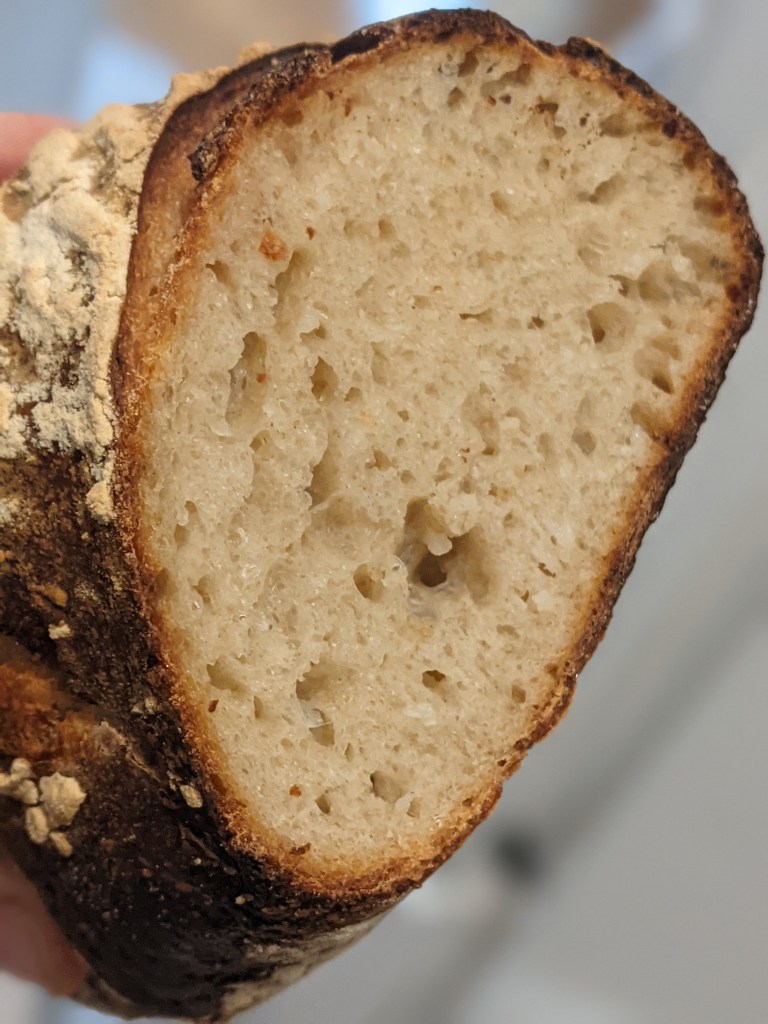

The story goes that there was a group of friends about 2,000 years ago, men and women, who broke and ate bread together three times a day. Sometimes, they grilled fish by the lake at sunset and told stories by firelight—lost sheep found, lost coins discovered and lost again, children, thought dead, who returned home, people who buried money instead of investing it. They’d been doing this for a couple of years—eating, traveling, meeting people, talking about justice and love, how to fulfill the law rather than punish people with it, and what it meant to be a friend and a neighbor. When people were sick, mentally ill, or dying, this group of friends was not afraid to touch them, heal them, and eat with them.
Word of mouth spread fast about this remarkable group. Sometimes people from the inner city would walk beyond the safety of their city walls and into the hills to find them. This group of friends welcomed every part of them—their sadness and grief, their poverty and isolation, their longing for justice and happiness and peace—and gave them refreshment in the form of bold, beautiful poetry that filled their hearts and also in the form of woven, bottomless baskets of bread and salted fish passed around late into the night to fill their bellies.
They started to gain a following, and their leader was invited to important dinners with city officials who tried to make him say something incriminating over wine. His eyes twinkled over the rim of his upturned glass, and as he put it down, his lips spoke kind, but hard, gut punching words, about loving others as you love yourself. This group of friends ate with everyone who asked, went to weddings and funerals and birthdays to share food and friendship. No one was told to leave the table. Everyone was invited.
Then suddenly, at one of their many meals together, he told them not to be afraid, but he was going to die. And then he was going to come back.
—
The story goes that she rode to the West Coast in the back of a wagon on the Oregon Trail, my mother, and survived until the technology to freeze-dry her cells came along, allowing anyone, anywhere to resurrect her by mail. Mail order loaf. That was 22 years ago, and she lives on inside of my refrigerator, my sourdough starter, my mother of countless loaves and pizza crusts.
In a kitchen where wild yeast is cultivated, the air is infused to life and the warmth of the oven becomes a sanctuary for wild baking. In this kind of kitchen, microscopic, invisible beings float in the air, in the umwelt of the room, invited to live and multiply in earthen vessels, to be molded into a sacrament, and to be sacrificed as an example of what it looks like to love ourselves and our human and more-than-human communities through life and death—a reciprocal relationship.
—
Just after my 40th birthday, I took an antibiotic for an infected spider bite, one I had taken before for two bouts of mastitis—Keflex. It was one too many times. The antibiotic swept away so many good gut bacteria that my colon was colonized by Clostridioides difficile, or C. diff. Imagine a long, pill-shaped bacterium with squiggly threads exploding from its body like jolts of electricity. The microbial imbalance swung in C. diff’s favor and allowed the tiny bug to multiply rapidly, tormenting me from the inside and throwing my body into turmoil. Nothing I ate or drank was accepted. The riotous noise from rapidly growing C. diff drowned out all communication between my digestive system and my brain. I was being held hostage by an invisible microbe that grew recklessly, pummeling my organs. There were times, late at night after hours on the toilet, that I thought maybe this is what it felt like to begin to die.
I needed more antibiotics to destroy these “bad” bacteria, but they destroyed the “good” ones, too. To help them, I ate prebiotics, a word one of my wise, good friends taught me. Prebiotics feed bacteria and fungus already living in the gut so they can thrive. Red seaweed, called Sargassum in her home country of Jamaica, was a great source of this gut food. My friend brought it to me in little bags from Canada and showed me how to soak it for a day until it became like gel, mix it with coconut milk, nutmeg, and bitters, and drink it. Slowly, I regained a more balanced microbiome, but something remained off kilter in my mind. My mental health took a downturn into extreme anxiety and obsessive thinking about dying. While I ate at the table with my two daughters, while I played co-ed volleyball, when I heard the heartbeat of my husband in bed, I thought, “We will all die one day. How soon?”
—
This group of friends broke all the rules, even laws. They healed and ate and encouraged a way of life that undermined those in power. Their leader knew this, but he went into the city anyway, to teach, to overturn money-lending tables that used religious rituals to make a profit. The last time he visited the city, he arrived on the back of a small donkey, and he was found guilty of blasphemy and sentenced to die.
The night before all of that happened, you guessed it, he shared a meal with his friends in the upper room of a house at a big, long, table. He said the strangest thing to all of them just before they ate. “This bread,” he said, “It’s my body. When you eat it, I will become a part of you, and every time you eat it, remember me. This bread is me, and I will live on in you every time you eat it.” He died the next day, Friday.
For those of us who have heard this story over and over again from the time we were children, repetition drains the strangeness right out of it, leaving the story empty, lifeless, without substance. But for those who haven’t heard this story before, it sounds monstrous. Cannibalistic. Why would anyone ritualize eating the body of their teacher and friend? How can entire church congregations do this without a second thought? Why would they want to be reminded, every time they ate, of death?
—
After C. Diff’s rampage of my colon calmed (it will always be there), I continued to obsess about death. I thought my marriage was going to die, too. Old, familiar habits erupted like mushrooms. I didn’t want to touch or be touched, to love or be loved. My two young daughters, 3 and 5, took all the emotional strength I had. At the end of the day, my physical coffers were dry, and there was nothing left for me or my husband. I was growing frayed, thin. I was taking antidepressants that were supposed to boost my sex drive, but they only pushed me into spiraling guilt and fear. I asked people I trusted about dying—were they afraid of it? Did they think about it very often? It was all I could think of. The finality. The loss—of myself, my love, my daughters, my parents, breath, and body.
—
I ignored her for a long time. Long enough for her to turn slightly green in color and lose all of her structural vigor. Without refreshment, my mother broke down every starch available into sugar, used her yeasts and lactic acid bacteria to ferment them into oblivion. And what was the result of this fermentation? Carbon dioxide, organic acids, and alcohol. If I starved her, she got hungrier and hungrier until a liquid layer of alcohol sloshed around her flaccid form. Hooch—made of alcohol, water, and dead yeast cells. But she wasn’t dead, not yet. She just needed to be fed.
—
The antidepressant and C. dif. left me spent. I was so empty I longed to be filled. That’s when I remembered to eat. My body needed food. I needed to eat with others. I listened to my bruised but healing gut. I knew it needed beneficial bacteria, yeast, and fungi that regulated not just my digestion, but my moods, my emotions, and my energy. I needed those invisible helpers inside and out.
I started to make sourdough pizza.

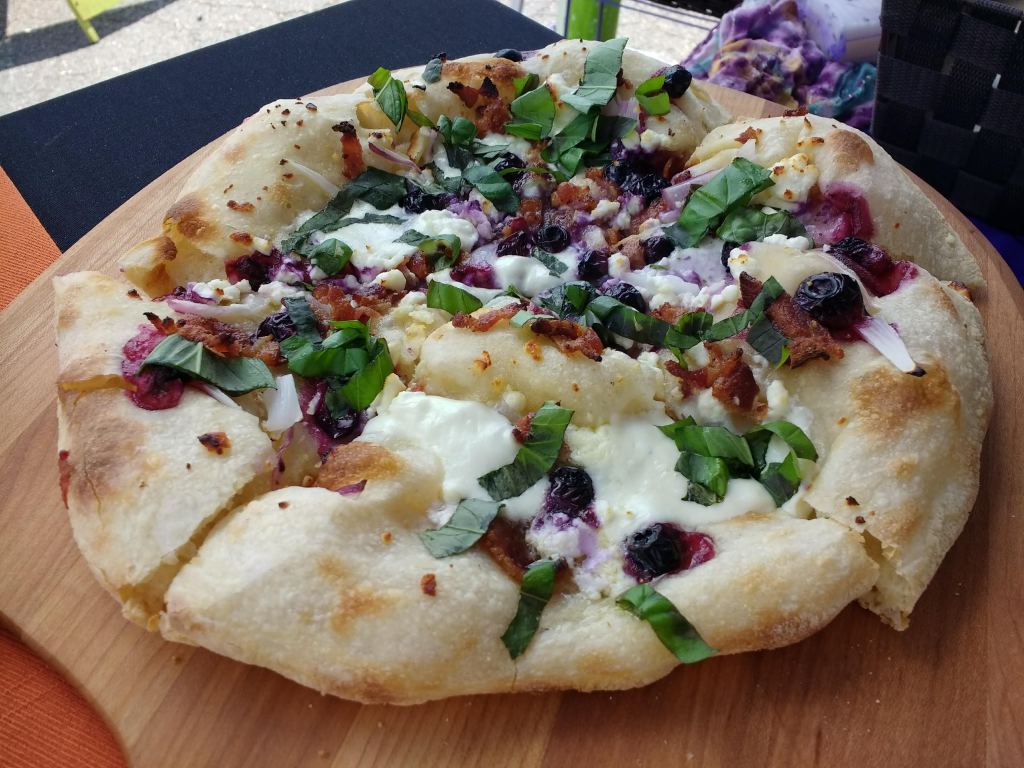
With the help of my mother, I fermented water and flour into a living dough. Goodness bubbled on my counter—uplifting and aromatic. When her countless progeny peaked in number, I added salt, more flour, and more water, separate ingredients that gathered into a whole as I kneaded rhythm into their lives—stretch, fold, push, turn. Threads of long gluten strands spun by hungry yeasts were knitted and woven together by the movements of my hands. The dough responded to my touch by rising in the bowl, then springing high and vibrant in the oven, exhaling their last, fermentatious breath as an offering to caramelize and leaven the pizza crust, releasing aromas that woke up dormant memories—my mom making rolls for thanksgiving, my grandma baking birthday cakes, the Christmas morning almond pastries my dad loved, and something much older and deeper: gratitude for food, for a delicious life.
—
When he broke the bread and told his close friends it was his body on Good Friday, it wasn’t just a metaphor. He was inviting his friends to experience life and death differently, to taste how connected the earth’s body was to their own, and to acknowledge the microscopic lives that ferried those connections from soil to seed to bread to body. Microcosmic connections. It was frightening, monstrous, confusing, and liberating. His words were transubstantial, transformational, a flow.
—
I invited friends to come and eat pizza. And they came. Every Wednesday I prepared the dough so that every Friday I’d have pizza crusts ready to top with delicious, in season colors and flavors. We called it Pie Day Friday. Sometimes 20 people came, and we had to supplement my pizza with Dominoes. Sometimes just 1 person came, and we had leftovers to send home with them.
Our Pie Day Friday group fermented like dough, growing in numbers and weaving connections. Friends met new friends. We talked about food and life. One friend started their own health food delivery business and hired some of us to work for him. We were our own Vagus fibers, spreading out to each other, connecting our minds and our stomachs on this one, central day. This good, Pie Day Friday. I began to eat again, to de-center. To be grateful, not perfect. To let go of control and be reckless, even just a little. It was frightening and exhilarating! I was dependent on a billion gazillion tiny microbes I could not see, hear, touch, or taste, but their work and taste and texture was evident in everything around me.

My fears about death began to fade as I kneaded life. I started a small pizza business. For two years I sold sourdough crust pizzas at farmer’s markets, fermented for days, topped with fresh ingredients from local farmers, offered to anyone who was hungry. I called it Sanctuary Pizza. It was a busy and good time, but it came to an end. It stalled with the death of my dad and finally died with the pandemic, but my sourdough lived on.
—
Wild yeast. More animal than plant, lacking in chlorophyl, able to survive in the dark, without plantlike veins or animal like tissue, ancient but earthy, a delicate, crumbly, ethereal substance that contains a single cell. A planimal. A living cell that does what many cells do. From their skin to the center they send signals, create thousands of proteins, frame their walls, and repair their DNA.
Humans and yeasts are related. Billions of years of evolution, from yeast to human, and the conservation of genes is so close that we can swap DNA like trading cards. We learned about the human cell cycles by studying yeast. Yeasts taught us about being human. I consider yeast, do they consider me?
Yeast, yeast. A round fungus. A Eukaryote, a single celled organism with a true nucleus and features of animal cells. A planimal.
There are more out there than we can imagine.
Wild yeast, in a batter, 6,000 years ago in Egypt, gave rise to, lifted up flat bread. Alma, soul, spirit. It took what was ordinary—water, flour, and salt—and transformed it. It worked on the gluten strands in the flour, unraveling and unraveling, until they became long and flexible, broken down into a more digestible form. I placed wheat berries, ground, in water, and they called to the yeast, called them to the roundness of their bodies, to come and live, to give spirit to lifeless flour and water. To sweeten, to ferment, to resurrect.


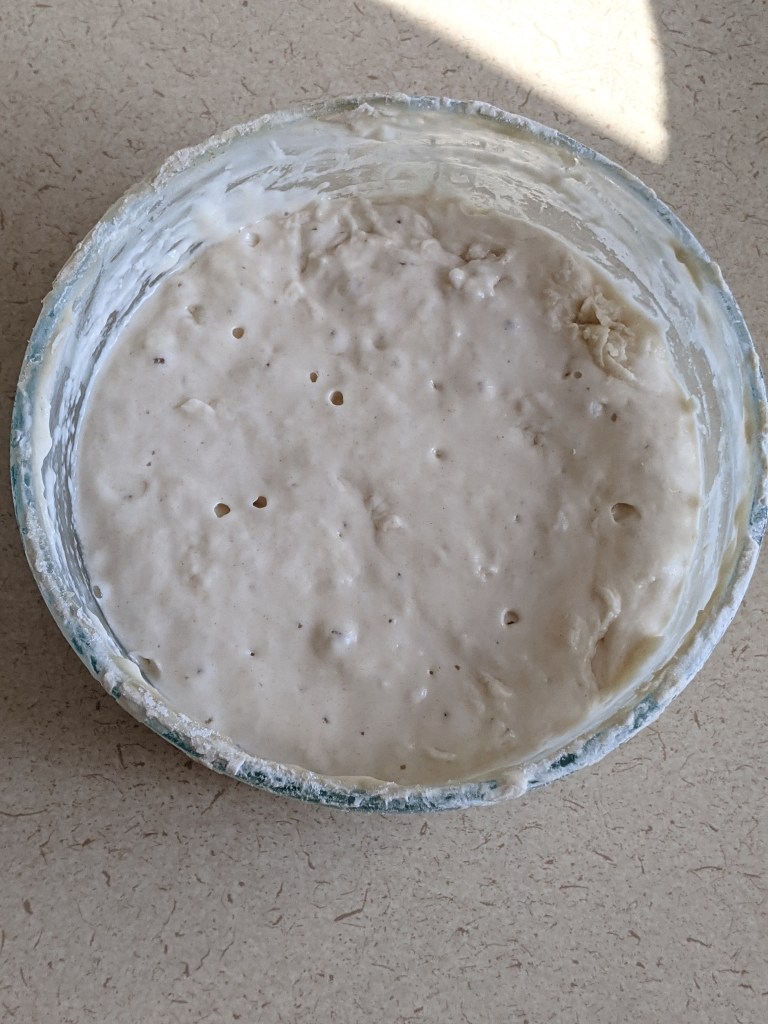
Find an empty bowl and put flour and water into it. Say a few words of invitation to the microscopic life forms swirling around in the air molecules, on your counter, in the breath you use to speak the prayer, spell, incantation, or song. Invite these lives to come, eat, drink in this bowl waiting with food and water, and with a surety born of billions of years of transforming what we consider death into life, the fungus and bacteria will oblige.
—
The story goes that after he died, a woman who came to anoint his body with spices found him standing outside of the tomb and held him and cried. After that, some of his friends who had been hiding, terrified they might die too, saw him, touched him. And a few days after that, he walked along a road with two friends, and they only recognized him after he sat down to eat with them and broke bread.
—
I thought I knew what death was, and so it terrified me. But the truth is, I did not know. My only experience of a kind of resurrection happened when I kneaded my lifeless mother back to life as rising dough, or felt what was once horrible kitchen scraps become rich, crumbly compost that ran through my fingers like silk. I stood in awe as I watched the luna moth emerge from its cocoon, and caught my breath with the first snowdrop that pushed up from the frozen ground.
“Do not be afraid,” he said. With friends around our table, with my family, community, and more-than-human friends close, this story, these friends eating together, was no longer an empty vessel, stale and lifeless. It was a recipe for transformation.
We are constantly evolving and changing, the earth, bread, compost, humans. I felt this unifying mysticism as I stood in the middle of a Floridian airport and people streamed past me. I had spent the last three days listening to the stories of minority and black farmers from across the United States. They were old stories, buried by history, that flowed into light. They connected the world. We shared stories and ate food together. My body resonated with the vibrations that connected us all, one human and more-than-human organism, one fantastic, frilly skirt whirling through space, dancing and delighting like a human fully awake, like a goddess.
—
No matter how the story was and is told, bread is at the center.
Broken. Shared.
The body.
Broken. Shared.
Bread taken into the body becomes our body.
To live, we must die.
Mystery of mysteries.
Microbial transubstantiation.
Note: You can buy the same starter I have had for over 20 years, Carl Griffith’s Oregon Trail Sourdough Starter, by mail (they happily show you how to address the return envelope) like I did in 2005. Just go to: https://carlsfriends.net/source.html.
Once you have invited wild yeast into your home, it will take on the flavors, smells, and bacterial and fungal families unique to your dwelling’s life and breath. It will come as a part and become a whole to your house and your daily and weekly rhythms.

 Motherlife