I'm Sarah--mother of two daughters, 11 and 9, born in Oregon, raised in Eastern Washington, played basketball and learned a little Japanese language at the University of San Francisco, volunteered as a youth minister in Adderbury, England, farmed on Lopez Island (where I met my husband from Nebraska), farmed some more in central Ohio for Dominican Sisters, graduated from OSU's college of food, ag and environmental sciences and moved to Michigan. I bake sourdough bread and pizza, like to run into neighbors outside on a regular basis, only knit if the weather is cold, and love the feel of my heart beat and the burn of my lungs after paddle boarding in a lake or working outside, especially after turning the compost pile. My husband is a researcher and instructor at a state university, and we often dream about sailing with friends. Maybe I'll start making Christmas presents early this year, but probably not.
about this plant. It’s one of the most beautiful, prolific, and enormous plants that actually grows in our backyard in Michigan. Pokeweed. There are more than one in the yard now, but the one that sits right next to the garden path, well not sits, more like towers, is about 8 feet tall. I did not plant it. I’m pretty sure a bird did when they pooped the seeds onto the soil, along with instant fertilizer.
This pokeweed has a thousand times more berries than the thornless blackberry I planted 9 years ago and have so far reaped a total of 3 berries from. (Not joking. We went sailing in the North Channel two weeks ago [yes! a post for later!], and when we returned, every last blackberry, apple, and peach was noticeably missing from the trees and brambles.) No harvest for the humans. For the raccoons and squirrels? All kinds of fruit cobblers and sweet treats.
In Washington, the weeds in my Mom’s garden grow low to the ground and stubborn, fighting for their spot rather than taking it over with such exuberant eagerness. Weeds in Michigan are definitely not shy–or benign.
Every part of American pokeweed (Phytolacca americana) is poisonous. It’s main stem is the size of a young tree’s trunk, and its taproot probably reaches down another foot or so, firmly anchoring its succulent weight in our sandy soil. From most to least toxic: roots, stems, leaves, berries. When it’s young, some people twice-boil the leaves and shoots for poke salad.
It looks out of place, too abundant, too red and purple and loud. No wonder it makes people uncomfortable.
There’s a lot online about how to manage pokeweed in an agricultural setting. Crop rotation, moldboard plowing, and disking. All techniques I studied as a graduate student at Ohio State University as I talked to organic farmers about the ways they managed the weeds in their fields without chemicals. Only pokeweed isn’t really a “weed.” It’s native to this part of the United States.
I recognized it this spring, when the long, thick stand of flamboyant green leaves literally shot up from the soil early and strong.
I let it grow.
A quick google search, “Should I remove pokeweed?”
“Yes. If pokeweed grows in your landscape, take steps to remove it.”
I’ll tell you what those steps are, because two of my neighbors and I volunteered to weed the community center’s garden beds during Covid and pokeweed was standing front and center.
Step 1: Put on gloves.
Step 2: Bring your best pruners.
Step 3: Attempt to pull it from the ground. When that fails, along with your back, weild best pruners and attempt to cut it off a few inches above the soil.
Step 4: Go back to shed to get shovel and large pruning shears, or possibly a hacksaw.
Step 5: Manage to finally mash/cut the main stem. Begin to dig around taproot.
Step 6: After struggling for 15-20 minutes to pull up taproot, cover what remains with soil and call it a day.
Step 7: Repeat the following year.
In Michigan, pokeweed is native. In Washington State and all along the Northwest Coast, pokeweed is invasive. It’s the same plant, poisonous to people, livestock, and pets. In Oregon, it’s considered an “Early Detection Rapid Response” species! Danger! Danger! In one particularly distressing case, “The berries stained our white dog purple.”
When it grew up to my waist, about 36”, I still didn’t chop it down.
Pokeweed is a member of the nightshade family, the most sinister sounding of them all (tomatoes, eggplants, beware!). Possibly you’ve heard of the deadly nightshade, or belladonna—the beautiful woman. Venetian women in the Renaissance used eye drops made from belladonna berry juice to dilate their pupils for an enchanting effect, and probably a few days of hallucinations, too. Agatha Christie’s serial killer Tim Kendal used belladonna to give his third wife hallucinations before he planned to poison her properly.
Even though people, pets, and potential murder victims should steer clear of nightshade berries like those bursting from the pokeweed in my backyard, birds and Hawk moth larvae love it. Like a lot of food and medicine, it’s the way the plant is used that matters.
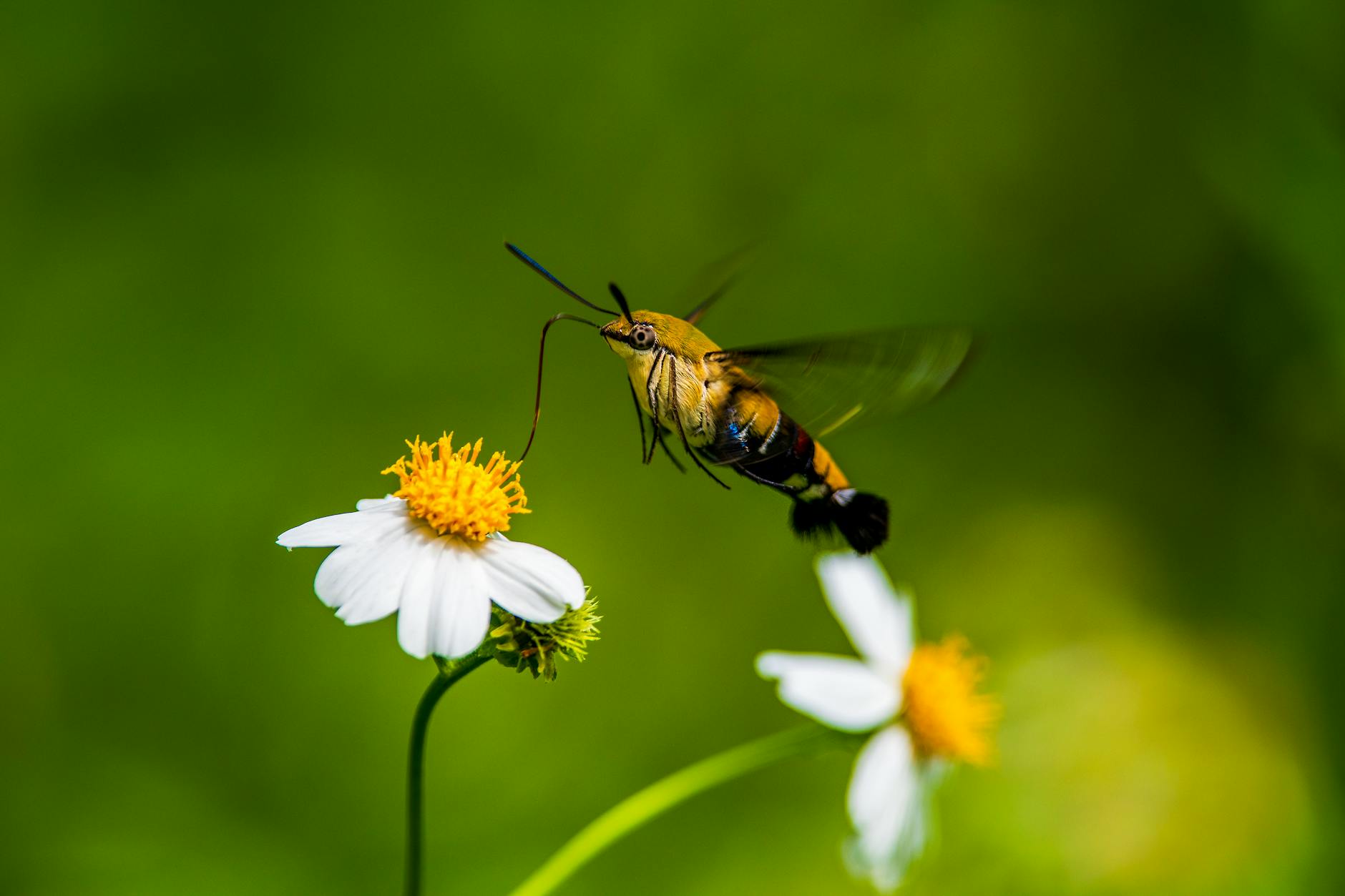
The incredible Hawk moth.
The pokeweed creates her prolific toxins for self-defense. Her roots secrete proteins to protect against root rot and invasion by soil-borne pathogens, and her seeds contain peptides that protect them against fungal diseases. And, in certain well-prepared forms, pokeweed can protect rather than harm humans. Indigenous people made a salve from her juices to ease rheumatism and arthritis and to treat fungal infections, ringworm, and eczema. The extracts from pokeweed, according to some recent scientific work, are shown to have “antibacterial, antiviral, antifungal, anticancer, antiparasitic, and insecticidal activities.”
When she came up to my chin, still, I let her grow.
Inkberry, coakun (not much on where this comes from), scoke (from m’skok, that which is red), whatever you call her, pokeweed was here long before I was, feeding the birds and moths, tapping the ground to let rainwater percolate through and oxygen fill soil cracks like a breath. She provided shade to wild rabbits and rolly polies. She defended herself.
I suppose she might be the one who decided to let me pass each time I measured her height, and now her sprays of white flowers have ripened into fruits that will spread across the neighborhood, a lot like the milkweed seeds that have populated the sidewalk crevices and fence lines of my neighbor’s yards.
An aggressive colonizer, she’s called. Well, I’ll let her be. She has been providing for the people and more-than-human beings with beauty and strength for centuries.
I think she’ll stay.
My daughter sits in front of her bounty of milkweed seeds. It was a few years ago now, but the look on her face mirrors what I’ve always felt about milkweed seeds and her and now pokeweed: ethereal, determined, wonderful, resilient, magical. I want to give them as many opportunities as possible to spread their gifts far and wide!
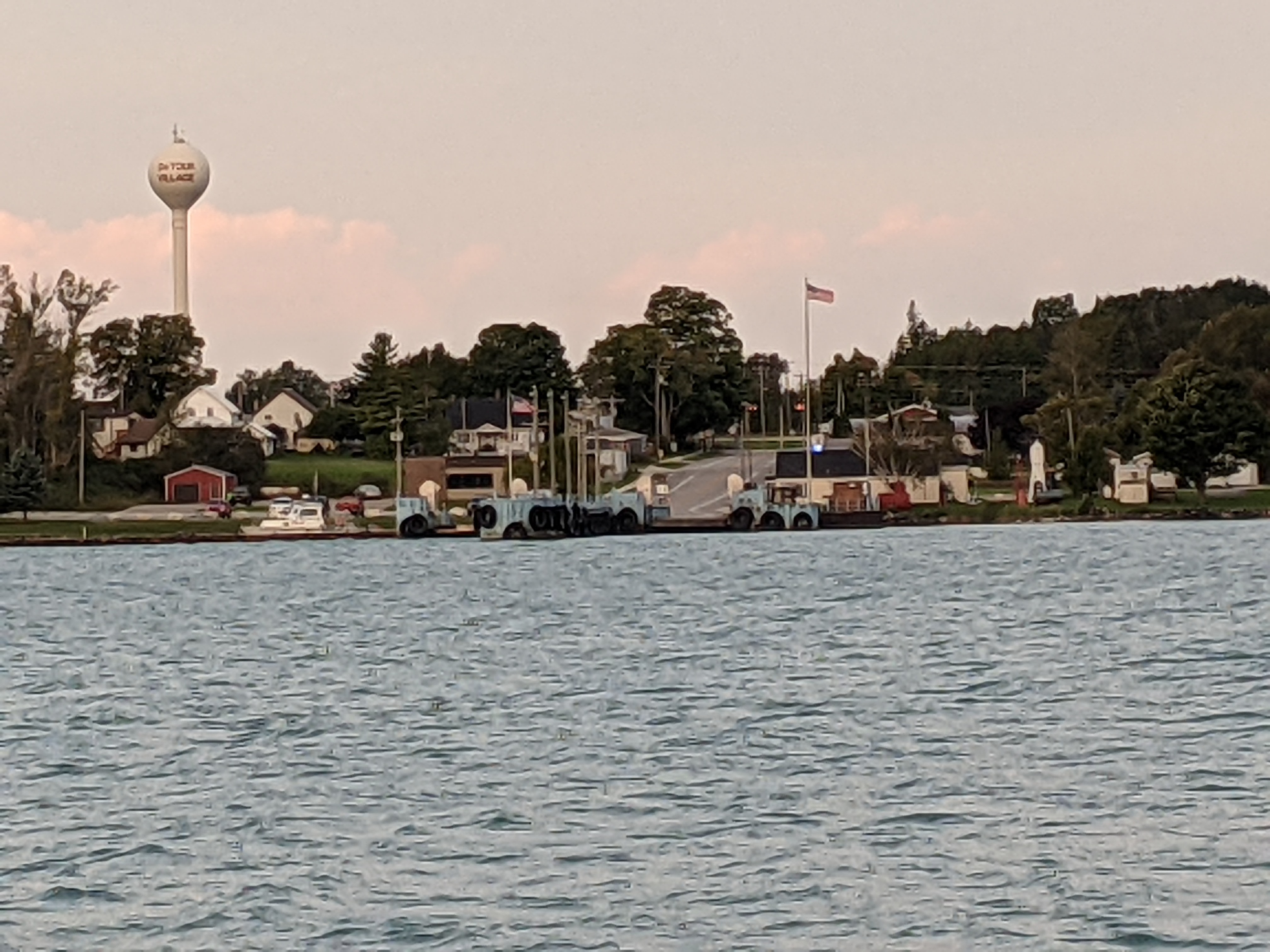
I mumbled out loud in my head. It was a store in De Tour Village, (pronounced dee toor) Michigan, and we were De “Tourists” that summer.
De Tour Village seen from the ferry
I said the name again out loud to my husband. “Timberdoodle? That’s cute. Like a picture of a tree doodled on paper made out of trees. Like all the kitschy things we’ll probably find inside.”
“Whelp, let’s go in!”
It was a colorful store of rooms filled with eye candy that made me want to buy a lot of things and also say no to everything my kids brought to show me. “This will make me so happy,” their eyes pleaded. “I’ll do whatever you say afterwards if you just buy me this one thing that I love.” I was trapped in consumerism and eventually in small talk with the owner who looked like her native habitat might have been a store on the corner of Haight-Ashbury in San Francisco. This place was more than two thousand miles from there, across a bridge even longer (and some say more impressive) than the Golden Gate.
The street in front of the store was open and wide, sloping up to a neat ridge of pine and deciduous trees. As a De Tourist, I could have lingered for hours on the brightly painted porch in front of the Timberdoodle while considering the most pressing issue on this end of town—which of the two restaurants we would choose for dinner (if they were even open). Main street was 3 blocks long and ended at a ship shape marina that was three times that. Getting around was more boat inclined than wheeled here.
The Timberdoodle was a distillation of Michigan’s rugged independence mixed with cottage charm and long maritime history that saturated the Upper Peninsula’s freshwater lakes. The tiny store overlooked the St. Mary’s river where 1,000 foot (“footers”) freighters slipped by practically unheard and unnoticed. Eighty-six million tons of raw materials and 90% of the US’s iron ore glided by the Timberdoodle’s back alley.
A Footer
No rush.
If a freighter could make it to this narrow water crack between the Eastern UP and the last island before Canada from China at that speed, what could possibly be so important to rush off to?
We had time, so we browsed, and the Timberdoodle’s charm grew on me like a barnacle on one of the footer’s hulls. It had more character than just quaint. There was local art and soap, local jams, local jewelry, and a bulletin board for community events they hosted (pop ups at the farmer’s market, local authors and the like). There were a lot of Melissa and Doug toys for the kids, and Taylor Swift inspired bracelets,of course. A few whispy articles of women’s clothing on a rack that I thought might make me look carefree and slightly hip, along with strings of exotic, but earthy beads on silver chains. A few frog umbrellas, bug catchers, whirligigs, and glasses that compound vision like a fly’s, multiplying every trinket in the store by 1,000. I also found (and bought) a pair of “Safety Sasses.” Thick, oversized, horn rimmed tortoise shell safety glasses for women to wear while constructing things out of wood, perhaps a Timberdoodle, whatever that was.
As I warmed up to the store, I felt my inner critic quiet and my good nature gather courage to speak with the woman behind the counter.
“Hi” and “How are you?” and “The store’s name isn’t anything I’ve heard of before. Is Timberdoodle something you came up with?”
“Oh no,” she said, and smiled at me like a mother explaining the most basic thing to her child. “It’s the name for a game bird you find here. Also called a woodcock.”
“Oh! I’ve never heard of it.”
I googled it.
A bird appeared on my screen: short and pudgy with deep pools of water for eyes and a long plover-like bill not for piercing sand, but for exploring forest duff, for slurping up worms that wriggled beneath the rich decay. Timberdoodles snuffle their lives along the earth’s spongiest floor, but they aren’t bound to it. Every spring, they soar straight up into the early morning and late evening sky to show the world and a lucky Timberdoodle lady their dizzying sky dance, a whirling cyclone drop accompanied by exuberant song.
Imagining this was like suddenly discovering my elderly, teetotaling, tractor-bound Great Uncle Harold could break out the smoothest, mind blowing dance moves if I got up early enough to watch.
Timberdoodle Photo: Tapani Hellman on Pixabay
“Crrrck! Crrrrck!” The Timberdoodle peents to announce his amorous intentions, hidden at your feet among leaves and old pine needles at the edge of a field or bog. He lifts into the air, higher and higher, and falls in exuberant twirls, like a helicoptering maple seed, and the whole forest pauses to admire the wild, acrobatic feat. Later, when the curtains close on his last performance, he will lift his brown belly and long bill into the air and migrate to New Orleans for the winter, which seems like a fitting place for such a surprisingly talented, unassuming, and exuberant bird.
Had I ever seen one in the sky?
Never.
I suddenly longed to see and feel those feathers the color of mud and soil—a soft, beautiful brown camouflage. Could I sneak up on a Timberdoodle? Lay in wait one early morning? Or was it enough to suddenly and simply know it existed? To know it danced? What would I gain if I saw it? Would witnessing the dance shift my awareness of the world, and for how long? Are tiny shifts enough to move a life in unexpected directions?
Like the fox I have yet to spy, my eyes still haven’t rested on a Timberdoodle in the wild. I knew that to create such a moment meant I needed to make more than a passing, hopeful effort. It meant asking local experts and concocting a certain means of planned patience into existence. But where to make those efforts?
At my high school in Washington State, I was a Timber-wolf.
Incredibly cool, I used to think, but a very different kind of Timber. One of my brief boyfriend’s dad and his friend traveled to Alaska when they were young and spry and shot a Timberwolf to taxidermy for the trophy case in the high school gym. It was still there 25 years later–a dull gray brown, one paw lifted, nose pointed towards home, trapped in a glass box and surrounded by trophies of the achievements of teenage athletes, including our 3rd in state volleyball team and 4th in state basketball team. Tennis players and track stars and this wolf, who could have out run us all in speed and distance, who showed her cubs how to howl at a night sky shining with the ancient claw marks of the milky way, who had been removed, cut down like so many timbers around her, and frozen among brief, human victories, herself being one of them.
What is this world where materials are removed along with the animals attached to them like spiders on the end of their glorious silk? Wolf and iron ore, forest and water, fur and metal, feather and foot. We rearrange earth’s body to fit our idea of bodily need until we stumble into a gift shop at the end of the Upper Peninsula and find time to become wild and warm and discover the ancient, flighty, and astonishing; until we slowly layer new awareness of the more-than-human upon our hearts and want to repair our relationship with them, break the glass, preserve the duff, wonder at doodling Timbers.
I stood, stunned, by the Timberdoodle.
In this store named after a beautiful, shy bird, I found strings of pearls and quilt squares, trinkets that, taken time and focused attention, can be gathered and stitched back into each other by gently pulling on threads of old and local knowledge, new and unviersal wonder, humble and uncomfortable conversations. These pieces are what will revive our inner and outer landscapes until wolves run unhindered, doodle dance floors remain intact, and we are beautified and remade to be part of something bigger, a whole reality rather than a split one.
I contacted two local wildlife gurus when we got back home, and they knew exactly where to find Timberdoodles. Not a hundred miles from my house in the wilds of the UP, but a mere 20 miles east of East Lansing. It was astonishing. Who knew they were so close? Upper and lower peninsula realities collided—brushed up against each other like brindled feathers. Like De Tour and San Francisco and New Orleans. Like wolves and doodles.
Timberdoodles.
The sign reads: “Where the Ordinary is Extraordinary”
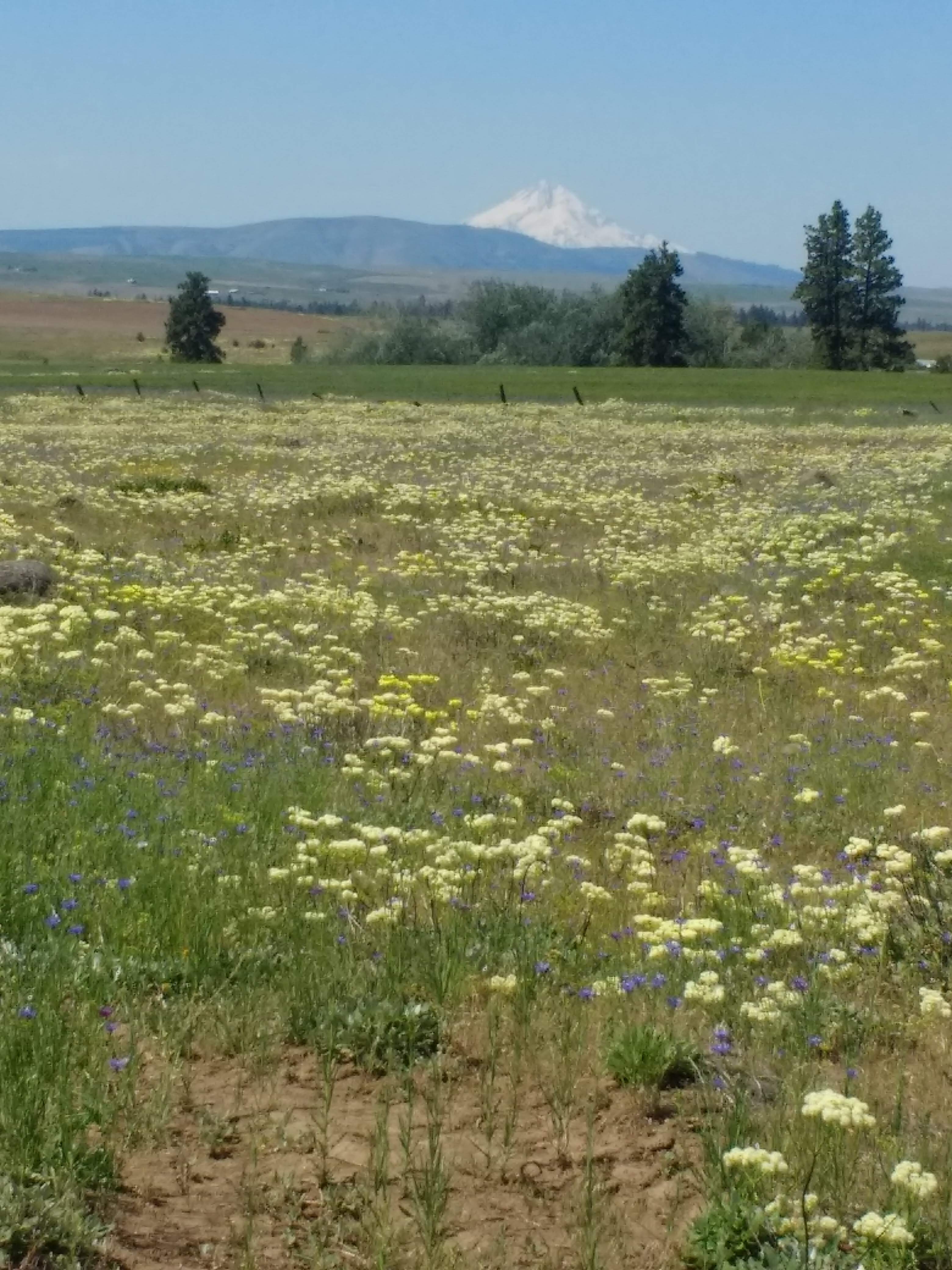
I was in the back seat of our pickup truck. My mom was in the front passenger seat next to my brother who was driving up and over the Old Dalles Mountain Road. It was my dad’s favorite route to take in the springtime, when lupin and balsam root were in full, glorious, purple and gold bloom, bright and vibrant against the dusty silver of sage and the muted brown of soil already cracking underneath their small, but triumphant, canopy of petals.
We were all together, our four-leafed family now plucked to three. There was a gap. A strange, time-warped gap, where I sat mostly in front of a computer screen to work and connect with people but felt the least connection of my life. Life halted, cut off and held hostage by an invisible, global virus, that, if gathered into one place, would fit inside a Pepsi can.
My dad drank a lot of diet Pepsi when I was growing up. It was comforting, that stockpile of cold pop cans in the mud room refrigerator, the sound of the tab snapping open, psssshhcck! on a hot, hot summer day after tilling the garden. Dad’s tanned arms in a cut-off sleeved shirt, his beard trembling a little from his hidden chin wiggling in concentration, his jeans, faded and dirty, his tennis shoes, old and falling apart, leather work gloves worn shiny and brown, and a Mariner’s baseball cap keeping his bald head form burning. These separate articles of clothes hung off of his 6’ 6” frame and contained him. They clothed the certain and habitual gestures of my industrious, earthy, strong parent. This was the dad my eyes were accustomed to resting on and my arms were used to wrapping around for bear hugs. I never had to see or to visit my dad in a mask. His face was always wholly visible, even as it began to slim and slacken and dim.
The work worn clothes, sweat stained baseball caps, muscle, and bone that contained the shape of my dad in the world were burned to ashes and held together in an urn made and fired by one of his long time teaching friends. The heavy weight of last year was lying in there with him, as well as the long wait to take him to his resting place.
I thought he would be light, like ashes caught in an updraft. But no, he was like sand, almost too real. I didn’t want the urn to break, so I held it in my lap. Tightly. I did not want to hold it, either. Was the cancer burned away now? How would he be welcomed by the earth? Ashes are so different than compost. Hydrophobic. No water, no organic material, can attach easily to it. It is free of earthly duty, ready to fly.
Still, I held him in my lap so the jostling from washboards and dislodged rocks on this old, dirt road wouldn’t accidentally break the ceramic container that held him. It took all the strength I had. How could he be so heavy and so gone at the same time? How could I still be so scared of making contact with other humans, of breathing another’s air, and still desire to touch and mingle voice and smile and smell and taste at the same time? How could I have been so far away as he was dying of cancer and not realize how much it would hurt not to hug him at the same time?
Dad didn’t leave me any coaching tips for this.
There was a road sign at the top of the mountain, of all places. Who on god’s green earth would see it, or need it, up there? This wasn’t god’s green earth. It was brown and dusty. There were no other ways to go, no other roads to take, no choices to contemplate. Nevertheless, this road was marked by a green sign that read, “Bryan’s Road.” My dad’s name, only with a “y” instead of an “i”.
Despite the name, we were still unsure whose road this really was. The land up here seemed unclaimable. Too remote and close to the sky to thrust private stakes into it, yet thrust and privatized it was. But the view was stunning, and the sign had his name on it, so we felt justified as we timidly crunched our tires down the barely graded gravel, quietly passed through a cattle guarded gap in the barbed wire fence, and parked out of sight from the rough shod shed just off to the west.
We had arrived.
I opened the door and slid off of the back seat, dad’s weight pushing my footsteps down into the dusty soil. Despite this, I felt wholly untethered, stumbling through sage brush on this high, high, wind-swept hill surrounded in every direction but the east by mountains.
There, to the north, Mt. Rainier, the mountain nearest Seattle, where dad was born in 1946 and lived with his parents, older brother, and younger sister in the house his dad built in the Rainier Valley. He lived there until he left for college on the other side of the state where there were no mountains, just acres of wheat fields. I could see Mt. Rainier’s summit, gleaming like the fond memory of a favorite teacher, peeking above the darkened outline of the Simcoe Hills that made up the northern border of the valley where we lived.
You had to climb this high to see that far.
Sweeping my eyes slightly west I saw the gray, flat-topped form of the once perfectly conical Mt. St. Helens, the mountain that erupted while dad and mom were still young parents, new teachers, first time homeowners, and rained an inch of lighter than air ash on their new deck in 1980 just outside of Portland, Oregon. I was four years old.
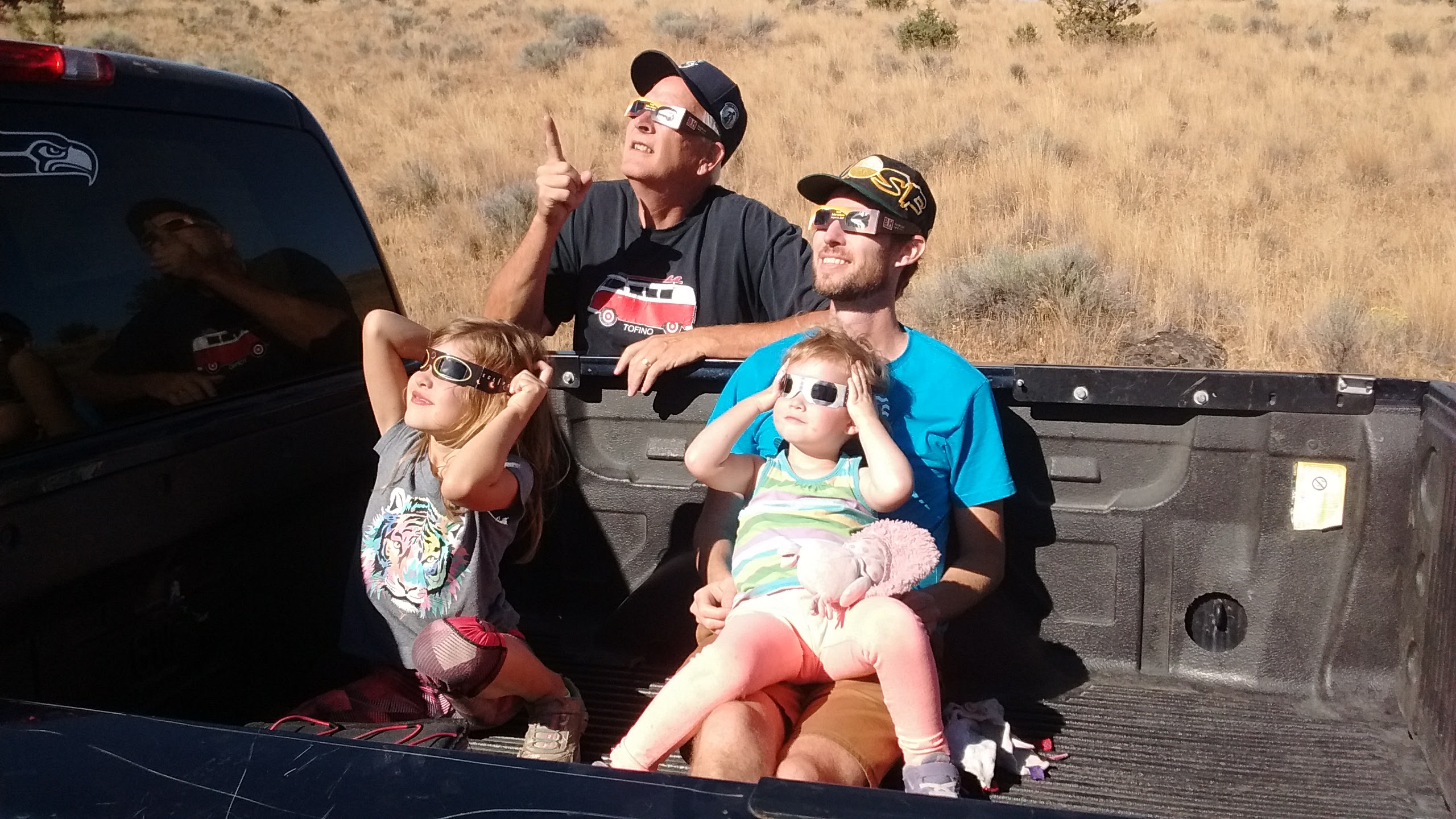
I continued the turn counter clockwise until I was facing south, gazing on Mt. Hood across the Columbia River and into Oregon, a distant but familiar face that so captivated my dad when the blue and white tails of the brightest comet in history, Hale-Bopp, streaked over her summit in 1997 a thousand times brighter and thirty-nine times more deadly than Halley’s comet (which I watched fly from the top of his shoulders when I was 10). Thirty-one years after Halley and twenty years after Hale-Bopp, dad and I drove to central Oregon with my husband and two very young daughters, pulled off to the side of a desert road, plastered paper and plastic glasses to our eyes, and were totally eclipsed for two minutes and forty seconds.
And finally, I turned back to the northwest, to the closest mountain, Mt. Adams, the mountain that would accompany him for most of his life, and mine. The mountain I looked for every time I crested the Columbia River Gorge and returned home. The mountain where we pitched our tent and picked huckleberries in the skirts of her southeast forests in late summer. The mountain our eyes sought out from the back porch of the house that mom and dad helped build to watch winter sunsets kiss her southern slopes and summer sunsets ignite her ancient form from behind, throwing rays of gold and orange and pink into the sky. On early summer mornings, the sun painted her the palest pinks and creamsicle oranges as we drove out to the alfalfa fields to change irrigation lines. Dad spent the last week of his life in my room, Mt. Adams looking in on him through the bedroom window.
From this high place, we could see his life in mountains.
From this high place, we let dad go. His ashes—the twin tails of a once-in-a-lifetime comet, the radiant beams of a sunset, the sudden clear rays of a solar corona—appeared, startling and singular, and then vanished, carried by wind, out over the mountains.
When we create a sourdough culture from seemingly inert flour and water, and coax bread-friendly yeasts and bacteria to take up residence in our little bowl of fragile culture; when we keep the culture in harmonious balance for years, fresh and vigorous, constantly renewed, and bake with it again and again, it is easy to feel like an alchemist, and more: For rather than needless gold from base metals, the baker’s alchemy is in the bringing together of ingredients that on their own cannot uphold life, and transforming them into nourishing, life-sustaining bread. Jeffrey Hamelman, Bread, A Baker’s Book of Techniques and Recipes
The story goes that there was a group of friends about 2,000 years ago, men and women, who broke and ate bread together three times a day. Sometimes, they grilled fish by the lake at sunset and told stories by firelight—lost sheep found, lost coins discovered and lost again, children, thought dead, who returned home, people who buried money instead of investing it. They’d been doing this for a couple of years—eating, traveling, meeting people, talking about justice and love, how to fulfill the law rather than punish people with it, and what it meant to be a friend and a neighbor. When people were sick, mentally ill, or dying, this group of friends was not afraid to touch them, heal them, and eat with them.
Word of mouth spread fast about this remarkable group. Sometimes people from the inner city would walk beyond the safety of their city walls and into the hills to find them. This group of friends welcomed every part of them—their sadness and grief, their poverty and isolation, their longing for justice and happiness and peace—and gave them refreshment in the form of bold, beautiful poetry that filled their hearts and also in the form of woven, bottomless baskets of bread and salted fish passed around late into the night to fill their bellies.
They started to gain a following, and their leader was invited to important dinners with city officials who tried to make him say something incriminating over wine. His eyes twinkled over the rim of his upturned glass, and as he put it down, his lips spoke kind, but hard, gut punching words, about loving others as you love yourself. This group of friends ate with everyone who asked, went to weddings and funerals and birthdays to share food and friendship. No one was told to leave the table. Everyone was invited.
Then suddenly, at one of their many meals together, he told them not to be afraid, but he was going to die. And then he was going to come back.
—
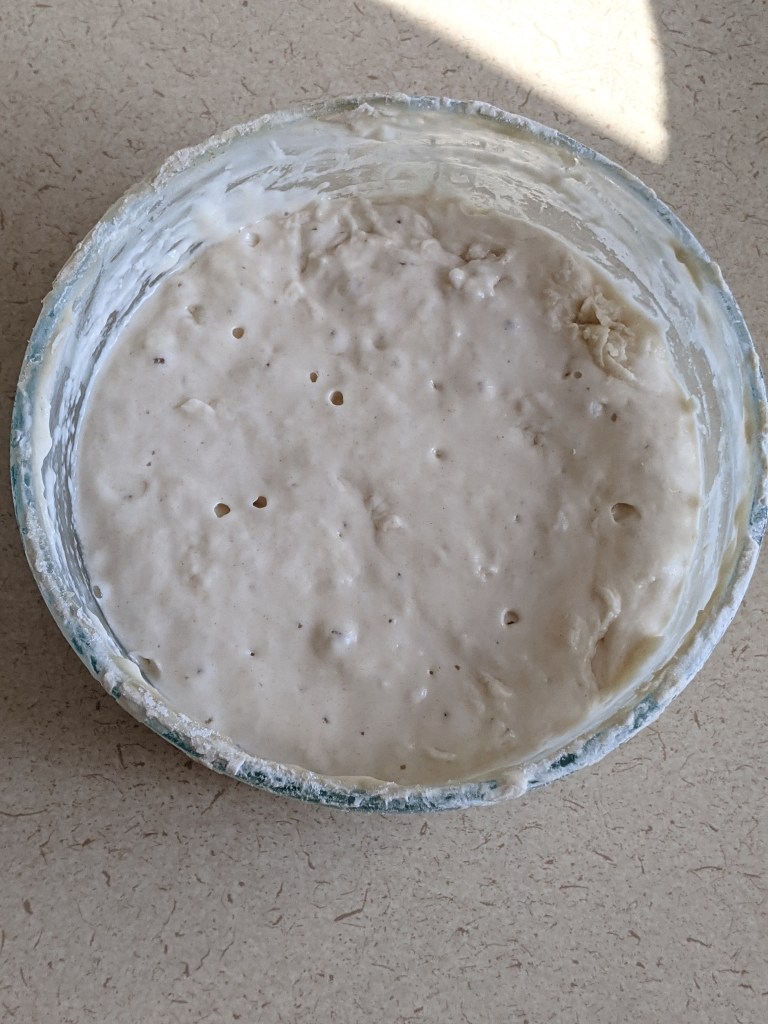
The story goes that she rode to the West Coast in the back of a wagon on the Oregon Trail, my mother, and survived until the technology to freeze-dry her cells came along, allowing anyone, anywhere to resurrect her by mail. Mail order loaf. That was 22 years ago, and she lives on inside of my refrigerator, my sourdough starter, my mother of countless loaves and pizza crusts.
In a kitchen where wild yeast is cultivated, the air is infused to life and the warmth of the oven becomes a sanctuary for wild baking. In this kind of kitchen, microscopic, invisible beings float in the air, in the umwelt of the room, invited to live and multiply in earthen vessels, to be molded into a sacrament, and to be sacrificed as an example of what it looks like to love ourselves and our human and more-than-human communities through life and death—a reciprocal relationship.
—
Just after my 40th birthday, I took an antibiotic for an infected spider bite, one I had taken before for two bouts of mastitis—Keflex. It was one too many times. The antibiotic swept away so many good gut bacteria that my colon was colonized by Clostridioides difficile, or C. diff. Imagine a long, pill-shaped bacterium with squiggly threads exploding from its body like jolts of electricity. The microbial imbalance swung in C. diff’s favor and allowed the tiny bug to multiply rapidly, tormenting me from the inside and throwing my body into turmoil. Nothing I ate or drank was accepted. The riotous noise from rapidly growing C. diff drowned out all communication between my digestive system and my brain. I was being held hostage by an invisible microbe that grew recklessly, pummeling my organs. There were times, late at night after hours on the toilet, that I thought maybe this is what it felt like to begin to die.
I needed more antibiotics to destroy these “bad” bacteria, but they destroyed the “good” ones, too. To help them, I ate prebiotics, a word one of my wise, good friends taught me. Prebiotics feed bacteria and fungus already living in the gut so they can thrive. Red seaweed, called Sargassum in her home country of Jamaica, was a great source of this gut food. My friend brought it to me in little bags from Canada and showed me how to soak it for a day until it became like gel, mix it with coconut milk, nutmeg, and bitters, and drink it. Slowly, I regained a more balanced microbiome, but something remained off kilter in my mind. My mental health took a downturn into extreme anxiety and obsessive thinking about dying. While I ate at the table with my two daughters, while I played co-ed volleyball, when I heard the heartbeat of my husband in bed, I thought, “We will all die one day. How soon?”
—
This group of friends broke all the rules, even laws. They healed and ate and encouraged a way of life that undermined those in power. Their leader knew this, but he went into the city anyway, to teach, to overturn money-lending tables that used religious rituals to make a profit. The last time he visited the city, he arrived on the back of a small donkey, and he was found guilty of blasphemy and sentenced to die.
The night before all of that happened, you guessed it, he shared a meal with his friends in the upper room of a house at a big, long, table. He said the strangest thing to all of them just before they ate. “This bread,” he said, “It’s my body. When you eat it, I will become a part of you, and every time you eat it, remember me. This bread is me, and I will live on in you every time you eat it.” He died the next day, Friday.
For those of us who have heard this story over and over again from the time we were children, repetition drains the strangeness right out of it, leaving the story empty, lifeless, without substance. But for those who haven’t heard this story before, it sounds monstrous. Cannibalistic. Why would anyone ritualize eating the body of their teacher and friend? How can entire church congregations do this without a second thought? Why would they want to be reminded, every time they ate, of death?
—
After C. Diff’s rampage of my colon calmed (it will always be there), I continued to obsess about death. I thought my marriage was going to die, too. Old, familiar habits erupted like mushrooms. I didn’t want to touch or be touched, to love or be loved. My two young daughters, 3 and 5, took all the emotional strength I had. At the end of the day, my physical coffers were dry, and there was nothing left for me or my husband. I was growing frayed, thin. I was taking antidepressants that were supposed to boost my sex drive, but they only pushed me into spiraling guilt and fear. I asked people I trusted about dying—were they afraid of it? Did they think about it very often? It was all I could think of. The finality. The loss—of myself, my love, my daughters, my parents, breath, and body.
—
I ignored her for a long time. Long enough for her to turn slightly green in color and lose all of her structural vigor. Without refreshment, my mother broke down every starch available into sugar, used her yeasts and lactic acid bacteria to ferment them into oblivion. And what was the result of this fermentation? Carbon dioxide, organic acids, and alcohol. If I starved her, she got hungrier and hungrier until a liquid layer of alcohol sloshed around her flaccid form. Hooch—made of alcohol, water, and dead yeast cells. But she wasn’t dead, not yet. She just needed to be fed.
—
The antidepressant and C. dif. left me spent. I was so empty I longed to be filled. That’s when I remembered to eat. My body needed food. I needed to eat with others. I listened to my bruised but healing gut. I knew it needed beneficial bacteria, yeast, and fungi that regulated not just my digestion, but my moods, my emotions, and my energy. I needed those invisible helpers inside and out.
I started to make sourdough pizza.
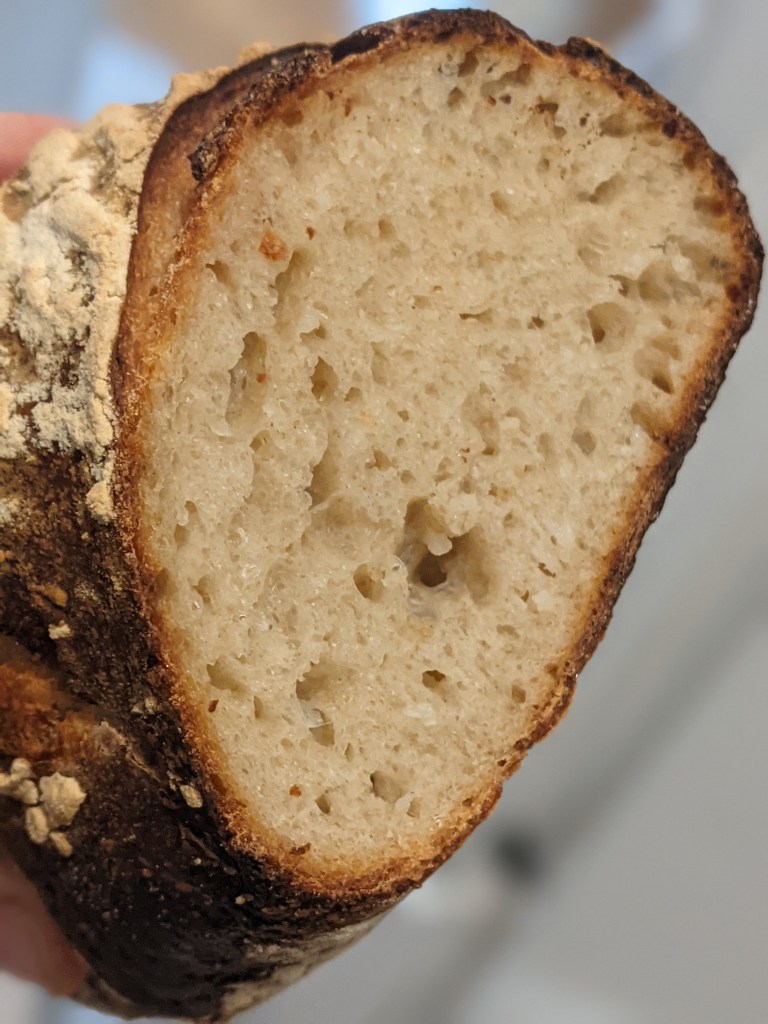
With the help of my mother, I fermented water and flour into a living dough. Goodness bubbled on my counter—uplifting and aromatic. When her countless progeny peaked in number, I added salt, more flour, and more water, separate ingredients that gathered into a whole as I kneaded rhythm into their lives—stretch, fold, push, turn. Threads of long gluten strands spun by hungry yeasts were knitted and woven together by the movements of my hands. The dough responded to my touch by rising in the bowl, then springing high and vibrant in the oven, exhaling their last, fermentatious breath as an offering to caramelize and leaven the pizza crust, releasing aromas that woke up dormant memories—my mom making rolls for thanksgiving, my grandma baking birthday cakes, the Christmas morning almond pastries my dad loved, and something much older and deeper: gratitude for food, for a delicious life.
—
When he broke the bread and told his close friends it was his body on Good Friday, it wasn’t just a metaphor. He was inviting his friends to experience life and death differently, to taste how connected the earth’s body was to their own, and to acknowledge the microscopic lives that ferried those connections from soil to seed to bread to body. Microcosmic connections. It was frightening, monstrous, confusing, and liberating. His words were transubstantial, transformational, a flow.
—
I invited friends to come and eat pizza. And they came. Every Wednesday I prepared the dough so that every Friday I’d have pizza crusts ready to top with delicious, in season colors and flavors. We called it Pie Day Friday. Sometimes 20 people came, and we had to supplement my pizza with Dominoes. Sometimes just 1 person came, and we had leftovers to send home with them.
Our Pie Day Friday group fermented like dough, growing in numbers and weaving connections. Friends met new friends. We talked about food and life. One friend started their own health food delivery business and hired some of us to work for him. We were our own Vagus fibers, spreading out to each other, connecting our minds and our stomachs on this one, central day. This good, Pie Day Friday. I began to eat again, to de-center. To be grateful, not perfect. To let go of control and be reckless, even just a little. It was frightening and exhilarating! I was dependent on a billion gazillion tiny microbes I could not see, hear, touch, or taste, but their work and taste and texture was evident in everything around me.
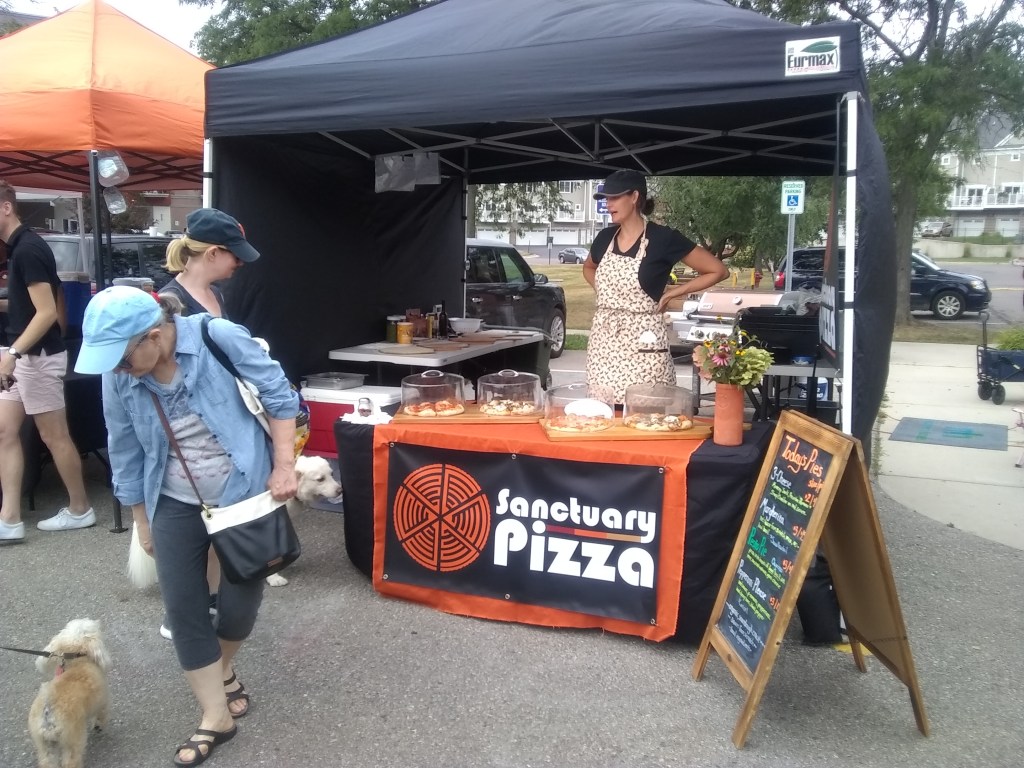
My fears about death began to fade as I kneaded life. I started a small pizza business. For two years I sold sourdough crust pizzas at farmer’s markets, fermented for days, topped with fresh ingredients from local farmers, offered to anyone who was hungry. I called it Sanctuary Pizza. It was a busy and good time, but it came to an end. It stalled with the death of my dad and finally died with the pandemic, but my sourdough lived on.
—
Wild yeast. More animal than plant, lacking in chlorophyl, able to survive in the dark, without plantlike veins or animal like tissue, ancient but earthy, a delicate, crumbly, ethereal substance that contains a single cell. A planimal. A living cell that does what many cells do. From their skin to the center they send signals, create thousands of proteins, frame their walls, and repair their DNA.
Humans and yeasts are related. Billions of years of evolution, from yeast to human, and the conservation of genes is so close that we can swap DNA like trading cards. We learned about the human cell cycles by studying yeast. Yeasts taught us about being human. I consider yeast, do they consider me?
Yeast, yeast. A round fungus. A Eukaryote, a single celled organism with a true nucleus and features of animal cells. A planimal.
There are more out there than we can imagine.
Wild yeast, in a batter, 6,000 years ago in Egypt, gave rise to, lifted up flat bread. Alma, soul, spirit. It took what was ordinary—water, flour, and salt—and transformed it. It worked on the gluten strands in the flour, unraveling and unraveling, until they became long and flexible, broken down into a more digestible form. I placed wheat berries, ground, in water, and they called to the yeast, called them to the roundness of their bodies, to come and live, to give spirit to lifeless flour and water. To sweeten, to ferment, to resurrect.
Find an empty bowl and put flour and water into it. Say a few words of invitation to the microscopic life forms swirling around in the air molecules, on your counter, in the breath you use to speak the prayer, spell, incantation, or song. Invite these lives to come, eat, drink in this bowl waiting with food and water, and with a surety born of billions of years of transforming what we consider death into life, the fungus and bacteria will oblige.
—
The story goes that after he died, a woman who came to anoint his body with spices found him standing outside of the tomb and held him and cried. After that, some of his friends who had been hiding, terrified they might die too, saw him, touched him. And a few days after that, he walked along a road with two friends, and they only recognized him after he sat down to eat with them and broke bread.
—
I thought I knew what death was, and so it terrified me. But the truth is, I did not know. My only experience of a kind of resurrection happened when I kneaded my lifeless mother back to life as rising dough, or felt what was once horrible kitchen scraps become rich, crumbly compost that ran through my fingers like silk. I stood in awe as I watched the luna moth emerge from its cocoon, and caught my breath with the first snowdrop that pushed up from the frozen ground.
“Do not be afraid,” he said. With friends around our table, with my family, community, and more-than-human friends close, this story, these friends eating together, was no longer an empty vessel, stale and lifeless. It was a recipe for transformation.
We are constantly evolving and changing, the earth, bread, compost, humans. I felt this unifying mysticism as I stood in the middle of a Floridian airport and people streamed past me. I had spent the last three days listening to the stories of minority and black farmers from across the United States. They were old stories, buried by history, that flowed into light. They connected the world. We shared stories and ate food together. My body resonated with the vibrations that connected us all, one human and more-than-human organism, one fantastic, frilly skirt whirling through space, dancing and delighting like a human fully awake, like a goddess.
—
No matter how the story was and is told, bread is at the center.
Broken. Shared.
The body.
Broken. Shared.
Bread taken into the body becomes our body.
To live, we must die.
Mystery of mysteries.
Microbial transubstantiation.
Note: You can buy the same starter I have had for over 20 years, Carl Griffith’s Oregon Trail Sourdough Starter, by mail (they happily show you how to address the return envelope) like I did in 2005. Just go to: https://carlsfriends.net/source.html.
Once you have invited wild yeast into your home, it will take on the flavors, smells, and bacterial and fungal families unique to your dwelling’s life and breath. It will come as a part and become a whole to your house and your daily and weekly rhythms.
All the food we eat, from fast food fries to oat milk to bartlett pears to the most delicately thin slice of taro root, has its beginnings in the soil.
Without soil, there is no forest.
Without soil, there is no fen.
Without soil, there is no farm.
Without soil, there is no food.
Soil is a living, breathing, delicately balanced life force, like a magic carpet covering the earth. Scratch it, put a seed just half an inch down, moisten it, warm it, and a tomato plant grows! A magical medium, a mineral mystery.
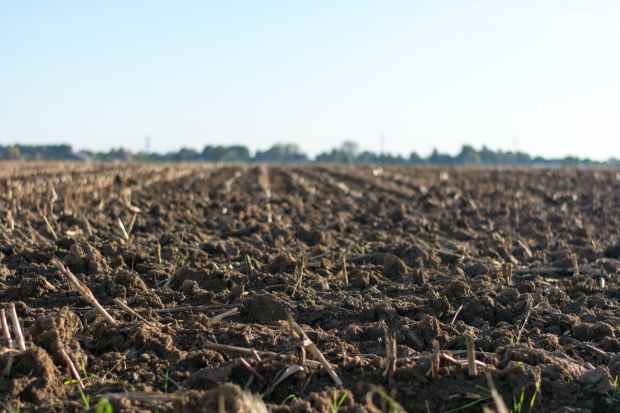
The skin of the earth is alive, and we live off of its vitality. Some of us live off of it quite literally making a living from cultivating the soil and growing cash crops, trees, or pasture. Some live off of the soil by collecting what it nurtures—nuts, roots, seeds, grasses, bark, and cattails. Some companies scrape topsoil from its native land and sell it in plastic bags or dump it on a new home lot to smooth out the hills and bumps. Without topsoil, alive and slowly, constantly forming, we would have nothing to look at or eat.
We eat and drink the Earth.
Can you think of one thing you ate or drank today that does not come from the soil? This might seem like a silly question, but let’s see where it takes us.
Scrambled eggs.
The eggs that most western cultures eat come from chickens, millions and millions of chickens being raised on farms. Or, for my family, the one in our backyard (her name is Marylin, and she occasionally lays the sweetest little brown eggs, they’re called fairy eggs). These chickens must eat for their bodies to create that egg, and if they are lucky hens, they are let out to eat grass and bugs every day. Grass that grows from the soil and bugs that live in and eat that same soil. And the more grass and bugs those chickens eat, the more nutritious the egg.
And butter for the pan? Same sort of pattern. Millions of cows in the United States are raised for beef, but also some for milk, and, if they are lucky cows, they are let out to eat grass every day. Bacteria help the cow to turn that grass into sun-fueled globules of fatty lactose that come out as milk that we then make into butter, yogurt, cheese, kefir, and the list goes on.
Olive oil.
Instead of butter? Fair enough, from olives that grow from trees that need the sandy, mineral rich nutrients of the Mediterranean or California.
Bread or oatmeal? Made from finely milled seeds of various grasses—rye, wheat, barley, emmer, einkorn—that used their fungus lined roots to draw nutrients and water from the soil.
Lobster.
Imagine. Invisible bacteria, phytoplankton, and algae are making their own energy from the sunlit saturated upper levels of the ocean. Even the abyssal bottom of the ocean floor is spewing chemical nutrients from deep within the planet into the blackest of water where microorganisms use them to make food in the absence of light. And those invisible organisms are the bedrock of an ocean-sized food chain, microscopic food to feed whales and salmon, shrimp and clams, sharks and octopus. Us.
Hamburgers, hotdogs, milk, peanut butter, tofu, the list will go on and on.
Coffee and chocolate? Yes, let’s stop there for a sweet second. Both are made from beans that come from plants that are the complex and delicious result of pre-fermented seeds planted in tropical soils.
It takes a leap of the imagination to get to the soil from every single thing that we eat, but it is not a huge, insurmountable leap. No, it’s more like a pause before taking that first sip of coffee or tea in the morning. An imaginative pause to close our eyes and envision where the beans and tea leaves originated. Arabica? Dig deeper. Are they from South America? Africa? Asia? Were they grown under the wings of birds in mountain forests, or on a clear-cut plantation that removed native trees so good for the soil the coffee and tea came from? Who picked them? How much were they paid? Do they get to eat the food they harvest?
Cereal? The ingredient list on the side of the box is like an inventory of soil minerals—zinc, copper, phosphorous, magnesium, iron, and calcium to name a few. It’s more like eating a soil sample than a box of Wheaties.
Tortillas? The seeds of an annual grass, maize, ground and flattened and patted or pressed into savory circles to be filled with beans or meat or cheese. One of the best tasting meals I ever had was called a papusa. It was made everywhere in El Salvador, but the first one I had was made a roadside stand, a papuseria. I watched them take the ground maize mixed with water, expertly shape it into a neat circle, place cheese, meat, refried beans, or even edible flowers in the middle that they covered up with more cornmeal, and slap it on a large, round griddle. Giant jars of fermented cabbage, curtido, were on tables outside, ready to put on top. Papusas were sunshine in my mouth.
The average rate of soil replenishment is 100 years per inch. In the United States, we use soil 10 times faster than that. Some estimates predict just 60 years of topsoil left in the world. A recent study published in 2021 by three geoscientists at the University of Massachusetts provides a staggering number. An average of 35% of the topsoil in the Midwest, what was once described as a rich, silky mousse, is now completely lost from over tilling, wind, and water erosion.
Mathematically speaking, we need to balance soil withdrawals with compost deposits before we lose any more. Biologically speaking, soil is a living organism made up of other living organisms, minerals, water, and air and needs to be fed in order to stay alive. Geologically speaking, soil is the very youngest, the thinnest, the tip top of earth’s layered history. Soil is just a century old, but the oldest rocks, found in the depths of Australia, are 4.4 billion years old and caught glimpses of the birth of our moon. Spiritually speaking, soil is more than the sum of its individual parts—clay, silt, and ancient sand. These tiny particles, hewn from the cooled rock of earth’s molten core are knit together by lichen, bacteria, and fungus until they can support cells that live off minerals and sunshine. Until they become soil.
After WWII, industrial agriculture took hold and chemical technology moved from the military field to the crop field. The results were immediate and green. But decades of increasing fertilizer and pesticide application resulted in tractor-compacted subsoil and heavy losses of trace minerals, micronutrients, fungi, bacteria, and other micro-organisms that give soil life. We are only just beginning to understand the importance of macrobiotics in farming.
Like native flora and fauna, we’ve lost native soil, some of it never to be recovered. Who knows how many millions of microscopic life forms have lived and died and gone extinct right under our noses. What did they look like? What did they do? Were they replaceable? Life is morphing constantly, but we’ve cut it short, unnaturally so.
The fertility, water holding capacity, and tilth of soil comes from biological diversity. When biology is replaced with monocropping and chemical fertilizers, it is like replacing a soil’s earthy vocal cords with a human tape recording. Instead of singing its native song, a field can only say “corn, corn, corn” and this field only “wheat, wheat, wheat” with an occasional season of fallow silence. Pretty soon, a field is completely expressionless without chemical assistance.
I do believe that, given time and various forms of compost, fields will begin to sing their native songs again. There is no use telling them what tune is acceptable. “Weeds” (many of which turn out to be important native plants) pop up like notes out of place and horribly out of tune with our idea of a field. At first, they seem an eyesore compared to the beautiful, sterile, chemically induced waves of grain we are so used to driving past. But the miracle is that soil, in partnership with farmers and gardeners who see the value in a living, singing soil, can heal with time and compost, and I am looking forward to the symphony.
I can’t say that I’ve ever witnessed a miracle. I’ve always imagined miracles being pretty obvious things to see—walking on water (I have a paddle board that gets me pretty close), never ending baskets of food (grocery stores in the U.S. hardly ever run out of anything, and perhaps that is a miracle that costs too much), water that turns to wine (fermentation kind of does that), lanterns that stay lit even after the oil has run out (there are 5 solar lanterns hanging in my trees, no oil required), paralyzed individuals walk again (there was a dolphin who lived a full life with a prosthetic tail and his story brought me to tears), the blind see (I know they’re just bending the light, but the moment I put on my glasses, the world sharpens), the dead return to life (compost).
It turns out a miracle is (I just now looked it up), profoundly, an object of wonder that causes you to smile. Well, in that case, I’ve witnessed plenty of miracles! A sudden burst of feathered flight when I walk out the back door. The perfectly furred and rounded back of the rabbit that lives in the house. The color of the sky behind Mt. Adams as the earth turns away from the sun.
Miracles happen to us, while oracles speak to us, warn us, shake us, move us as if we were mountains and they were the miracles.
Marjory, or Madame Trash Heap to the Fraggles in Fraggle Rock, a Muppet show that many from my generation will know (and possibly be singing the theme song to right now) was a bespectacled, sentient pile of trash that had seen everything and knew everything and gave advice. Usually she wanted everyone to live in harmony and to take responsibility for their lives. She was a parabolic oracle, and she really was wise.
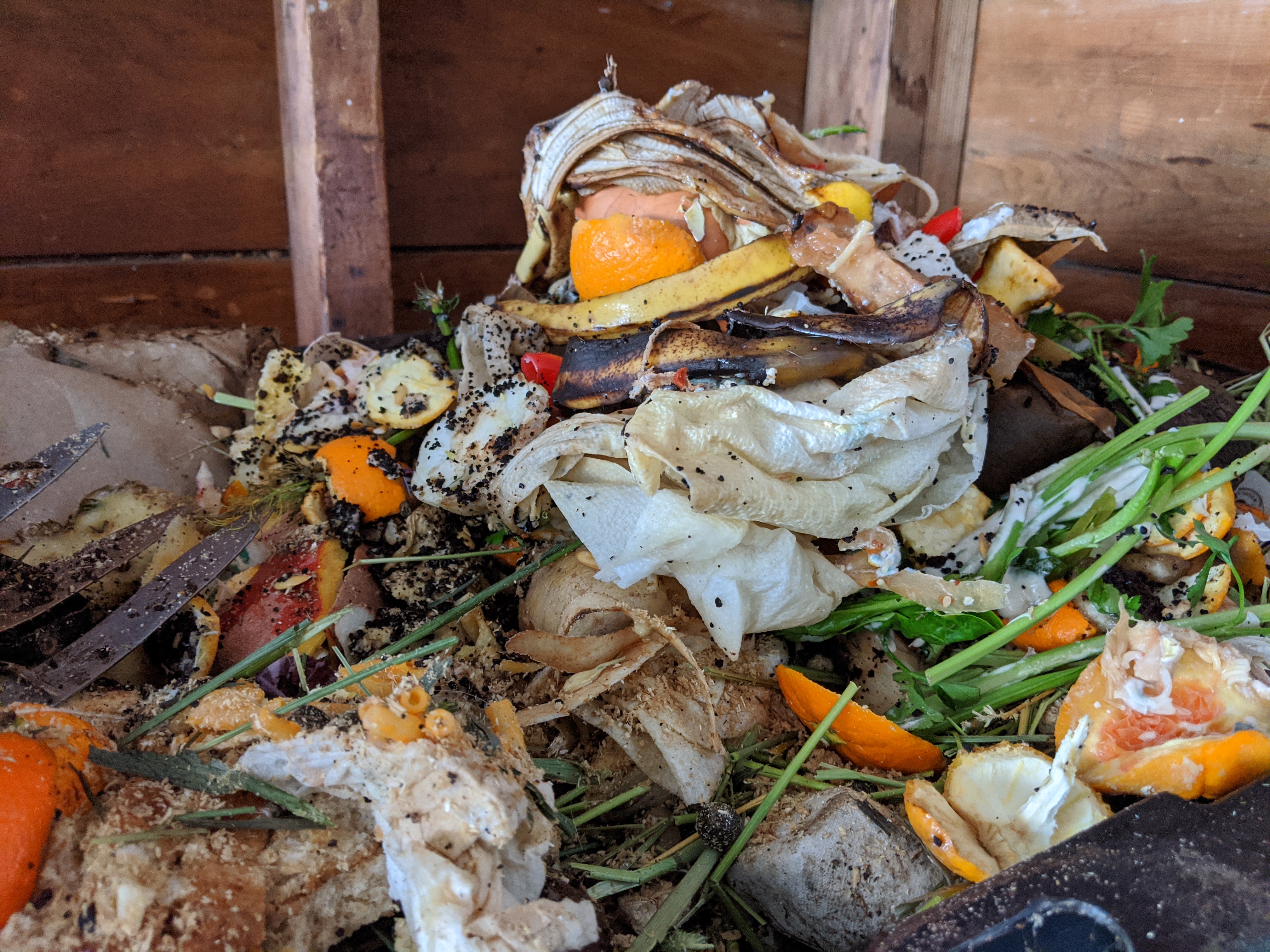
Garbage is our life’s oracle. Our daily leftovers speak volumes about who we are and what we love and how we live our lives. Sometimes I imagine modern purgatory as a place where you are forced to sit with all of the garbage you ever threw away and wait, in real time, until it completely decomposes. Only then could you ascend to heaven. And it wouldn’t be a combined pile, either. No, you’d have to wait until that Styrofoam cup decomposed (about 500 years) before you could move on to the take-out containers from all of those restaurants. Every person would have to wait as one diaper decomposed at a time and only then move on to the next one. That’s right, the number of years it takes for a diaper to disintegrate (roughly another 500 years) TIMES THE NUMBER OF DIAPERS.
Okay, I confess I imagined it this way because I did use a few disposable diapers alongside all of the thousands of times I rinsed, washed, and dried our cloth ones, and I don’t want to have to sit and wait. I mean, I gotta get some reward, right? Or is this just another version of the parable of the farmworker who came early to the field and got paid the same amount as the one who came just before the sun went down? Sigh, I know the answer. Garbage purgatory is only a fantasy I have, a wish for detritus retribution, to satisfy the desire to have something to hold over every wasteful, thoughtless act of pollution and littering. The final Word. But of course, this is not the way the world works, this is not the way that love works, and if the world is going to move forward, we’ll need to round out the edges, not sharpen them to a point—metaphorical or grammatical.
Compost is never the final word. Compost piles and the words we need to learn how to create them are signposts that invite conversation with the always changing world, that encourage a composter to dive into the deep, dark, unknown waters of change and transformation, of despair becoming hope, of waste becoming treasure. Compost language lives beyond the pale, where there are wildflowers growing in sentient garbage heaps, where there are monsters of leftovers turning into garden gold. Compost is embodied language. Earthed. Embedded. Speak. Write. Revise. Listen. Compost. Try again.
Compost is my oracle. It speaks of renewal. Of raw, rounded, richness generated in my backyard, from my own life’s refuse. Regeneration. Re-dos. It’s not the language we are used to hearing, and definitely not the language that we are used to understanding. It’s a lot like parables, truths that sit alongside other truths. Jewish rabbis often spoke in parables, and Jesus, who was their successor, also spoke in parables with words that could be understood by everyone about what made life good. Compost is a parabolic parable turning words and language upside down, like the prostitute’s hair on Jesus’ oiled feet, to become new again, to become full of light and life.
Here are some compost parables from my own trash heap:
And the disciples asked, how will we know the resurrection? And she answered, “Look at the compost pile, see how it starts a smelly, putrid mass of gloppy food, grass, pumpkin innards, manure, and straw. Yet quietly, with time and without waste, it consumes, digests, and restores the light inside a dark dankness. All good things in life come to an end. You feast, you reap, and from these events come waste. And yet, you waste the waste. Does not the compost pile welcome the waste you have rejected and make it new again?”
And the disciples asked, how can salvation be for everyone? And she answered, “There once was a rich woman who invited all of her friends to a feast. She brought in her best wine and her finest chefs. She depleted all of her grain stores to make the richest breads and squeezed her chickens and cows dry to have enough butter and eggs for the best cakes. But she did not compost what was left over, and for the next seven years her soil was lifeless and she could not raise enough food to host her friends. But those she did not invite, those who waited for the crumbs under her tables, the peels from the kitchen, the scrapings from the plates, and the waste water from the wash basons took the waste, composted it, and grew their own gardens and shared it with their friends.”
And the disciples asked, who will understand how to get into the kingdom of heaven? And she answered, “There once was a sower who scattered seed. Some seed fell on the pavement of an urban street, some in the ditch of a rural road. Some blew on the wind to land in the duff of the forest floor and the rest she threw onto her compost pile in the backyard. The seed that fell on pavement was eaten by pigeons and squirrels and never had a chance to sprout. The seed that fell in the ditch grew, but no one noticed it as they drove by at 80 miles an hour. The seed that fell in the forest duff grew far from people and the raccoons, opossum, rabbits, and deer had a feast. And the seed that fell on the compost grew in size and flavor unlike anything she had seen, and she was amazed at such abundance from her own backyard, so near, so easy and effortless, and from then on she planted, harvested, and composted at home.”
What would it be like if people who lived in cities could suddenly peer into the life of a farmer or fisherman? If the fences suddenly disappeared between them? If someone from inner city Chicago could suddenly smell the sweet barn hay mixed with manure and understand that this is where that pulled pork from the restaurant is coming from? What if a crowd waiting on a corner in Hong Kong to cross the street was suddenly zorped into the middle of an alfalfa field, the same one I used to irrigate every morning and night, the one where I would sing to the bumble bees on the purple flowers and the mountain and sky with all my heart? What if I was zorped into their world? Would we experience being held by the most wondrous body, would we come to feel the skin of the earth on our cheeks, the reflection of light from skyscraper windows, and reciprocate the inhale and exhale, uniting earth and sky? Would we know that we, the humans in between earth and sky, are made of earth but breathe the sky, every day melding and interacting and mingling and tangling ourselves up in her beautiful body?
Not everyone has access to a large piece of land where they can hide a compost pile in a shady corner or stock pile lots of material. Not everyone will be visiting their garden on a regular basis, keeping it free of weeds and plants that have gone to seed.
Community or church gardens will be tended by several people, and the compost pile might be added to as people come and go. At some point it will certainly be drying up in a forgotten corner requiring a major effort to get going again. On a lazier note, sometimes I just don’t want to haul raw materials out of the garden gate to the compost pile, compost them, then haul them all back in again with a wheelbarrow.
If any of these sound familiar, or if you want to save a little time and labor, a garden “bed rest” is your compost ticket.
One fall day, I was standing in the garden just looking and not doing anything, which is usually when good ideas materialize. There was a lot to be done. Old tomato vines drooped in their cages, the squash plants had turned to mush with the morning frost, and the mustard had already gone to seed. I did not feel quite energetic enough to pull it all up, take several trips with the wheelbarrow to the compost pile out back, build the pile, then bring it all back in again in the spring. Too many trips!
Inspiration struck.
I went to the garage to find some chicken wire and staked it around the outline of one of the garden beds, maybe 3’ by 5’, and built the pile right on top of it. Right in the middle of the garden. I felt gleefully lazy.
Like every compost pile, I did my best to have both green and brown material in the mix. It wouldn’t be a perfect ratio, probably heavier on the brown, carbony stuff, but my goal was not to make a hot compost pile. This pile would sit and slowly compost all winter, so I wasn’t too worried about getting the ratio just right. I forked up the soil in the bed a bit and began with a layer of bulkier stuff on the bottom (tomato vines and old, woody radishes), then I layered brown and green stuff to a height of about two feet. I hauled in some fall leaves and old straw for the browns. I had some kitchen scraps sitting in a lidded garbage can that I brought in for greens, as well as anything left in the garden that wasn’t going to be eaten (mushy pumpkins, old tomatoes, and lettuce gone to seed). I was fortunate enough to have chickens, so I cleaned out the chicken house and used the mixture of manure, straw, and feathers to help heat up the pile. If you don’t have access to chicken manure, (the “hottest” of all manure, meaning it has a lot of nitrogen in it), you can buy a bag of bone or blood meal from a nursery or grain growers to sprinkle on top of each layer.
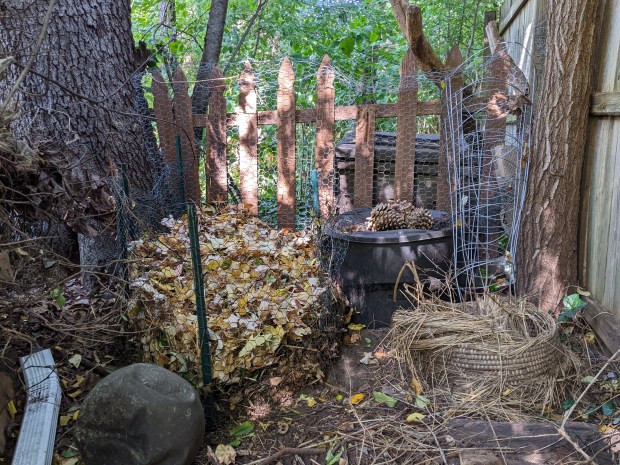
I often use stakes and chicken wire to contain compost and leaves
Instead of hauling everything out and then back in again, I was just hauling it in to stay. It was very satisfying to clean up fall leaves, the chicken house, and the kitchen scrap bin in one go and have a compost pile I wouldn’t have to move later to show for it.
When I was done, I covered it with old straw and went inside pretty pleased with myself. Using my compost thermometer, I checked on it after a week or so. The pile made it to about 100 degrees F, which is a good start.
Throughout the fall, the microorganisms worked on it. In the winter, they took a rest, too. In the spring, they started up again, and when the ground warmed up enough, and I had a burst of energy, I took away the chicken wire, scraped off the top layer of straw, and went to work turning the pile straight into the soil. No wheelbarrow necessary! I gave the soil another couple of weeks to incorporate the compost, then planted right into it.
It was as fluffy as a raised bed, compost included.
After that, I included a compost “bed rest” right into my usual garden rotation.
The less you disturb soil, the more mushrooms will grow! Sometimes nature doesn’t need us to work so hard, she’s got it covered in her own miraculous, astonishing ways.
I haven’t tried this yet, but if you need more nitrogen in the soil, plant a cover crop that procures it from the air (any kind of legume, vetch, or clover), then build the compost pile right on top of that (bonus, no need to turn that cover crop in by hand!) in order to break down the cover crop, adding nitrogen to the soil, and add compost at the same time.
In the summer, it would be possible to build a compost pile on top of a bed and add worms to the mix in order to break the pile down even further.
I used to make a lot of pizza. Five every Friday for 2 years and then 40 every Sunday during the farmer’s market season. In all, I made over 1,000 pies in the summer of 2019, and even though I don’t sell them anymore, if you stop by our house on a Friday, well, you’ve come on a Pie Day.
If you are a foodie, local is the magic word. Even better, local organic. Even better, local native.
Let’s start with the crust. Water, wild yeast, and flour. Water, local (Saginaw Sandstone aquifer), check. Wild yeast, local ( floating around my kitchen), check. But let’s face it, local, organic flour? That’s for people in Maine or Oregon who have the passion to make such things possible. Not for a Michigander making 1,000 pies that are affordable. You think in the Midwest you’ll find organic, local flour milled at a local mill?
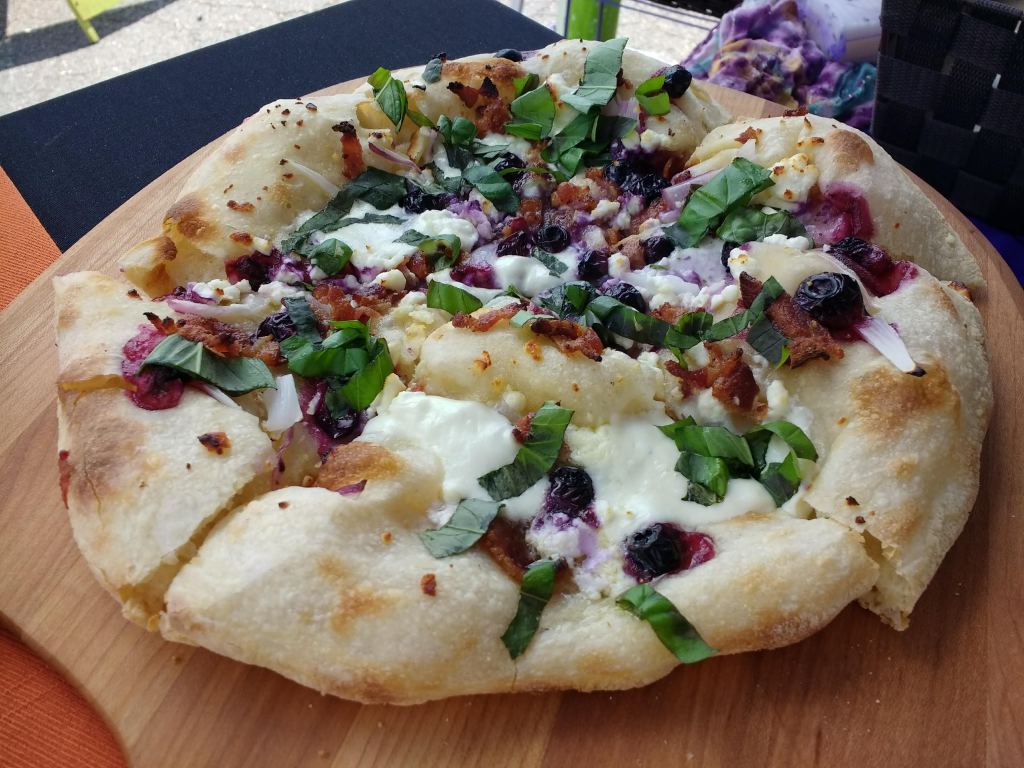
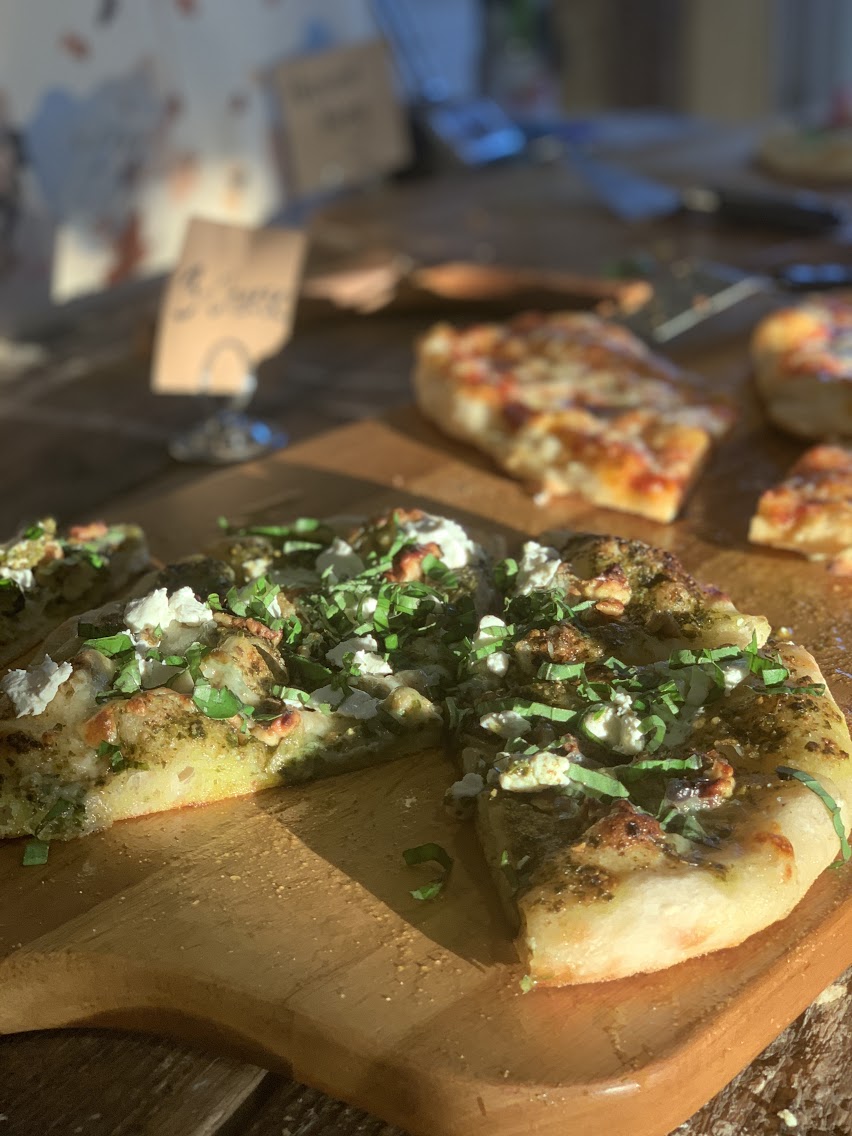
“B Happy Pie” with local blueberries, basil, and bacon from Trillium Farm
You know where I’m going. You can. It’s only 18 minutes away from my house.
Ferris Organic Farm. Back in 2018, I ordered whole wheat flour (discontinued, it seems, but millet is so tasty and oats amazing for the body) and some buckwheat from Ferris, and I showed up at the farm in my Honda Accord on a foggy Tuesday. There were a few outbuildings, a place where I could park. The door was closed, but I grew up near my Grandpa’s farm, so I knew not to give up just because people weren’t around. They were probably out doing chores somewhere, and I was conscious that I would be interrupting what is always a tight farm schedule, but didn’t it say to come on Tuesday?
“You should have come on Thursday,” she said, very short and brisk and brusk. She had short, evenly cut hair, tiny feet, and apparently was gluten intolerant. I offered to carry the floury, dusty bags after she checked the order form and took me back into the storage area. The mill for the farm was enormous, and quiet now. The suspended smell of seeds under friction found my nose. I already loved this place.
“You are lucky you found me, otherwise you would have driven all this way for nothing.” I was reminded of Henning, the German farmer I worked for on Lopez Island oh so many years ago, back when I wanted nothing more than have a farm of my own with fence posts I had dug into the ground myself some hot, sunny day. Somehow, in my 20 year old mind, building a fence meant I earned it, owned it. I felt just as happy listening to her kinda-ly chastise me as I felt one morning transplanting tender bean plants in the east orchard after learning I had accidentally planted pole beans next to bush beans and they would cross pollinate, so the bush beans needed to be moved.
Like Henning, she held secrets, years of knowledge that probably went back before she was born, and mysterious tendencies underneath that observant, piercing brow.
Henning used to talk about Norwegian folklore as we worked to make rows out of the field with pick axes (the rototiller used too much gas) for a dry bean experiment that Washington State University was staging at his farm (we had tried last month in the sacrifice field, but without a fence, the dear deer ate his two weeks’ labor in one night.) Day after day we pick axed our way across the acres, him sharing more and more about why biodynamics appealed to his sensibility. It was a mix of traditional knowledge and science, planting on certain days depending on if it was a leaf, flower, fruit, or root crop you’d like to grow. (Today, August 3, the moon is in pisces and it is solely a leaf day, so get that late summer spinach and mache in the ground before tomorrow (a fruit day!)).
I was as fascinated as I was skeptical. Part of me craved this new way of thinking about food. Composting everything in order to create a closed farm system not dependent on fertilizer from outside, herbicides, pesticides, or any other additives. Instead, we made fertilizer from cow horn manure buried under a full moon, dandelions picked in the morning sun just before their petals opened all the way, and chamomile found flourishing in the gravel driveway that we stuffed into deer bladders and let ferment in the ground for a year. The magic was harnessed for the soil, and the soil made celestial foods.
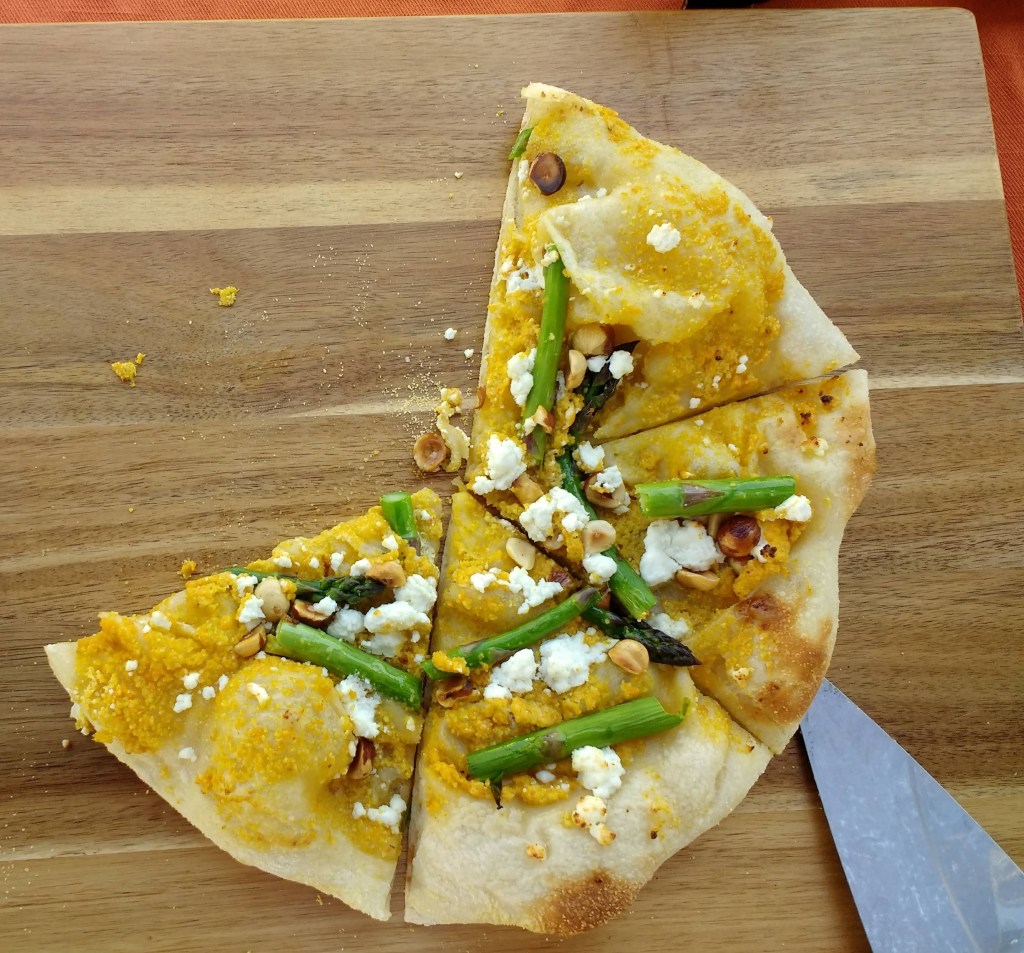
“Spring into New Orleans” with carrot aioli, local asparagus, hazelnuts, and goat cheese
I’ll never know if the buckwheat at Ferris Organics was sprinkled with a brew of nettle tea (delicious), but I had walked on the ground where it came from. I was standing in a space where it lingered for a while after harvest, imbued with the touch of hands, still near the trees where it was planted and raised. (I asked Kroger where their organic flour was grown, but they didn’t know. They don’t know where their ice cream is made, either, but it’s the best ice cream I’ve had).
Listen, you are probably looking at your screen the same way my future husband looked at me when I first met him on Lopez and told him my latest biodynamic task was to “ask” the new tree how it wanted its longest branch oriented (east to west). This is the kind of care and mystical, wonderful potential I want my daughters to see in every tree along their way to school, every beetle burrowed in a milkweed, and every person needing the magic of kindness born of imagination, of empathy. Singing the stories of every life on this earth, not just our own, making space for them to do their healing and wonderful work that weaves in and out of the sometimes silly, sometimes cruel, sometimes beautiful lives of the humans that are here, too.
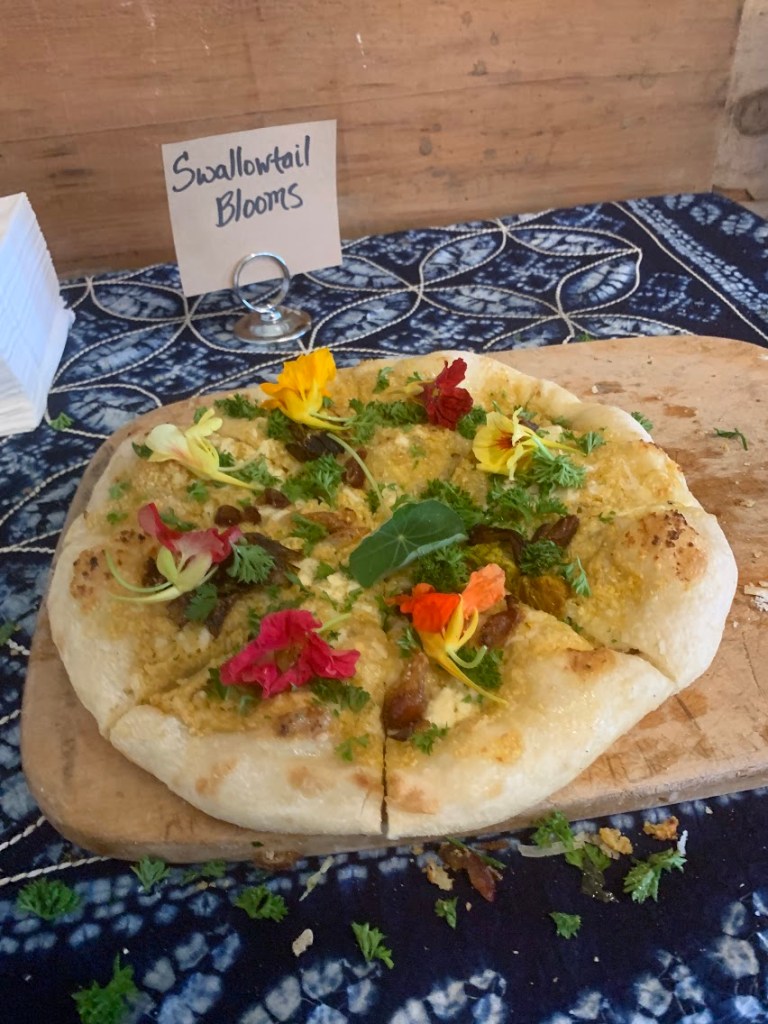
Years after dipping my toe into biodynamics, I was making pizza at Swallowtail Farm for a “pizza at the farm” night. I gave my pizzas some local magic, starting with the crust and ending with the bright, beautiful flowers of squash plants, nasturtium, and basil, a palette of local color and flavor bound for the human palette, to taste colors! To mouth feel late summer! (Wine enthusiasts, you will be familiar with this: biodynamics and terroir and the liquid seasons.) To take into our bellies, hearts, and mental health capacities the energy of the water that opened the seed to cotyledon and nutation, the soil that humbly brought nutrients to root, the farmer that tenderly and gleefully tended its every growth spurt, then with quiet gratefulness cut off its life to feed our own. To mingle our enzymes with foods like water mingles with paint, to paint a canvas of flavors full of light and delight and gratitude and love.
We bought our first house nine years ago (still here!), and the first thing I looked for was a place to build our compost pile. I found a nice, hidden corner for the food digester and a spot under the two hackberry trees in the back for a version of the 3 bin system. But it would be a year before compost was ready, and I needed some now! I was planting a garden soon and had none of the humus-rich, wonderfully textured stuff to fork into the soil before planting. My worm bin was humming along in the garage (we moved it with us, worms and all, and we’d never had a garage before), but it did not produce enough compost for even 50 square feet of a garden.
Our food digester and leaf pile tucked between fence, wild cherry, and old playground ball
The appeal of the barrel system is speed, and that turning it is as easy as turning a handle. Barrel composters often sit up off of the ground on a frame with a handle that turns a paddle inside of the barrel to mix up the browns and greens into compost. Other designs allow you to turn the entire barrel, rather than having a paddle and axle inside. I had a friend who had his barrel on the ground. He added materials to it as needed and simply rolled it on the ground about once a week. Because it was on the ground, red wigglers found their way in and helped out.
A quick search on the internet led me to Ms. Tumbles, but there are lots of ways to acquire your own tumbler. You can build one, grab an old garbage can with lid and roll it around, or buy one.
Like all successful compost piles, a barrel composter will need both brown and green materials, moisture, oxygen, and mass. If you can provide all of the necessary ingredients in the right ratios, it can work just as well as a hot compost pile. If your barrel is up off of the ground, critters won’t be able to access it as easily, a bonus for those in the city.
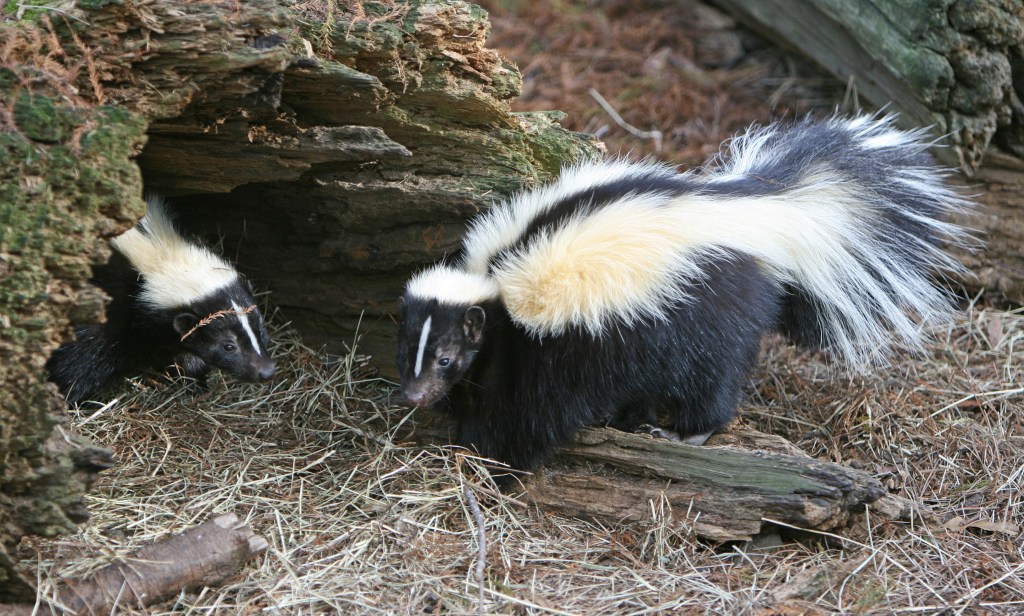
Side note: Just last week I watched a healthy looking skunk emerge from beneath our neighbor’s old garage that sits along our property. It waddled along the fence, taking a detour under the trampoline, brushing past the now blooming comfrey, and stepped right up to her breakfast of compost. While I’m not too worried about this (gasp!), others may not be as welcoming to critters, so a barrel is perfect. Contained, up high, skunk proof.
Turning it is also easy, and you won’t need to get out the shovel every few weeks. Barrels fit well in a smaller yard much better than a three bin system can, and for those who like a tidy garden, it looks just that, neat and tidy. This is a good option for those who do not have time to make and turn a pile, have little room in the backyard, and want compost fairly quickly.
Here’s the thing, though. Barrel composters often claim to provide compost in just a couple of weeks. But like good wine, good compost takes attention to detail and time to cure. You might get compost in three days to two weeks, but it will not be as humus rich as piles that cure for a year or more.
Slicing into this one year old pile is like cutting into a humus cake, full of richness for the soil, frosted with fall leaves
Humus is garden gold. It is the final result of decaying plant and animal matter, whether in a forest or your compost pile. As your leftovers break down further and further, they get down to their most elemental selves, a negatively charged humus particle. Think of humus as a plant buffet—the most stable form of plant food on the planet. Briefly, humus holds minerals, nutrients, and nitrogen in the soil so they don’t leach away. When plant roots come into contact with humus, they exchange their positive ions for the negatively charged food they need to grow—phosphorous, calcium, nitrogen. Humus also gives the soil more water and oxygen holding capacity by becoming a kind of sponge.
Humus is the casserole of the soil: spongy, generous, something for everyone.
Humus is in sharp decline. Modern farm methods need crops in quick succession. Instead of adding organic matter in the form of cover crops and letting the soil rest and regain its humus for the next crop, we add synthetic fertilizers that tend to be over applied and leach away into our water systems. Fertilizer cannot create the kind of tilth, the crumbly, dark, sweet-smelling soil, that humus creates. They are a quick, chemical fix to a deep and long-term humus shortage.
Not to despair! The answer to our humus shortage is staring us in the face, on our dining room tables, right at our fingertips. We can save humus with everything we throw away. Humus is created through decomposing organic matter, organic matter that Americans have an abundance of. Millions of tons of organic matter is sent to landfills each year where it creates methane, a greenhouse gas more powerful than carbon dioxide, instead of humus, the very thing we need to replenish the soil. Cities like Seattle, New York, and Portland, OR are beginning to divert organic waste to compost facilities in large numbers, but we need more cities on board. Some European cities even use anaerobic composting (without air), biodigesters, to create energy from decomposing food waste. Digging through compost history, I discovered a woman scientist from Germany hired to design and install biodigesters for Mexico, turning their organic waste into energy, in the 1950’s! We are just beginning and at last learning from, as Janine Benyus calls them, “our wild teachers” and “nature’s genius.” Just like in nature, when we compost, nothing is wasted, everything can be recycled.
The one becomes the other, and the other becomes the one, in a reciprocal song that changes key now and then, but can keep making music forever.
Leftovers are not waste, they are opportunity. An opportunity to heal the soil, mitigate climate change, and grow beautiful crops, flowers, and trees. To some, putting leftovers in a barrel and turning it might sound as crazy as getting in one and riding it over the edge of Niagara Falls, but compost barrels are just as thrilling for the worms, bacteria, and fungi inside, tumbling your compost into a national treasure waiting to be buried and brought back to life.
Do you remember the film the series that came out in 2006, “Planet Earth?” It was, and is, both beautiful and incredible. New technology allowed the film artists to zoom in from tremendous distances with crystal clear clarity. Such groundbreaking camera work is not only visually stunning, but scientifically important in studying the behavior of animals unaware of a human presence. The series included, “Deserts,” “Ice Worlds,” “Great Plains,” “Caves,” and “Mountains,” but missed one of the largest, most fascinating, and crucial parts of our interconnected planet—the soil. So, for the next few paragraphs, let’s take a close look at what we walk on every day.
First, “Soils” takes you to view the largest and heaviest living organism in the world. Not the Pacific Ocean’s Blue Whale or newly discovered Giant Squid, but Eastern Oregon’s honey mushroom. The fungus Armillaria has been growing in the Blue Mountains for over 2,400 years and could weigh as much as 35,000 tons. The mushrooms above ground are only the fruiting bodies of this giant. Below ground, its white filaments, or mycelia, spread over 2,000 acres, penetrating the roots of trees and siphoning off water and carbohydrates.
In this same forest, a rare, slow motion shot captures the dramatic flight of a springtail. The almost transparent arthropod uses its well-developed mandible to graze on fungus at the base of a tree. Suddenly, its arch-enemy approaches—a small ant with a strange, spongy structure between its thorax and abdomen that emits an irresistible odor. Stinger ready, the ant moves closer, but the springtail comes to its senses just in time. It releases a catapulting organ tucked under its abdomen and springs twenty times its own length to safety.
The camera follows the baffled ant as it scurries down into the leaf litter. It is a quiet, moonlit night, and the soil surface comes alive. A night crawler waves a third of its body above the ground in an eery, graceful dance. It finds a leaf and pulls it down into a vertical burrow lined with its own mucous.
Not too far away is a colony of several million ants. These particular ants practice aphid husbandry. They faithfully transport aphid eggs to their nests each autumn, tend them in safety, then take the newly hatched aphids to fresh, spring roots. As a reward, the healthy adult aphids leave sugary droppings, called honeydew, as food for the ants.
And let’s not forget the leaf cutter ants–earth’s first composters–who learned make middens of leaves, compost piles, inside their massive dens for fungal partners to feed on over 50 million years ago, long before humans learned how to farm or compost. After the fungus fully digests the leaves, the ants eat the nutrified fungus. This partnership is exclusive, meaning that the only place this particular fungus is found is in the ants’ compost pile. They are meticulous about keeping their fungus friends clean and even carry symbiotic bacteria on their bodies (making them look like they are covered in powdered sugar) with antibiotic properties that protect their partners against parasitic fungal pests.
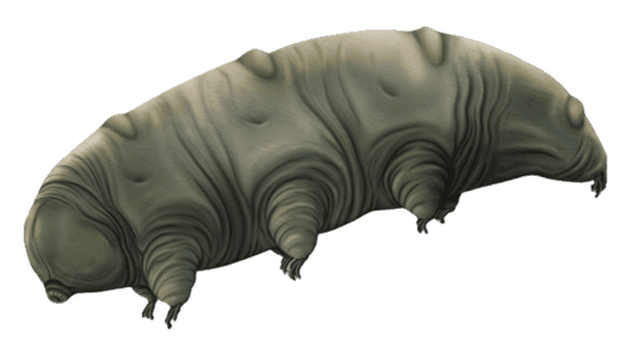
Finally, “Soils” films the strange and captivating Tardigrade, or “Water Bear.” Just as the Polar Bear elicits “oohs” and “aahs” with its antics on the ice, so the tiny Water Bear, only 1/50 of an inch long, is the charmer of soil critters. They come in red, green, orange, yellow, and pink, and their eight legs each end in four tiny claws. Their eggs, spheres decorated with geometrically patterned spines, knobs, and ridges, are fascinating and beautiful. If the humidity level in their microscopic habitat drops, they shrink like a dry sponge into an unrecognizable form. In this state, they can survive temperatures up to the boiling point and down to -200 degrees F. Then, even after 120 years, the dehydrated Tardigrade can be brought back to life. Some scientists are studying this amazing feat of cryptobiosis (hidden life) to see if humans could do the same.
And this is just the beginning! There are millions of animals, insects, and microbes that live in symbiosis and competition under the soil—from Ant Lions to Glowworms, from Camel Crickets to Kangaroo Rats. Without them, life above the soil would come to a messy halt. Soil creatures take the minerals and nutrients that drop to the ground from above and incorporate them into the earth’s skin where they resurface as new plant and animal life.
In order to better understand the soil and critters that inhabit the soil, all you have to do is build a compost pile and observe it closely. Ants, springtails, worms, beetles, and maybe even a Tardigrade will appear to transform your detritus from garbage to gold.
If you would like to see pictures of all of these creatures, check out the book “The World Beneath Our Feet: A Guide to Life in the Soil” by James B. Nardi, and watch the movie, “Microcosms,” a documentary set to classical music depicting the wonder filled life of insects.


























 Motherlife

